
Tesla’s troubles in Europe deepened in January, as sales continued to decline while Chinese rival BYD posted explosive growth across the region.
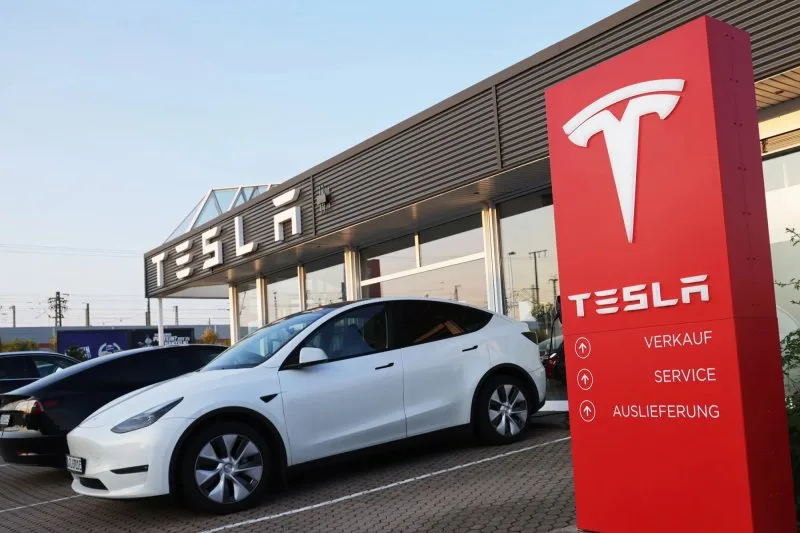
According to data from the European Automobile Manufacturers’ Association (ACEA), Tesla’s electric vehicle registrations — widely used as a proxy for sales — fell 17% year-on-year to 8,075 units in January, News.Az reports, citing foreign media.
The drop came despite overall growth in the region’s EV market. Total electric vehicle registrations in Europe, including the UK and members of the European Free Trade Association, rose 13.9% during the same period. Meanwhile, overall vehicle registrations, regardless of powertrain, declined 3.5%.
RECOMMENDED STORIES
January marked Tesla’s 13th consecutive month of falling sales in Europe. The weak start to the year follows a difficult 2025, when the company’s sales on the continent dropped 27%.
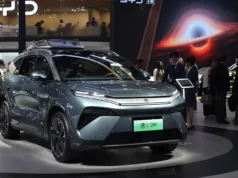
In contrast, Chinese automaker BYD, which offers a lineup of fully electric and hybrid vehicles, reported a 165% surge in European sales to 18,242 units in January. According to The Wall Street Journal, BYD’s sales in Europe have risen every month since ACEA began tracking the company’s data last summer.
While electric vehicle demand has cooled somewhat in the United States, the European Union has seen strong appetite for lower-cost EVs and hybrids, particularly from Chinese brands such as BYD and Li Auto. European consumers have increasingly embraced competitively priced Asian imports.
Tesla, however, faces multiple challenges in the region. CEO Elon Musk’s declining popularity in Europe has weighed on the company’s brand perception. At the same time, Tesla’s limited product refresh — including the absence of a more affordable EV model — has left it struggling to compete directly with cheaper Chinese alternatives.
In the US market, domestic automakers like Tesla have so far been shielded from Chinese competition. However, some manufacturers are reportedly exploring joint ventures to produce Chinese-designed vehicles locally. Ford is said to be considering such strategies, while Stellantis has already partnered with China’s Leapmotor to co-develop vehicles.
Tesla recently discontinued its higher-priced Model S and Model X vehicles and is increasingly betting its future growth on autonomous driving technology, robotaxis, and its Optimus humanoid robot project. Nevertheless, the company’s global sales fell 9% last year after declining 1% in 2024.
Last week, Tesla’s first Cybercab — a purpose-built robotaxi without pedals or a steering wheel — rolled off the production line at Giga Texas in Austin. The milestone kept the company on track for its planned first-half 2026 production timeline, an uncommon achievement for Tesla under Musk’s leadership. However, progress in autonomous deployment has slowed.
The company’s robotaxi rollout has stalled in both Austin and the San Francisco Bay Area, with no additional locations launched so far in 2026. Newly submitted crash data to the National Highway Traffic Safety Administration (NHTSA) indicates that Tesla’s robotaxis may be less safe than human drivers based on reported crash statistics.
Moreover, Tesla has been cautious about removing safety drivers from its Austin robotaxi fleet. This suggests slower-than-expected advancement toward achieving Level 4 autonomy — defined by SAE International as a system capable of handling all driving tasks within specific, geofenced operational conditions without human intervention.
As competition intensifies and autonomous ambitions face scrutiny, Tesla’s position in Europe appears increasingly under pressure.