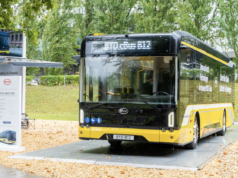

A 5 February report by Reuters claims that BYD aims to source or produce 50% of vehicle components locally at its new factory in Bahia by the end of 2026 as it pushes to become Brazil’s top-selling automaker within the next decade. The Chinese electric vehicle (EV) giant is investing approximately US$1.1bn into the project, with in-house production located on a site previously used by Ford before the US automaker abandoned domestic manufacturing in Brazil.
Since its highly-anticipated October 2025 launch, the Bahia plant has produced around 25,000 EVs and hybrids and currently employs about 5,000 workers. BYD now plans to boost the site’s production capacity to around 300,000 vehicles per year in future phases, essentially double the 150,000 units it expects to produce by end-2026. The plant currently assembles vehicles using semi-knocked-down kits imported from abroad, which company officials describe as a temporary approach while local supply chains and production facilities including stamping, welding and painting are completed.
The Bahia plant’s launch was not without controversy, drawing scrutiny in the months leading up due to reports of human trafficking and worker exploitation. A state investigation, which began in late 2024, revealed that more than 220 Chinese workers were being held in “slavery-like conditions” by BYD’s subcontractors. Following a lawsuit filed by Brazilian federal prosecutors in May 2025, the automaker and its subcontractors were forced to pay around US$7.5m in damages. Around half of this sum was earmarked for the affected workers themselves.
For BYD, the move towards local sourcing is a response to changes in local regulation as much as it is a play for regional vertical integration. Brazil ended a temporary tariff exemption on 31 January that allowed EVs and hybrids assembled using imported parts from China to enter the country at sharply reduced costs. The six-month exemption allowed up to US$463m worth of imported kits to enter without import duties, but drew criticism from the Brazilian lobbying group National Association of Automotive Vehicle Manufacturers (also known as Anfavea). The group represents global automakers like Audi, Honda, Renault, Toyota, Volkswagen, Stellantis and GM.
Anfavea argued the tariff exemption rewarded simple assembly rather than full manufacturing and risked shifting production away from Brazil’s domestic supply chain. The association circulated studies projecting that a shift from full production to large-scale kit assembly could eliminate up to 69,000 direct jobs and cause losses of up to US$19.6bn across the automotive supply chain. Semi-knocked-down kits previously faced an 18% import tax, while completely knocked-down kits attracted a 16% duty. Both rates have now risen to 35%.
BYD sold 9,755 vehicles in January 2026, securing fifth place in Brazilian vehicle sales rankings and surpassing Toyota. The figure represents a 50.5% increase compared with January 2025 and raised BYD’s market share to 7.8% from 5.25% the previous year. The company closed the gap with fourth-placed Hyundai to just 421 units.
Since entering Brazil’s passenger car market in 2022, BYD has sold more than 170,000 new energy vehicles and now controls more than 74% of the country’s EV segment. In an interview with Reuters, Senior Vice President Alexandre Baldy said BYD is moving as quickly as possible to build a local supply chain with the goal of becoming Brazil’s largest carmaker by sales volumes by 2030.
Rising local content would help meet regulatory requirements, and allow BYD to begin exporting from Brazil to neighbouring Mercosur markets as early as this year. Notably, the automaker also acquired mining rights for two plots of land in the country’s ‘lithium valley’ during February 2025. The sites are located roughly 500 miles from the Bahia plant. BYD is also courting local refiner Sigma Lithium about a potential acquisition.