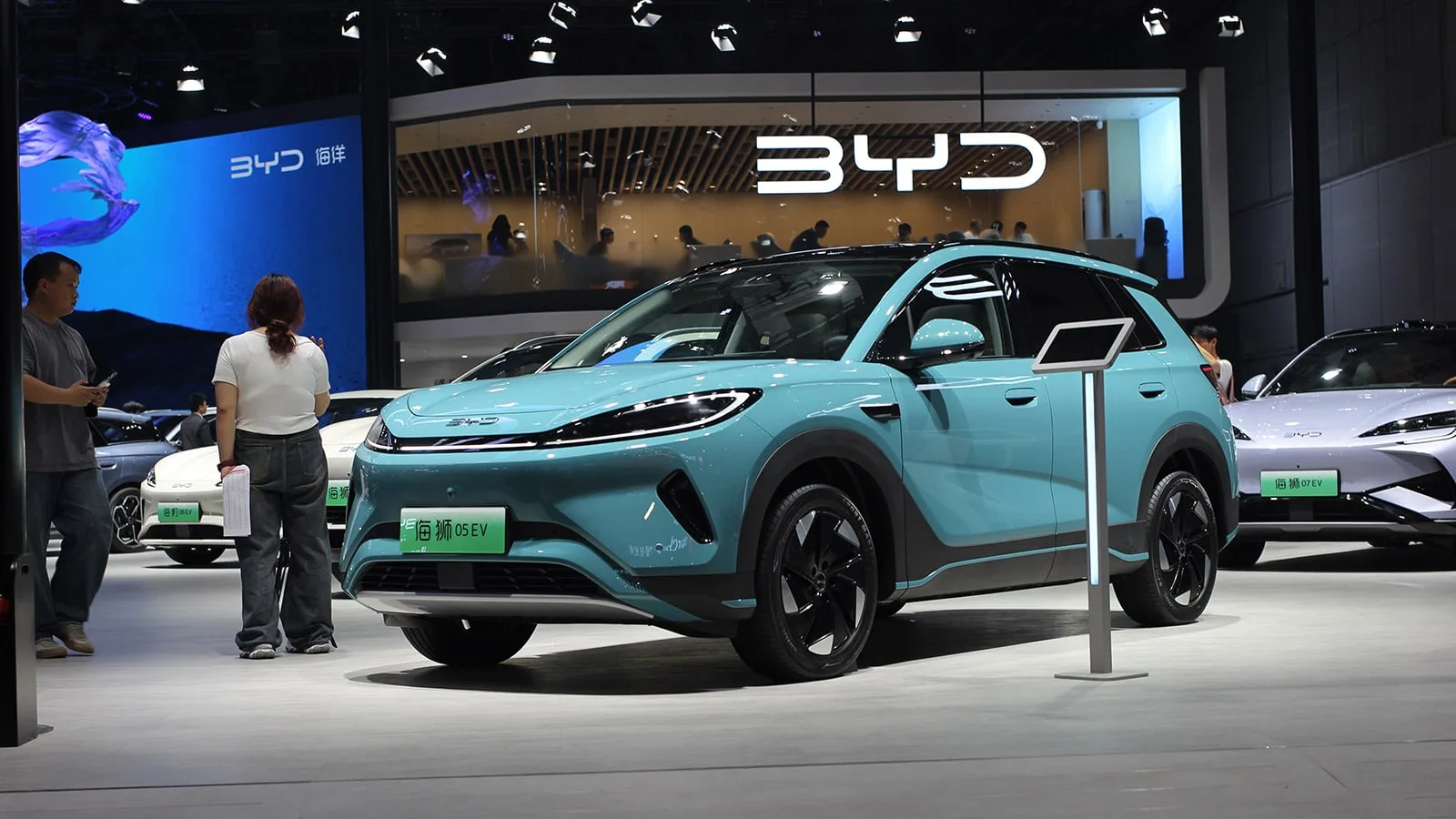
- If a deal is reached, Ford would likely source batteries from BYD for its plants outside the US, the Wall Street Journal reported.
- In China, Ford and BYD are collaborating, with the electric Bronco SUV launched a month ago featuring BYD batteries.
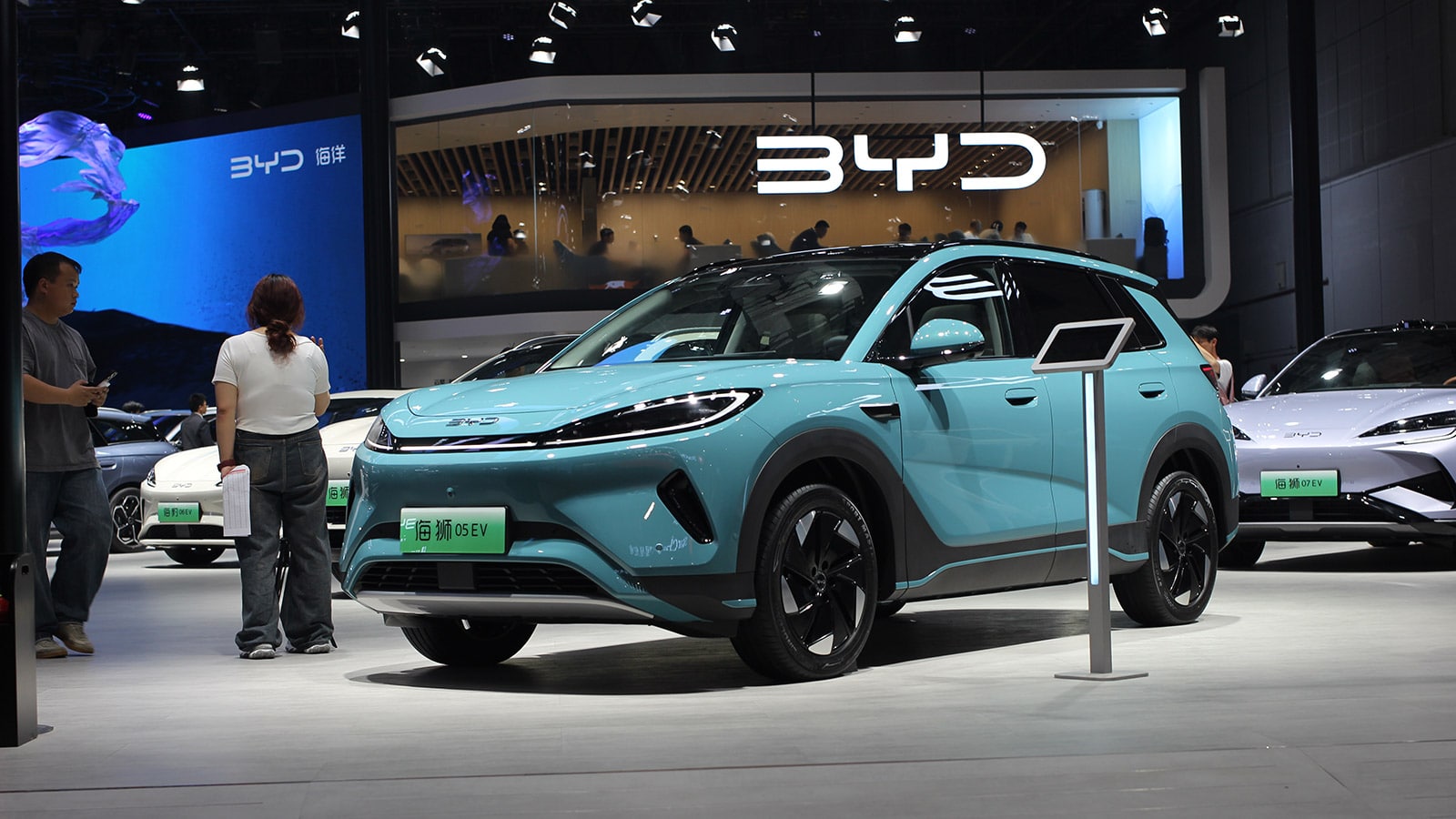
US auto giant Ford is in talks with BYD (HKG: 1211, OTCMKTS: BYDDY) over a potential partnership for hybrid vehicle batteries, the Wall Street Journal reported on Thursday.
If an agreement is reached, Ford would likely source batteries from BYD for its plants outside the US, according to the report.
Ford would procure batteries from the Chinese automaker for some of its hybrid models, with the two companies still discussing the specifics of the arrangement, the report cited people familiar with the matter as saying.
Talks remain ongoing and it is possible a deal won’t materialize, the people said.
Ford and BYD are collaborating in China.
One month ago, Ford launched the electric Bronco SUV (sport utility vehicle) in China. Both its extended-range electric vehicle (EREV) and battery electric vehicle (BEV) versions are equipped with BYD’s blade batteries.
The US automaker launched its locally produced Mustang Mach-E electric vehicle in China in April 2021 and deliveries to the first buyers began on December 26, 2021.
The Ford Mustang Mach-E was equipped with ternary lithium batteries from BYD, primarily manufactured at the latter’s Xi’an plant in Shaanxi province.
Interestingly, the Ford Mustang Mach-E did not adopt BYD’s signature blade batteries based on lithium iron phosphate (LFP) technology, opting instead for the latter’s 811 ternary lithium batteries.
In early 2022, the model faced battery supply shortages due to the impact of the Covid-19 pandemic.
BYD is China’s second-largest power battery supplier after CATL (HKG: 3750, SHE: 300750), with LFP batteries dominating its product portfolio and ternary batteries accounting for a minimal share.
In November, BYD’s LFP battery installations came in at 19.04 GWh, securing a 25.28% market share to rank second in the LFP segment, according to data from the China Automotive Battery Innovation Alliance (CABIA). CATL led the LFP market with 28.09 GWh installations and a 37.31% share.
| Company | Installations (GWh) | Market Share (%) | Share vs Prev Month |
|---|---|---|---|
| CATL | 28.09 | 37.31% | +1.61 |
| BYD | 19.04 | 25.28% | -1.23 |
| Gotion High-tech | 5.86 | 7.78% | -0.43 |
| CALB | 4.84 | 6.43% | +0.00 |
| Eve Energy | 3.50 | 4.65% | -0.09 |
| Rept Battero Energy | 2.98 | 3.96% | +0.69 |
| Sunwoda | 2.42 | 3.21% | -0.83 |
| Energee | 2.24 | 2.97% | +0.52 |
| Zenergy | 1.51 | 2.01% | -0.64 |
| Svolt Energy | 1.05 | 1.40% | +0.13 |
| Greater Bay Technology | 0.62 | 0.82% | +0.25 |
| Cornex | 0.57 | 0.76% | -0.10 |
| Yinpai Battery | 0.56 | 0.75% | +0.32 |
| Yuanhang Genlead | 0.54 | 0.72% | +0.08 |
| Do-Fluoride | 0.42 | 0.56% | -0.20 |
In China’s ternary battery market, BYD’s installation volume did not appear in any rankings.
In the US, Ford announced in February 2023 that it would build a $3.5 billion LFP battery plant in Michigan using CATL’s technology.
Ford expects the facility to begin production this year, supplying batteries for its upcoming $30,000 all-electric pickup truck.
However, the plant has faced criticism from US Republican lawmakers who have launched investigations into the deal and project, as noted by the Wall Street Journal.
BYD produces some commercial vehicle batteries at its California bus manufacturing plant but has yet to manufacture passenger vehicle batteries in the US.