Support CleanTechnica’s work through a Substack subscription or on Stripe.
BYD’s premium Denza brand recently announced a naming competition for its upcoming sports car. While branding may not be the most critical clean technology issue facing the world right now, it can make a surprising difference in customer adoption, especially for vehicles from one market entering another market that has significant cultural and language differences. Branding can help motivate potential customers to look at an EV over an ICE vehicle (or at least not turn off potential customers).
While Denza asked the question of Chinese audiences, it is relevant to a much broader audience for a brand with global ambitions. We have some smart readers at CleanTechnica, so I wondered what people here think would work.
Denza Z Model Names
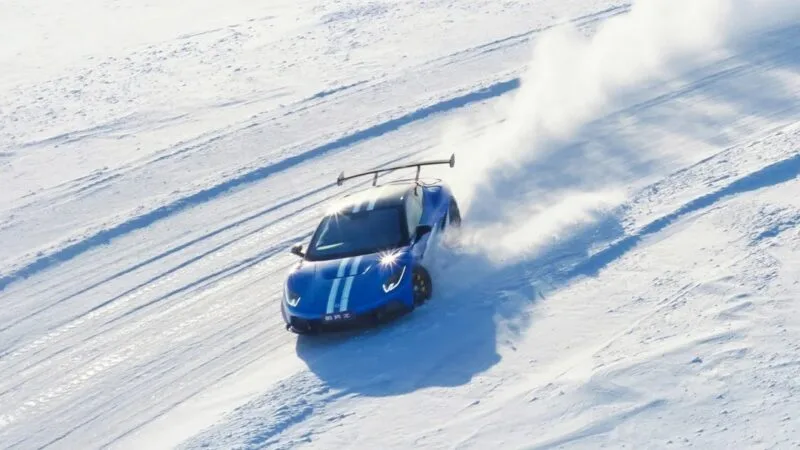
BYD’s Denza brand is set to launch its Z sports car soon. A concept of this model was presented a year ago. Prototypes were seen testing back in 2024, sometimes benchmarking against a Porsche 911. This is one of the most extended product rollouts we have ever seen from BYD, and the company is clearly putting in a lot of effort.
However, electric 2-door sports cars have been somewhat limited since the demise of the original Tesla Roadster. People often tend to buy from established brands in the sports car category. They are buying the emotion around the product as much as they are buying the product itself. Introducing a new electric sports car has the potential to raise the Denza brand profile, but it also creates branding challenges. Denza is turning to the public for help.
Denza recently announced a contest for creative naming ideas for the Denza Z sports car suffixes, with a deadline of April 10. The contest is specifically to create names to be used combination with “Denza Z” for the three different versions of the car:
- Hardtop version: “Starting with pure driving pleasure, we forge a core performance icon, making top-tier racing technology an accessible performance belief.”
- Convertible version: “An extension of freedom and emotion, the soft-top convertible design blends sunshine, social interaction, and travel, interpreting a poetic style of traversing life.”
- Track version: “The ultimate form of racing technology, combining top-tier power, lightweight materials, and exclusive certification.”

Branding Is Surprisingly Difficult
If you have ever worked on a branding project, you will quickly find that it isn’t as easy as it looks. You might find a name quickly that works, but that rarely happens. Even when you get lucky from the start, alternatives need to be generated for testing and backups if trademark clearance becomes a challenge.
From the rules: “The suffix can be in any language (Chinese, foreign languages, combinations, etc.), and should be concise, elegant, positive, and free of negative connotations.”
That gets into cultural differences. What may be a positive in one culture might be seen differently in another. Some people think seagulls are beautiful. Others call them “rats with wings” or “chip thieves.” Kids in the US who grew up with Curious George find monkeys cute, while many South Africans find them annoying. Some people find the name Qashqai exotic, while others find it unpronounceable and foreign. A name that works well in one language might not work as well in another language. A Nova might sound exciting to US buyers who grew up during the space age, but “no va” (“doesn’t go” in Spanish) creates complications. “Wang” may have an aspirational meaning in Chinese, but it can be slang for a male body part in other countries. Nissan calling its sports car “Fairlady” might make sense in Japan and for some fans of musicals, but it didn’t have the same appeal for a macho target market in the US. Sometimes it is just easier to call it “Z.”
European automakers started the trend of naming cars with a combination of letters and numbers, particularly German makes like BMW, Mercedes, and Porsche. Automakers like Lexus and Infinity, seeking many of the same buyers, followed similar naming conventions. Cadillac shifted to letter-based models and then largely went back to names. However, while the contest mentions, “Having grown accustomed to supercars defined by letters and by European, American, and Japanese brands,” Chinese brands have been just as guilty of the letter and number trend. While it may be difficult to trademark a letter or number, the proliferation of similar letter/number combinations can also lead to confusion.
That gets into another problem, as the rules state: “The work must be original, not registered or used by other car brands or categories, and must not infringe on any third-party intellectual property rights.” Copyrights proliferate around the globe. There might be some startup somewhere or a trademark for an unreleased model that you are not aware of. A lot of time gets spent on TESS and other trademark searches. A trademark that gets cleared in one country may have an issue somewhere else.
Then you get into challenges of interpretation. Creating a unique name can get around some trademark challenges, but then you get into challenges of pronunciation, interpretation and connotation. For another Nissan example, the Altima brand name was derived from the Latin “altus” meaning elevated, but the word also means “finest” in Arabic, which was lucky for Nissan. Sometimes, names do not mean flattering things in other languages. With a unique name, you may know what you want it to sound like and mean, but that doesn’t mean that potential customers will see it the same way. Ideally, a brand name will have several positive connotations from different perspectives that work to reinforce the overall brand promise.
Brand Portfolio
In addition to confusion with other companies, you also run into challenges within the brand portfolio of the same automaker. A vehicle does not just have to be seen as appealing, but also different than other vehicles. Different models from the same manufacturer should not just cannibalize each other’s sales. That is especially the case when an automaker charges a premium for a model. Each model should be seen as distinct and not directly compete with a sister brand. Ideally, a model should draw customers in from another company or pull existing customers up to a more premium price point.
Denza is positioned as a premium brand, derived from the Chinese word “Tengshi,” translated to “rising power and momentum.” Up until now, sedans have been named Z, followed by a number and sometimes letters to signify variants (e.g., Z9GT). SUVs have used the letter “N” followed by a number and variant signifier (e.g., N8L). MPVs have used the letter “D” followed by a number (D9). However, Denza sits within the overall BYD family of brands, falling in roughly the 250,000 to 500,000 RMB price range ($36,000 to $72,000).
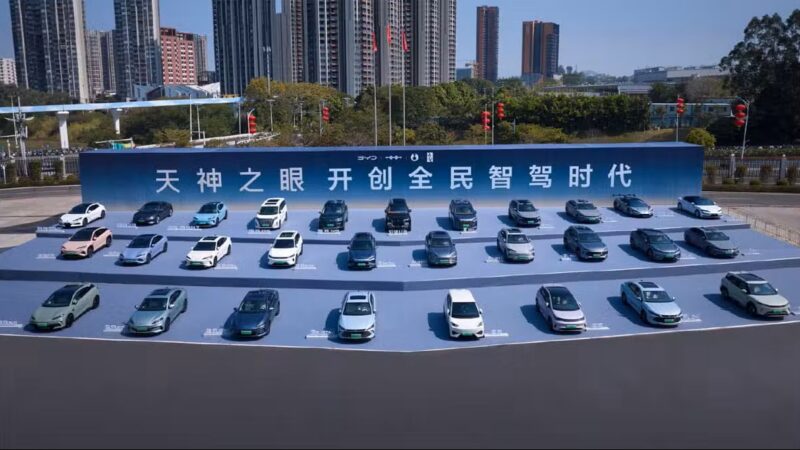
But Denza is just one brand in the same family. BYD’s new ride-hailing brand Linghui, meaning “to understand,” has models named with a letter and number, such as the flash charging E7. BYD uses a similar naming convention for its commercial vehicle division. BYD’s main consumer brand is split into the more youthful Ocean series, with models named after sea animals (Seagull, Dolphin, Sealion, Seal), and the more formal Dynasty series, named after historical Chinese dynasties (Song, Xia, Tang, Yuan, Qin). Above that falls Fang Cheng Bao (~150,000-400,000 RMB/$22-58k) translating to “Formula Leopard,” with offroad-focused models named Bao (Leopard) followed by a number, road-focused SUVs with Ti (Titanium) followed by a number. An upcoming FCB sedan is rumored to be named Magnesium (Mei or Mg) followed by a number, although that could cause confusion with SAIC’s MG brand. At the top, Yang Wang (650,000+ RMB/$95k+), which translates to “looking up,” has used U followed by a number for different models, such as the U9.

What Would You Pick?
Getting back to the original question, I am intrigued to know what our readers think. Personally, with “Denza” meaning gaining momentum, my mind went to physics terms like Kinetic or Force, both of which are already being used by other automakers. Are there other physics terms that could be used? As it is their first sports car, would other sports or racing terms fit? It will likely become the highest volume electric sports car to date. Would something around being electric make sense? Would you tap into Chinese heritage or focus on global relevance?
If you want to make an official entry, you can submit them through a QR code in this post that sends you to this page. Prizes include an action camera, electric scooter, luggage and an invitation to the model launch. Voting will happen on the Denza’s Weibo page, although, “The final official name of the model will be determined by Denza Auto after a comprehensive evaluation considering brand planning, product positioning, intellectual property, and other factors.”
While most of the people who read this are unlikely to make a formal submission, it is still an interesting question to ask. I have a feeling that some trolls and sarcasm will show up. But I also have a feeling that we could have some great responses. So, what names would you pick?
Sign up for CleanTechnica’s Weekly Substack for Zach and Scott’s in-depth analyses and high level summaries, sign up for our daily newsletter, and follow us on Google News!
Have a tip for CleanTechnica? Want to advertise? Want to suggest a guest for our CleanTech Talk podcast? Contact us here.
Sign up for our daily newsletter for 15 new cleantech stories a day. Or sign up for our weekly one on top stories of the week if daily is too frequent.
CleanTechnica uses affiliate links. See our policy here.
CleanTechnica’s Comment Policy