More than 25 Chinese automakers now sell electric or hybrid vehicles in Israel, though their presence in the market is rarely highlighted due to geopolitical tensions surrounding the ongoing conflict.
In August, Norges Bank Investment Management, which manages Norway’s $2 trillion sovereign wealth fund, announced it had removed five Israeli banks.
The decision was made due to “an unacceptable risk that the companies contribute to serious violations of the rights of individuals in situations of war and conflict,” the world’s largest sovereign wealth fund said back then.
Norges Bank has previously sold its stake across 17 Israeli companies with a total portfolio value of $143.3 million.
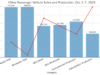
Against this backdrop, Chinese brands have quietly come to dominate Israel’s new energy vehicle market, accounting for 82.1% of all electric car sales in the first ten months of 2025.
In total, 43,177 vehicles from Chinese brands were sold, according to the Israel Vehicle Importers Association.
Data released by the association covering January through November 2025 shows Chinese automakers leading both the fully electric and plug-in hybrid segments by a wide margin over South Korean, Japanese and European competitors.
BYD Leads All Brands
Shenzhen-based BYD tops the charts with 12,734 new energy vehicles registered in Israel through November — comprising 8,069 fully electric units and 4,665 plug-in hybrids.
The company entered the Israeli market in late 2022 and currently offers the Atto 3, Dolphin, Seal, Sealion and Tang electric models, along with three plug-in hybrid variants.
Late last month, BYD launched the Atto 2 DM-i in Israel through its dealership Shlomo Motors.
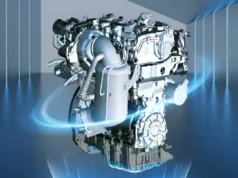
The subcompact crossover, known in China as the Yuan Up DM-i, combines a 1.5-liter gasoline engine with an electric motor and an 18-kWh battery, providing up to 90 km of range and approximately 1,000 km combined.
Chery Group Brands Surge
Chery Group has emerged as a major force through its Chery, Jaecoo and Omoda brands.
The Chery brand registered 20,175 vehicles through November, including 6,219 fully electric units, 1,765 hybrids and 12,191 plug-in hybrids — making it the third-largest brand overall behind Toyota and Hyundai.
Jaecoo, Chery’s off-road focused sub-brand, added 13,516 units comprising 369 fully electric vehicles and 13,147 plug-in hybrids.
Currently available in Israel are the Jaecoo 5 in gasoline and electric variants, and the Jaecoo 7 in gasoline and hybrid versions.
The Jaecoo 8, along with the Omoda 7 and Omoda 9, are planned as the next models to arrive.
The two brands announced last August they became the new sponsor of the Israeli football super league as part of efforts to increase brand awareness, following BYD’s major sponsorship of the 2024 UEFA Euro Football championship.
XPeng Builds Presence
XPeng registered 6,013 fully electric vehicles through November, placing it among the top Chinese EV brands in the market.
The Guangzhou-based company shipped its first 750 vehicles to Israel in September 2023 — the G9 SUV and first-generation P7 sedan — arriving through dealership Freesbe a month later.
Last September, amid its second anniversary in the market, XPeng founder and CEO He Xiaopeng visited Israel to launch an ultra-fast charging network.
The network was announced in Rishon LeZion together with Freesbe, in the presence of Israeli Energy Minister Eli Cohen. The chargers are manufactured by Chinese EV charging firm Star Charge.
XPeng currently offers the G6 and G9 mid-size crossover SUVs and the first-generation P7 executive sedan in Israel.
Other Chinese Brands
Geely registered 3,386 vehicles through November, including 3,377 fully electric units and 9 plug-in hybrids.
Lynk & Co, another Geely sub-brand, added 3,293 units comprising 2,992 fully electric vehicles and 301 plug-in hybrids.
Dongfeng registered 2,079 fully electric vehicles, while Maxus recorded 1,999 units — all fully electric.
Deepal, the mass-market brand under Changan Automobile, registered 1,990 fully electric vehicles.
Zeekr, Geely’s premium electric brand, registered 1,903 fully electric units. The brand launched in Israel in early 2024 with the Zeekr 001 shooting brake sedan and Zeekr X subcompact crossover.
In February, Zeekr launched an ultra-fast charging network across Israel, also open to drivers of other EV brands at higher rates.
Seres registered 1,720 fully electric vehicles, while Leapmotor added 1,277 units including 1,145 fully electric and 132 plug-in hybrids.
Smaller Chinese brands present in the market include Forthing with 820 fully electric units, Hongqi with 813, JAC with 727, EVeasy with 700, Voyah with 565, Skywell with 510, Ora with 291, GAC with 166, Avatr with 111, BAIC with 50, and IM Motors with 11.
Nio’s First Year
Nio registered 205 fully electric vehicles in Israel through November, its first full year since officially launching in November 2024 through a partnership with Delek Motors.
The figure places Israel second only to Germany among Nio’s international markets, where the Shanghai-headquartered EV maker registered 236 units over the same period.
The brand’s Israeli registrations have been volatile due to shipping logistics.
September marked a monthly record with 72 units, followed by 65 in October, while November saw no registrations.
Tesla Trails Chinese Rivals
Tesla registered 4,511 fully electric vehicles in Israel through November, placing it behind BYD, XPeng and Chery in the pure electric segment.
The US automaker’s performance contrasts with its dominance in other markets, underscoring the strength of Chinese brands in Israel’s EV sector.
Overall, Israel registered 161,753 vehicles across all powertrains through November, with fully electric vehicles accounting for 55,232 units (34.1%), hybrids at 74,549 units (46.1%), plug-in hybrids at 31,946 units (19.7%), and diesel at just 26 units.
Toyota led all brands with 27,027 hybrid vehicles, followed by Hyundai with 22,572 units including 1,136 fully electric and 21,436 hybrids.