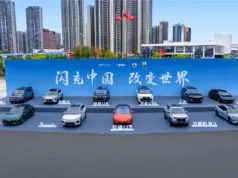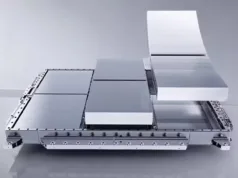
BYD Co. has registered its passenger vehicle factories with Canadian transport authorities, a move that positions the world’s largest EV maker to become the first Chinese automaker to ship consumer EVs to the country under the new import quota system.
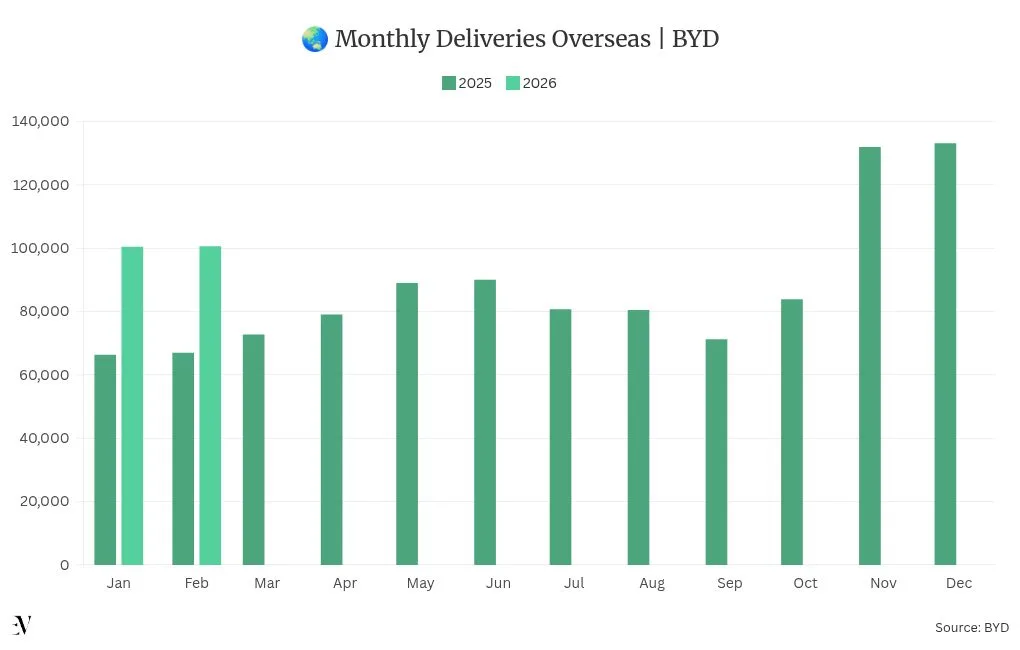
In February, BYD‘s total sales fell 41% year over year — the sixth consecutive monthly decline and the steepest drop since February 2020.
For the first time in the company’s history, overseas shipments surpassed domestic sales.
Canada
Transport Canada’s Appendix G registry — a preclearance list of recognized foreign vehicle importers — shows four BYD entities as of Thursday morning.
Two are new passenger car listings covering BYD Auto Co Ltd‘s manufacturing plants in Shenzhen and Xi’an, the Chinese cities where the company produces models such as the Seal, Dolphin, Atto 3 and Seagull — which is marketed as Dolphin Surf in Europe.
The other two entries predate the passenger car registrations.
BYD Auto Industry Company Limited in Pingshan, Shenzhen, covers buses — including city, school and shuttle buses — as well as trucks. BYD Coach & Bus LLC in Lancaster, California, is listed for coach and school buses.
BYD has operated a 45,000-square-foot electric bus assembly plant in Newmarket, Ontario since 2019, supplying vehicles to the Toronto Transit Commission and other Canadian transit operators.
The passenger car listings represent the official expansion of BYD‘s Canadian ambitions, moving from commercial vehicles into the consumer market for the first time taking advantage of the lower tariffs.
As of Thursday morning, no other major Chinese passenger car manufacturer appeared in the Appendix G registry. Nio, XPeng, Chery and Geely were not listed.
Quota Now Open
The Canadian government began accepting import permit applications last Saturday, formally launching the quota system that will allow up to 49,000 China-built EVs into the country over the next 12 months at a 6.1% most-favored-nation tariff.
The new tariff rate replaces the 106.1% rate imposed in October 2024.
Under the framework published by Global Affairs Canada on February 24, the first 24,500 vehicles can enter between March 1 and August 31 on a first-come, first-served basis.
A second allocation of 24,500, plus any unused first-half permits, covers September 1 through February 28, 2027.
Import permits are shipment-specific, valid for up to 60 days, and can be filed up to 30 days before a shipment’s expected arrival.
Only original equipment manufacturers or their authorized Canadian representatives may apply — ruling out grey-market importers.
Global Affairs spokesperson Samantha Lafleur said there is “no predetermined limit” on the number of permits per automaker, but the department “will monitor the application and issuance of import permits for the purpose of providing equitable access to the quota to eligible applicants.”
It remains unclear whether Chinese authorities will manage what vehicles can be exported. Lafleur said Global Affairs was “not aware of any export-permit mechanism that might be administered by China.”
Tesla Pulls Model 3
Tesla appears to be positioning itself to take advantage of the same quota.
As reported by EV on Monday, the option to configure a Model 3 had been removed from Tesla’s Canadian website, with the company directing customers to remaining inventory units.
A Reddit user who visited a Tesla showroom reported that the company had “quietly removed all the demos and new inventory from their lots and shipping them back to the USA.”
Tesla currently produces the Model 3 in both the United States and China.
While the company began importing Model Ys from its Berlin factory last year to bypass tariffs on US-built vehicles, it could not do the same for the Model 3 as the German plant only produces the SUV.
The removal suggests Tesla may be preparing to resume importing Chinese-made Model 3 sedans under the new 6.1% tariff — a route it briefly used in mid-2023 when it shipped vehicles from Giga Shanghai through Vancouver, boosting Chinese automobile imports through the port by 460% year over year.
Chery Also Preparing
While Chery does not appear in the Appendix G registry, the Wuhu-based automaker is actively hiring for the Canadian market.
As reported by EV in late January, recruiters working on behalf of Chery have contacted Canadian auto industry professionals on LinkedIn about roles to support the expansion, with some messages specifically mentioning the company’s Omoda and Jaecoo sub-brands, The Globe and Mail reported.
Chery announced a 2026 sales target of 3.2 million units, approximately 14% above last year. The company sold more than 2.8 million passenger cars in 2025, of which over 900,000 were new energy vehicles.
Approached by EV in January, BYD said it could not discuss its Canadian plans.
“We sincerely apologize, but we are unable to share specific details on this matter at this time,” the company said.
XPeng declined to comment, while Nio and GAC Group did not respond to requests for comment. Li Auto said it is focused on other regions and made no mention of Canada or the Americas.
Trade History
Statistics Canada data show that Canada’s imports of electric vehicles from China surged from less than 100 million Canadian dollars in 2022 to 2.2 billion Canadian dollars in 2023, representing approximately 44,400 vehicles — primarily Tesla Model Ys shipped from the company’s Shanghai Gigafactory.
Data compiled by the China Passenger Car Association showed China exported 41,700 new energy passenger vehicles to Canada in 2023, a 751% year-over-year surge.
In the first half of 2024, before the tariff took effect, exports reached 13,200 units, up 500% from a year earlier.
After the 100% tariff was imposed in October 2024, Chinese EV exports to Canada plummeted by 92% in the fourth quarter of that year, according to data cited by Chinese media outlet NBD.
Chinese-made brands previously exported to Canada included Tesla, Volvo and Polestar. Volvo, which had shipped its Chinese-made EX30, subsequently shifted production of affected models to its factory in Belgium.
Political Opposition
The quota has drawn sharp criticism.
Ontario Premier Doug Ford labeled Chinese EVs “spy vehicles” and called for a boycott. Conservative leader Pierre Poilievre described the vehicles as “roving surveillance systems.”
Unifor, Canada’s largest private-sector union, said the agreement “puts Canadian auto jobs at risk.”
“Finding a resolution to US auto tariffs just got more difficult as Canada has surrendered the leverage of opening our market to China,” Unifor National President Lana Payne said.
Industry Minister Mélanie Joly said in February that she had held meetings with multiple automakers including BYD and Chery. “I think we have to be not naive, but we also have to be open minded,” Joly said.
Late last week, the country’s Finance Minister François-Philippe Champagne launched consultations to tighten Canada’s automotive remission framework, aiming to force global carmakers to choose between local production and stiff surtaxes on imports.