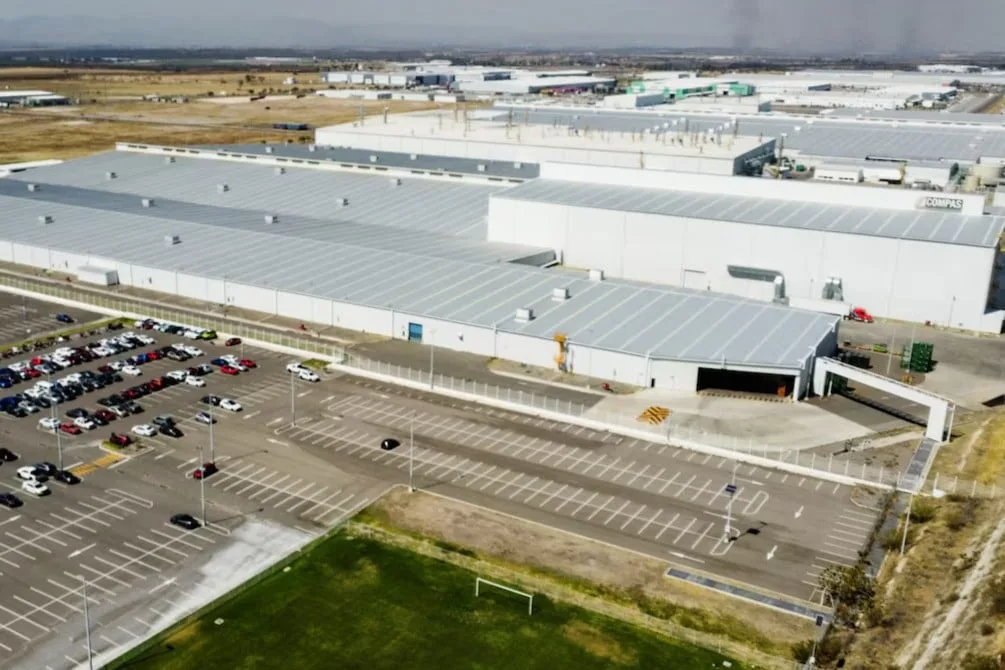

After Mercedes decided to get out of its business with Nissan, China’s two major automobile manufacturers BYD and Geely are in the final running to take over the plant. Nissan is also exiting the factory, stating that this is due to “broader strategic shifts,” while Mercedes is basing the decision on the end of the GLB model.
According to a Reuters report, the “finalists emerged from nine companies expressing interest in acquiring the factory, including at least two other major Chinese manufacturers: Chery, opens new tab and Great Wall Motor, opens new tab, according to two sources familiar with the matter. Vietnamese electric-vehicle maker VinFast, opens new tab is the third finalist.”
The decision is in an interesting state, however, as Mexican officials face a fair amount of international pressure: The USA, under Trump, are strongly affecting Mexico with the tariffs, however, the jobs that would be created also offer much-needed growth potential. Should they give a Chinese company the go-ahead, officials are also worried about repercussions from the USA, which has effectively banned Chinese EVs from being sold, and accused Mexico of providing a back door for Chinese goods to enter the U.S.-American market.
No comment has been given by the manufacturers on the ongoing proceedings, but Mexico remains an important market, even without the trading potential with the USA: Chinese EV manufacturers only entered the market in 2020, but they have grown their business to encompass roughly 10 per cent of the Mexican market. This corresponds to about 1.5 million cars per year. Notably, US consumers also buy a lot of vehicles produced in Mexico, at least before the tariffs hit. In 2024, about 2.8 million of the 4 million passenger vehicles produced in Mexico, were sold in the USA. Faced with the 25 per cent tariff introduced by Trump, this market has since dwindled, costing about 60,000 auto-industry jobs in Mexico over 2025.
Mexico also has its own tariffs on Chinese goods, which currently stand at 50 per cent, making it a worthwhile investment for China’s manufacturers to get a local foothold. This has also had an effect, as more Chinese companies are thus moving in on the North American market.
As Reuters writes, Shanghai Yongmaotai Automotive Technology is building an auto-parts factory in Ramos Arizpe, where General Motors is also operating a factory, which saw 1,900 employees laid off due to the Trump administrations subsidy rollback.
Finally, the Mexican government does not actually have the power to decide or block the sale of the factory, however, unnamed economy ministry officials quietly urged state authorities to stall Chinese automakers’ investments until it completes U.S. trade talks.