DETROIT, May 14 (Reuters) – The Biden administration’s plan to slap heavy new tariffs on Chinese electric vehicles and batteries would provide temporary protection for U.S. auto jobs, potentially at the expense of White House efforts to fight climate change by accelerating U.S. EV adoption.
Few Chinese-made EVs are currently sold in the United States, so the immediate impact on consumers of higher EV tariffs would be minimal, analysts said. The White House also plans to more than triple tariffs on Chinese EV batteries and battery parts to 25%. Graphite, permanent magnets used in EV motors and other EV minerals would get new 25% duties added. These tariffs could affect a broader range of vehicles.
U.S. President Joe Biden‘s administration issued tailpipe pollution standards in April designed to drive the share of electric vehicles up from 8% last year to as much as 56% by 2032. Automakers have warned that hitting the EV targets will be challenging, in part because different Biden administration rules deny federal subsidies to EVs that get too much content from China.
Without access to lower-cost batteries and battery materials made in China, EVs will be too expensive for mainstream U.S. consumers, automakers have said.
U.S. automakers exported 155,337 vehicles worth $6.3 billon to China in 2021, according to the most recent U.S. government data. China sent just 64,067 vehicles to the United States in the same year, worth $1.45 billion. Most of the vehicles imported from China were sold under U.S. brands, led by General Motors’ (GM.N) Buick division.
At present, four vehicle lines sold in the United States are made in China, according to government data: Ford’s (F.N) Lincoln Nautilus SUV, the Buick Envision SUV, the Polestar 2 and Volvo’s S90 sedans. Polestar and Volvo are affiliates of Chinese automaker Geely (0175.HK).
Chinese retaliatory tariffs that targeted U.S. vehicles could hurt workers at the BMW (BMWG.DE) factory in Spartanburg, South Carolina, which sends about 25,000 vehicles to China per year, or the Mercedes-Benz (MBGn.DE) SUV plant in Alabama that builds electric SUVs sold in the world’s largest market.
A clean-technology trade war between the United States and China could also drive up the costs of EVs, batteries and other EV hardware, keeping overall EV prices high, industry executives and some analysts said. EVs wearing U.S. brands, such as the Mustang Mach-E or Tesla (TSLA.O) Model 3, have 30% to 51% Chinese content, according to U.S. Transportation Department data.
«From the battery, from the mining, from all the technology integration, the Chinese supply chain now is the leading supply chain. It’s the best,» Stella Li, head of Chinese EV and battery maker BYD’s (002594.SZ) operations in the Americas, said at the Milken Conference last week. «Why don’t you allow a U.S. company to have the freedom to choose the best supplier?»
Even before Biden’s action on Tuesday, electric vehicles had taken a central position in the U.S. presidential race. EVs are now symbolic in partisan debates over climate policy and how the U.S. should respond to China’s efforts to dominate critical technologies in the 21st century.
Democrat Biden and his presumptive Republican opponent Donald Trump agree on very little, except when it comes to using steep tariffs and other trade barriers to keep Chinese EV makers out of the U.S. market. Biden and Trump are betting that anti-China trade policies will appeal to voters in swing states such as Michigan, Wisconsin and Pennsylvania, which depend on manufacturing jobs.
A PAGE FROM CHINA’S PLAYBOOK
Experts are divided over whether stronger tariff protection will help U.S. automakers in the long run, or work to the benefit of consumers.
«The tariffs buy important time,» said Michael Dunne, a consultant who has watched the Chinese auto industry for years. «The U.S. is five to seven years behind China when it comes to electric vehicles and battery supply chains.» China protected its automakers in the 1990s and 2000s, Dunne said. «U.S. political leaders could rightly say we are just borrowing a page from China’s playbook.»
Advocates of speeding up the pace of EV adoption to cut U.S. carbon dioxide emissions warn that reducing pressure from Chinese EV manufacturers will backfire.
Longer-term, Detroit automakers sheltered from Chinese competition could replay the experience of the 1970s and 1980s, when import restrictions on imported Japanese cars gave the domestic automakers a reprieve from low-priced rivals.
Those trade barriers encouraged Toyota (7203.T), Honda (7267.T) and Nissan (7201.T) to transplant their lean production systems to new U.S. factories. The success of North American-made Japanese vehicles forced General Motors, Ford and the former Chrysler, now called Stellantis (STLAM.MI), to shed thousands of jobs and undergo painful overhauls in the 1990s.
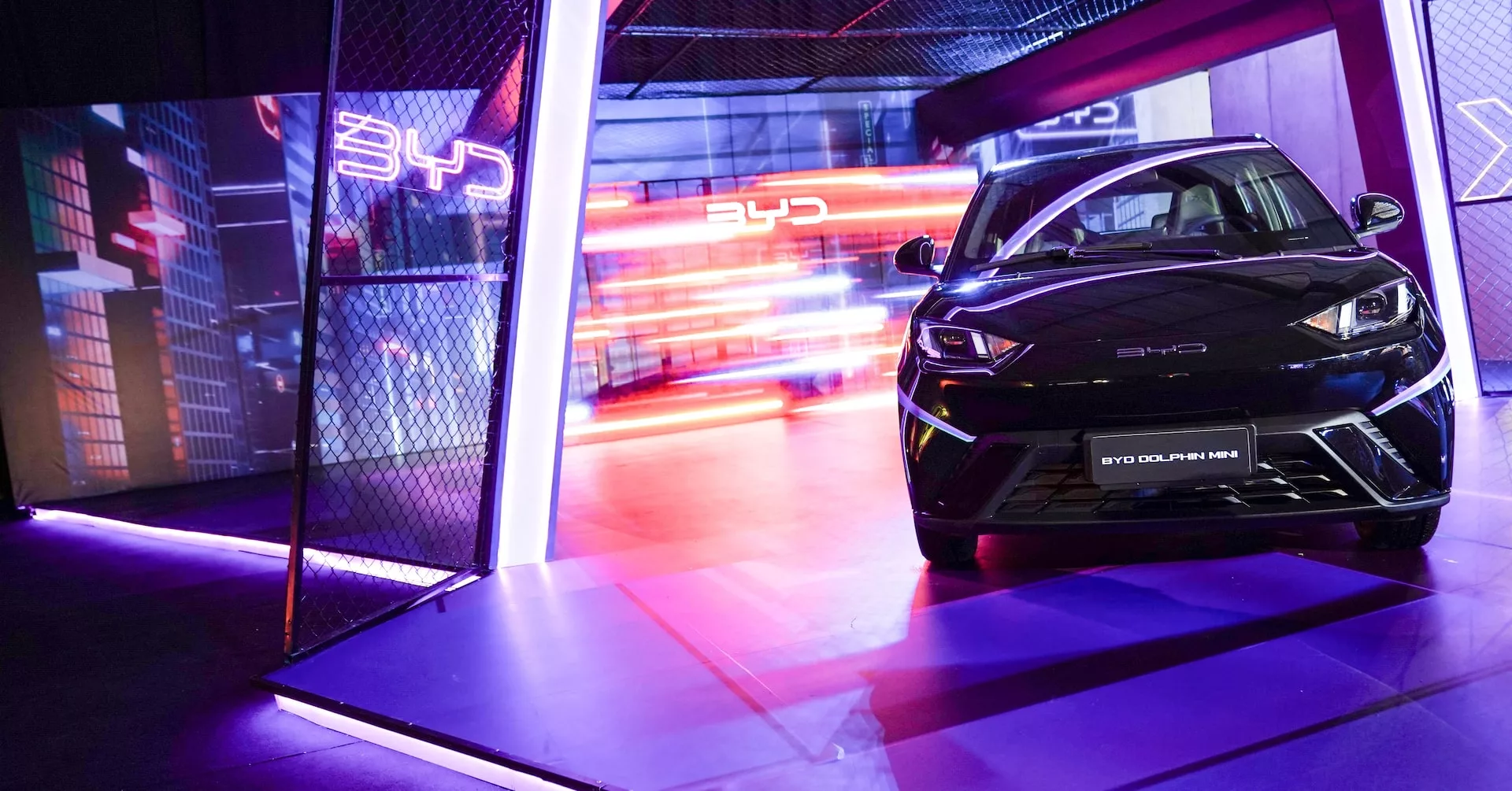
BYD’s recent announcement that it plans to build an electric pickup truck in Mexico transforms a hypothetical threat into a real one for incumbent U.S. automakers. A Mexican-made EV with sufficient North American-sourced parts could qualify for tariff-free entry to the U.S. market.
«If General Motors, Ford and Stellantis don’t have to compete against foreign companies that make EVs, they won’t make them. The market will go to BYD. And the Americans will lose market share like they did in the 1970s,» said Daniel Becker of the Center for Biological Diversity, an environmental group that has pushed the Biden administration for stronger climate policies.
It is not clear how China will respond to the Biden tariff moves. When Europe threatened to hike tariffs on Chinese-made EVs, China responded by threatening steep duties on French cognac.
GM President Mark Reuss last week downplayed the risk that Chinese authorities could make life more difficult for the Detroit automaker’s Chinese operations, which dipped into the red during the first quarter of this year. Two of GM’s biggest brands in China are U.S. names: Chevrolet and Buick.
«For us in China this has been a great advantage for us to be partnered so deeply for so many years with our JV partners,» SAIC (600104.SS) and Wuling (0305.HK), Reuss said. In China, Reuss said, Buick is seen as both an American and Chinese brand.
«It’s not as clean or as crisp as you might indicate from a more global, geopolitical standpoint,» he said.
Sign up here.
Reporting by Joe White in Detroit
Additional reporting by Chris Kirkham in Los Angeles and Nora Eckert in Detroit
Editing by Brian Thevenot and Matthew Lewis
Our Standards: The Thomson Reuters Trust Principles.