
BYD has indicated to analysts that it expects its overseas vehicle sales will reach 1.5 million units in 2026, 15% above the 1.3 million target it set in January. The guidance, delivered at a private briefing following worse-than-expected Q4 2025 results, was reported by Bloomberg and has yet to be confirmed publicly.
The upgraded forecast comes amid a less-than-ideal financial situation for the world’s highest-selling electric vehicle (EV) maker. BYD posted its first annual profit decline in four years, despite overtaking Tesla in its own lane for the first time in 2025. The automaker had outsold its US counterpart in previous years, albeit only when hybrid and plug-in hybrid offerings were taken into account.
Due in large part to the intense price warring that BYD itself exacerbated in 2025, Citigroup has estimated that the automaker’s Chinese vehicle sales will turn unprofitable in the first quarter of 2026. This leaves its international operations in the uncomfortable position of carrying the entire margin burden for its core automotive business.
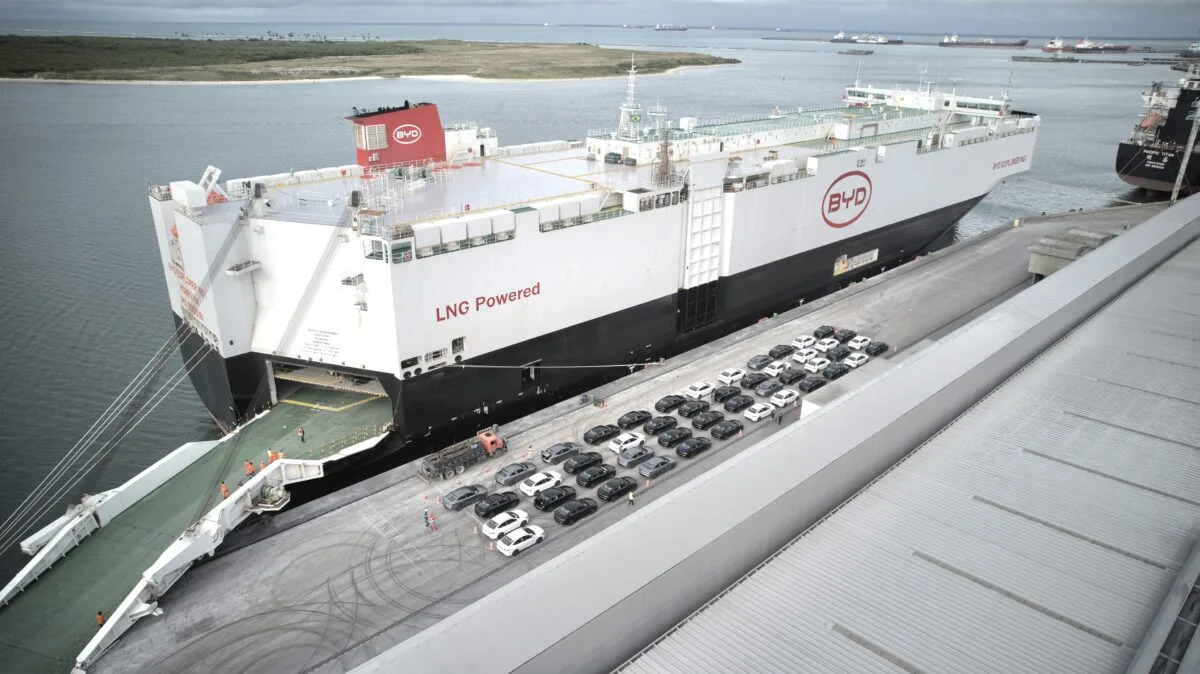
Fortunately for BYD, its global expansion has been going rather well so far. Overseas sales crossed one million units for the first time in 2025 against an original forecast of 800,000 units. Average sticker prices abroad are also, in some markets, substantially higher than in China, which in theory allows the automaker to command higher margins.
Reaching 1.5 million units will require BYD to do more than export its vehicles from Shenzhen, but expand its global manufacturing footprint significantly. To this end, plants have either opened or are under construction in Brazil, Hungary, Turkey, Thailand, and Indonesia. The automaker is also reportedly one of several Chinese automakers bidding to acquire a shuttered Nissan-Mercedes-Benz plant in Mexico.
Overseas production will help to shield BYD from geopolitical instability and ever-changing trade barriers; for example, the EU’s anti-subsidy tariffs, which added 17% to BYD’s European imports atop the 10% base fee in 2024. Since then, per-model price minimum negotiations have been introduced as an alternative to the flat tariff rates. The US remains entirely inaccessible to BYD thanks to its 100% rates on Chinese-made EVs, while Canada has reduced its rates for a fixed number of imported units annually. Reporting from earlier in March indicated that BYD is looking to quickly establish a national dealership presence to take advantage of this allowance.
Beyond the vehicle targets, BYD is preparing to deploy its ultra-fast charging infrastructure outside China from 2027, paired with a second-generation blade battery capable of charging from 10% to 97% in a landmark nine minutes. The charging network addresses one of the more persistent weaknesses in BYD’s international expansion: its overseas customers, unlike those in China, cannot rely on a meaningful infrastructure presence to support its best-in-class technology.