Until quite recently, Tesla was the king of EV sales on this planet. It grew from a boutique manufacturer of electric Roadsters in 2008 to a mass-manufacturer of battery-powered sedans, SUVs, and pickup trucks, with global sales reaching more than 1.8 million units by 2023. Then, in 2024, sales dropped for the first time. As of the end of 2025, Tesla sales were still dropping around the world, due to increased competition, expiring tax credits in the U.S., and political controversies surrounding its CEO, Elon Musk.
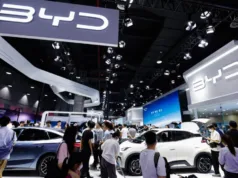
Now, the spotlight shifts to China’s BYD. BYD is now the best-selling EV manufacturer in the world, due, in part, to Tesla’s bad sales year in 2025. According to the BBC, BYD’s sales increased by an impressive 28% in 2025 to more than 2.25 million. Meanwhile, Tesla’s sales dropped by about 9% to 1.64 million, allowing BYD to pass Tesla like a racer passing a rival whose engine failed on the last straightaway before the checkered flag.
Things can change in the auto market, of course, and Tesla has recently reversed its sales slump in some areas of Europe, according to Investor’s Business Daily, so there is a glimmer of hope for the California-based company. Still, BYD currently looks like a steamroller crushing its competition globally, Tesla included, and there’s good reason to believe that will continue. Here are 10 reasons why BYD is taking over the EV world.
The Chinese government gives its carmakers advantages
BYD isn’t the only Chinese EV manufacturer that’s growing. In fact, there are over 100 carmakers in China, with EVs dominating the country’s market and increasingly being exported worldwide. While Chinese EVs (and Chinese cars in general) are virtually unknown so far in the U.S., China is selling tons of EVs in emerging economies, and, increasingly, European drivers love Chinese EVs. None of this happened by accident.
Around the turn of the century, the Chinese government concluded that its home-brewed carmakers would remain at a disadvantage in competing with foreign manufacturers of internal-combustion engines, given the foreign brands’ enormous head start. So, it concluded that China could get a quick jump off the starting line and dominate the new EV industry. In 2001, China’s Five-Year Plan prioritized EV development. In 2007, Wan Gang, a former engineer with Audi, became China’s minister of science and technology and pushed an intense focus on EVs.
As a result, China now consciously nurtures the country’s EV industry. It began subsidizing production of electric cars, buses, and other vehicles in 2009. It also restricts exports of rare-earth magnets used in building EVs and encourages domestic lithium mining. Producing these resources and components domestically gives Chinese EV makers an advantage and gives China an edge in its trade standoff with the U.S.
BYD benefits from vertical integration
Just as China consciously keeps every phase of EV manufacturing in country, BYD has adopted a philosophy of vertical integration. It’s so committed to keeping most of the production process in house that it even owns its own lithium mines to ensure it controls the materials for its batteries, insulating it against skyrocketing lithium prices. EV Magazine reports that batteries account for about 40% of each vehicle’s cost, so this gives BYD an advantage over competitors.
Overall, BYD produces about 75% of the components of each of its cars. In addition to batteries, it produces electric motors and electronic components. It even operates a subsidiary called BYD Semiconductor to build AI chips capable of 80 trillion operations per second. This makes it less dependent on chips from foreign manufacturers such as Nvidia. BYD uses AI in its advanced driver assist features, which are standard across all pricing tiers in its models, allowing BYD to gather vast amounts of data from every one of its cars on the road. BYD calls its system «Intelligent Driving for All.»
BYD also employs AI extensively on its factory floors. AI-powered neural networks perform quality control at a level beyond what can be done with manual inspections, catching even microscopic defects. AI also runs BYD’s robotics and warehousing, making its production process 97% autonomous. As a result, BYD models can undercut their competitors in price. This helps BYD to absolutely dominate the Chinese market against both domestic and foreign competitors.
BYD operates at a massive manufacturing scale
In the hypercompetitive Chinese EV market, BYD benefits from massive economies of scale. It operates mega-factories in China that are each capable of producing up to one million vehicles per year. It incorporates the lessons of its high-volume production into its factories elsewhere in Asia and in Latin America. This has been key to BYD’s ascent to become the world’s largest EV manufacturer. Plus, establishing factories in the countries where it sells cars helps to avoid tariffs, giving it an extra advantage.
According to Business Insider, some of BYD’s factories are almost inconceivably huge. If Tesla’s largest factory, located in Austin, Texas, is a «gigafactory» at 3.5 square kilometers or 1.4 square miles, then what word could describe BYD’s Zhengzhou plant, which sprawls over 22.5 square kilometers, or 8.7 square miles? BYD simply operates on a whole different scale than its competitors. Zhengzhou includes a test track, a nearly 100-foot sand incline, and a 230-foot pool for testing its vehicles. There’s even a low-friction drifting track made of basalt bricks that’s open to the public.
No wonder Chinese EV factory tours are so popular that tickets are given out in lotteries! By 2024, the Zhengzhou plant was already building 545,000 vehicles per year, despite having just commenced production in April of the previous year. By February 2025, this city-sized factory employed 60,000 workers. This scale enables BYD to sell EVs for as little as $8,000.
BYD enjoys stable, experienced leadership
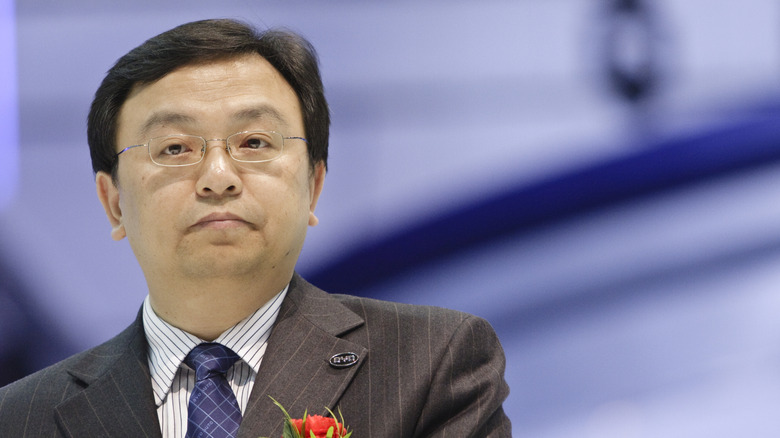
One of BYD’s biggest advantages is strikingly stable leadership, with the company having been led since its founding by its founder and CEO, Wang Chuanfu. Orphaned as a teenager, he rose from poverty to earn a Master’s Degree in battery technology, after which he was appointed general manager of a battery company at the age of 27. 2 years later, he struck out on his own, founding BYD to build rechargeable batteries. Within just a few years, BYD became one of the world’s largest mobile phone battery manufacturers.
BYD acquired a small car manufacturer in 2003 and opened BYD Auto, which, surprisingly, manufactured internal combustion vehicles at first. Its F3 soon became one of China’s most popular cars. Wang believed batteries could effectively power cars, and BYD launched its first EVs in 2008. After an injection of cash from Berkshire Hathaway, BYD expanded its electric vehicle operations, building its first bus. By 2024, BYD’s revenue reached $106 billion in U.S. dollars. Wang still holds a major ownership stake.
Wang’s long-term focus has been critical to the company’s growth. BYD has also maintained strong relationships with governments and its own business partners. 100 European cities use BYD buses, helping to build its credibility and brand recognition. Plus, Wang’s technical background helps BYD to maintain its lead in battery technology. In early 2026, BYD revealed an upgrade to its Blade Battery that can charge to almost full capacity in just 12 minutes, even in sub-freezing temperatures, with a driving range of 483 miles.
BYD is cost-competitive in emerging and mass markets
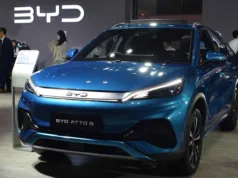
The market intelligence firm IDC attributes BYD’s new lead over Tesla to BYD’s entry-level models, such as the Dolphin hatchback and the Atto 3 SUV. The Dolphin’s price starts at less than $14,000 USD, while the Atto 3 starts under $16,000 USD in its home market. By comparison, the Tesla Model 3 Long Range Rear-Wheel Drive begins at just over $37,000 in China, and the Model Y’s entry-level trim costs a bit over $47,000.
The ability to build and sell cheaper models gives BYD an advantage throughout developing markets. IDC notes that Tesla seeks out high-end consumers and positions itself as a technology-driven company. By comparison, says IDC, «BYD has rapidly expanded in emerging and mass markets through highly cost‑competitive models, while gradually introducing higher‑end product lines in mature markets.»
According to the Detroit News, in South America, where many countries face $7-per-gallon gas prices, EVs have become particularly popular. In Uruguay, for example, battery-powered vehicles make up a quarter of all new car sales. BYD has a strong presence there, as does Tesla. Uruguay exempts EVs from import duties and has built out an extensive network of charging stations, helping to drive EV adoption. BYD assembles vehicles for the South American market in Brazil.
BYD offers superior battery technology
In general, China is becoming a global EV battery behemoth. But even within that context, BYD stands out because, as noted earlier, it started out as a battery manufacturing company more than 30 years ago, giving it a long-standing and deep expertise in the most important technology of an EV. In fact, BYD has staked a claim in the renewable energy field in general, developing solar power stations and its modular Energy Storage System (ESS). But its most publicly visible application of battery expertise is probably its vehicles.
Its Blade battery technology powers its EVs. This lithium iron phosphate (LFP) technology uses a proprietary cell arrangement to achieve high energy density and exceptional longevity in 50% less space than other companies’ batteries. The Blade technology also offers safety advantages, thanks to its cell structure and the stable LFP chemistry. In fact, even when punctured, overcharged to more than twice their capacity, or subjected to temperatures in excess of 570 degrees Fahrenheit, Blade Batteries won’t explode or catch fire.
In early 2025, BYD unveiled a new battery technology for its future models that will charge in only 5 minutes. This could help overcome one of the hurdles preventing more widespread adoption of EVs by making recharging as quick as filling up a traditional car with gas. This would also give BYD an edge over Tesla and its Superchargers. Of course, the BYD that charges in under 5 minutes won’t be challenging Tesla in America, since BYD has no sales presence in the U.S. yet.
BYD uses smart, efficient designs
BYD’s design and manufacturing are focused on building cheap but high-quality vehicles using numerous smart design choices. We’ve already noted the company’s use of lithium iron phosphate to build cheaper batteries, as well as its vertically integrated, in-house manufacturing processes. However, BYD goes far beyond those examples of efficiency in order to build EVs that cost as little as one-third the price of American-built EVs in the Chinese market, such as the $12,000 Seagull (known as the Dolphin Surf in Europe), while still being better vehicles than one would expect at this price point.
One area of efficiency at which BYD excels is weight savings. Batteries are heavy, and EVs are some of the heaviest vehicles on sale today, but BYD has learned to build them lighter. A PBS News article notes the Seagull weighs 2,734 pounds, or approximately 900 pounds less than a Chevrolet Bolt. As an example of weight-saving design, the Seagull sports only one windshield wiper. That may seem small, but hundreds of smart design choices like this add up to substantial weight savings.
According to EVWorld, BYD has even learned to integrate the battery into the car’s structure using what the company calls Cell-to-Body (CTB) technology. While other manufacturers drop a battery into a pre-built chassis, BYD has turned the top cover of its Blade batteries into the floor pan of the vehicle. This not only saves weight but also increases torsional stiffness. It does create challenges with maintenance and recycling, but lighter weight translates into lower cost and greater range. This construction technique debuted in the BYD Seal sedan.
BYD benefits from lower labor costs
BYD can take advantage of low labor costs in its home market of China, and labor costs are also a factor in where it establishes its manufacturing operations outside of China. According to Statista, the average annual wage in China’s manufacturing sector in 2022 was 97,500 yuan, which converts to about $13,400. By comparison, ZipRecruiter reports that the average U.S. manufacturing worker earns just a tick under $35,000 in 2026.
An article on Marketplace bears this out, quoting a BYD assembly worker named Mr. Wu who earns 7,000 yuan, or about $990 USD, per month. However, to make that much, Wu works copious overtime, totaling 67 hours per week and averaging $3.60 per hour. Marketplace notes that a Chinese workers’ rights group accuses automakers, including BYD and Tesla, of exploitative labor practices in China. Still, workers come to BYD’s recruitment offices from all over China, as the company’s jobs are still considered good by Chinese standards.
BYD seeks advantageous labor arrangements at its foreign plants as well. A 2025 article on CnEVPost, a website covering the Chinese EV industry, reports that BYD delayed opening a new plant in Hungary in part because of cost considerations. The plant in Szeged is still expected to begin production in 2026, but at a low volume. Instead, BYD has shifted to a plant in Turkey, which offers lower labor costs. The Turkish plant is expected to produce 150,000 cars in 2026.
BYD offers a diverse model range
So far we’ve examined BYD’s strategy of expanding sales by offering cheap, low-end EVs. However, automakers seldom flourish in the long run strictly by offering entry-level models. BYD offers a full model range and even owns three luxury brands: YangWang, Denza, and Fang Chen Bao. Denza dates back to a 2010 collaboration with Mercedes-Benz, although it’s now wholly owned by BYD. It sits between the BYD brands and ultra-luxe YangWang on the branding hierarchy and just launched in Europe in 2025. It aims to compete with models from the German carmakers
By comparison, YangWang is in a league of its own within China. Wired reports that the $149,000 YangWang U8 model offers some amazing capabilities. This 4-ton, 1,200-horsepower SUV can run from 0 to 62 mph in only 3.6 seconds. And, should the roads become flooded, the U8 can not only float but also travel on water (in emergencies only!) by spinning its wheels. A new model called the YangWang U9 Xtreme is the new fastest car in the world at 308 mph.
Fang Chen Bao, which BYD translates into «Formula Leopard,» offers a «personalized car life» through a vehicle lineup that ranges «from off-road vehicles to sports cars,» according to the company. Within China, its vehicles such as the Ti3 and Ti7 crossover SUVs are labeled as Fang Chen Bao models, but for export, they carry BYD badges. Both vehicles feature the upgraded second-generation Blade Battery with the 5-minute Flash Charging capability.
BYD has global expansion plans
BYD enjoys a number of advantages that should help it increase its lead over Tesla in worldwide auto sales. As The Wire China notes, BYD is releasing a «tsunami of different models covering different segments,» while Tesla has a more limited model range. BYD also manufactures hybrid vehicles and buses, two segments in which Tesla doesn’t compete. With models ranging from budget economy cars to supercars, BYD’s range is simply more extensive and complete than its American rival’s.
The publication also notes that BYD has cut the time it takes to get a new model to market down to 24 months, which combines with its vertically integrated production to give it an agility that’s tough to match. Further, since Western manufacturers have traditionally treated EVs as luxury goods, BYD’s budget offerings give them an entry point into the market with consumers across the world, including in developing nations.
This leaves tariffs as one of the biggest barriers to BYD’s worldwide expansion, as the U.S. and the European Union have put up barriers to try to protect their domestic manufacturers. However, Europe is considering lifting Chinese EV tariffs, as is Canada, thus opening up new markets. Surveys show that if the U.S. lifted tariffs, there may be a strong market here. In particular, 69% of Generation Z would consider buying Chinese cars, according to a poll by Cox Automotive.