Support CleanTechnica’s work through a Substack subscription or on Stripe.
In the US, the Ford F-150 has been the best-selling truck for 48 consecutive years and the best-selling vehicle overall for the past 43 years. Americans love their trucks. Much of that love has little to do with actually carrying cargo in the bed. However, with ongoing construction on my street, I am reminded that some truck users prioritize function. Looking through materials for BYD’s new T4, it raised a question: What if you actually needed a truck to carry stuff?

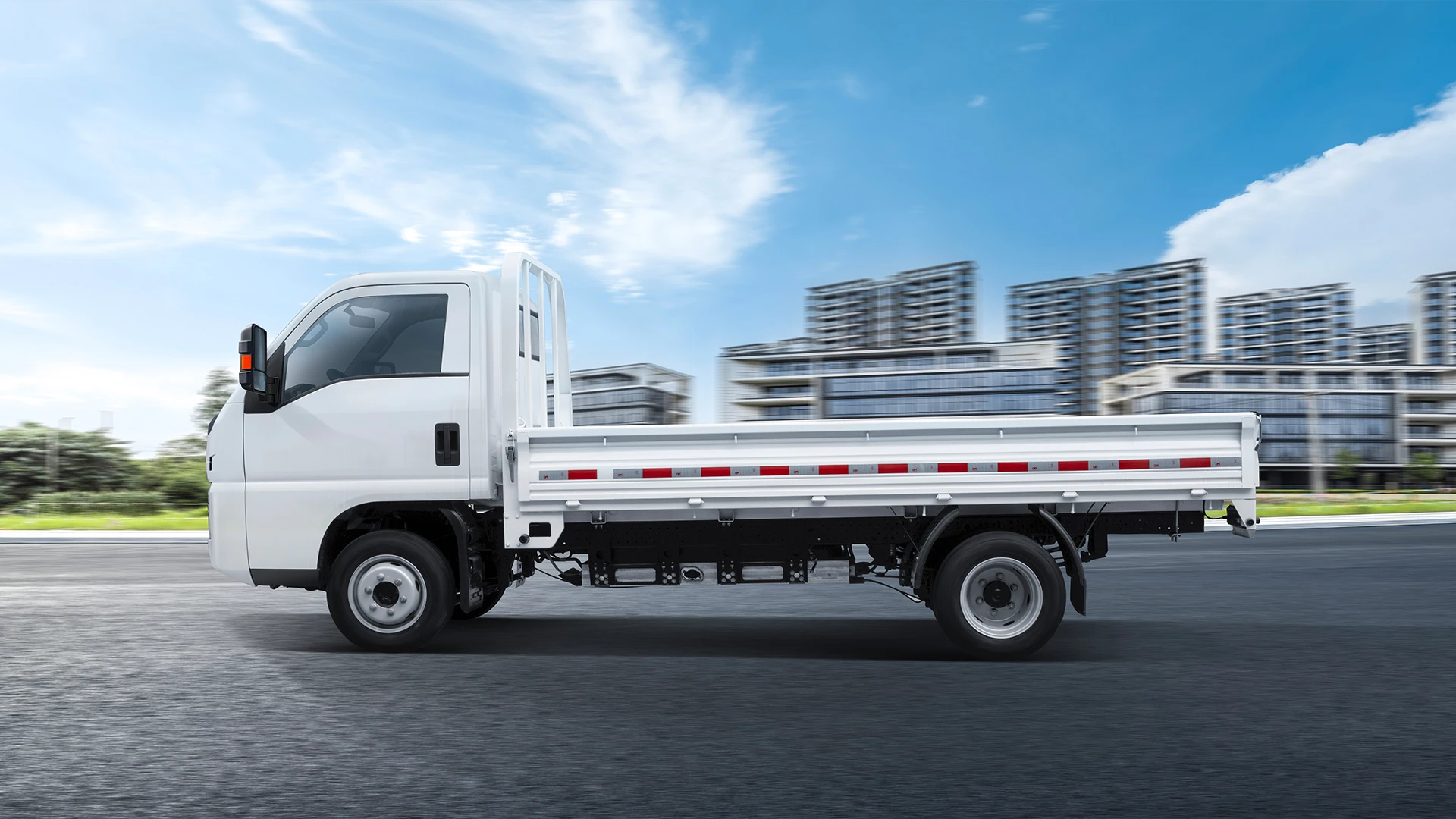
Overall, the BYD T4 has a GVWR of 3.495 metric tons, or 7705 lb, which would technically make it a Class 2 Truck in the US. Being Class 2 would make certification easier, as the regulations are different than for passenger vehicles (even though many Class 2 trucks, like the F-250, are used as passenger vehicles). Payload comes in at 1545 kg for the flatbed (3406 lb), which is roughly 50% more in comparison to the most capable F-150 and twice as much as the most popular model. The bed of the T4 measures over 12.6 feet long inside with the sides folded up. That bed is also over 50% longer than the 8’ bed F-150 and over twice as long as the most popular version, while the T4 is shorter overall. And, because it is a flatbed, the bed width is not restricted by wheel wells, making the bed floor ~50%. At over 6’ wide, that’s wider than the most popular F-150 truck bed is long. A 15 cubic meter cargo box is also available, which is in line with the largest Jumbo/Extended Frame high-roof version of the Transit van, but in a much smaller footprint.
The rear axle uses dual 185R15LT tires on each corner. At only 26.7” tall, those tires are inexpensive to replace and allow for a relatively low load floor, with loading made easier by bed sides that fold down. Dual tires also provide a level of redundant safety and make it technically 4WD, although I wouldn’t take it extreme rock climbing.

From a performance perspective, the new T4 is a bit surprising for what it is. The truck can climb a 35% grade fully loaded. It can also pass the standard “Moose Test” at 70 km/h unloaded and didn’t do much worse with a full payload in the bed at 68 km/h. Not only did it do better than many full and mid-sized trucks that failed the test, but also better than cars like the BMW M4, Porsche Macan, and Mustang Mach-E. For a solid-axle, leaf-sprung work truck hauling 1.5 Tons, that is impressive.
Much of that performance has to do with the application of multiple electronic traction and safety systems with acronyms like ESC, EBD, HHC, EPB, etc. In combination with four-wheel disk brakes, BYD claims a 12 m (39 foot) reduction in braking distance with a full load. While crash testing is often not required for vehicles in this class in some markets, BYD crash tested this truck to European R29 standards. Safety is aided by a cab that is 64% high strength and ultra-high strength steel, borrowing construction technology from their passenger cars.

Efficiency is rated at 5.5 km/kWh, which isn’t groundbreaking by EV standards, but is more efficient than many electric pickups with less payload. The 2C battery charge speed isn’t overwhelming, but it is useable to recharge over a lunch break. Meanwhile, direct refrigerant thermal management maintains performance under a wide range of temperatures.
BYD calls this a “sedan truck,” claiming similar comfort to a sedan. Overall, the level of fit and finish, comfort, technology, and refinement appears to exceed vehicles in this class. However, while it may be better than the category norm, don’t expect Yang Wang U7 opulence. BYD also claims that the design is inspired by the Arc de Triomphe, but it still clearly prioritizes function over form.
That said, the truck has limitations. With a 150 kW (201 hp) motor, it is geared for torque over speed. Top speed is limited to 90 km/h (56 mph), which reflects typical Chinese and European speed limits for this type of vehicle. If it was to come to the US, some changes would need to be made. It is also designed for hauling instead of towing, with no tow rating listed. At 330 km+ range from a 62.3 kWh battery, it is good enough for many in-town uses, but not ideal for regular road trips across the country. It also does not have much lockable storage standard — although, aftermarket underbody cargo boxes are widely available for this type of truck. Also, it is only a two-seat vehicle. However, I keep thinking it would be a great platform for an e-Jeepney. (What do you think, Raymond?)
However, it offers a lot of utility within its limitations. The Technology Edition comes in at 98,800 RMB, or ~$14,000 USD. The Fortune edition comes in 3000 RMB ($450 USD) lower, but that makes major sacrifices in comfort, technology, and safety features for a relatively small reduction in price. BYD also offers a 10-year, 800,000 km (497,000 mile) warranty on the motor, drive electronics, and battery, as well as several insurance, finance, and fleet management benefits. Overall, it costs less than half of the cheapest F-150 but offers greater payload capacity and much lower operating costs. If you were to go up to an F-250 to get similar payload or to a Lightning to reduce fuel costs, the price multiple would expand.
A More Efficient Choice for People Who Need the Payload
The reason why many Americans buy a pickup truck often has little to do with hauling stuff. For some, towing is the priority. However, much of the value comes from psychological needs more than practical needs. While an MPV might do a better job transporting a family, having a pickup looks more macho. A pickup often helps people in corporate jobs feel more in touch with their blue-collar roots. A truck might help people feel like they fit in with their peers. For some, the big vehicle is likely compensating for feelings of inadequacy, especially for those “rolling coal.” Many feel like a truck is safer, even though the evidence of that is not as strong as the perception. Perhaps most importantly, a pickup helps to alleviate “what if” uncertainties. They may never drive off road, tow across country, carry a load of gravel … but “what if?”
However, for some people, a truck is a tool. A tool that better meets their needs while reducing costs is valuable to them. That tool enables greater value from its use than from its purchase, creating an economic multiplier effect. Parks departments, utilities, road crews, landscaping, and construction companies could use a functional truck like a T4. With the cargo box, the T4 would also be a good fit for local deliveries. It would be a good fit for hardware store hourly truck rental, giving people a capable vehicle for the few times that they need it. If delivery and rental services become widely available, some people might stop wanting to carry around a less-capable bed on their commuter vehicle.
Even though it may not be the vehicle that you would personally choose, it would be a good option for many use cases that need to haul cargo. Some people might still choose to stick with their preferred domestic brand. Other people might choose a PHEV pickup, like a BYD Shark, if given the option. However, many people would appreciate the freedom to choose what best fits their needs.
Some readers might remember that BYD had a commercial vehicle plant in California and think that we could get this truck. However, BYD was forced to spin off that division into Ride. In looking at their current lineup, the vehicles being offered no longer represent BYD’s latest global busses, commercial vehicles, and technologies. Unless the current trade environment changes, I wouldn’t expect this model here anytime soon.
As a refresher for why BYD had to spin off Ride: the US government classified it as a Foreign Entity of Concern. The justification was that BYD was building transportation infrastructure, and any transportation infrastructure could theoretically be used to transport troops. In BYD’s case, the infrastructure was relatively low-speed, short-distance monorails in dense urban areas. They are similar to the monorails at Disney World, but BYD’s monorails are much farther away from military installations than the theme park. It begs the question: Do foreign tourists cower in fear at the military threat of Mickey’s monorails?
Of course, that is ridiculous, as is the overall situation. But it serves as a reminder: Protectionists are not looking to do what is fair or right. They are not looking to even come up with a good justification to be selfish. They are simply looking for an excuse to block competition and prop up legacy industry. And, with the WTO Appellate Body and rules-based trade crippled, there is no international third party to limit abuse. Consumers pay elevated prices for goods. Their freedom of choice is undermined, including the ability to choose vehicles that better fit their needs. And the transition to electrified transportation is slowed, with long-lasting environmental impacts.
However, commercial vehicles like the T4 have perhaps the best hope of making it here one day. We would not need a full-scale rollback of protectionist measures. It would take just enough stabilization and reduction to make supplying vehicles to meet the potential customer base viable. Containers could quickly be filled with cabs, chassis, powertrains, and batteries for local assembly. Heavy, bulky parts, like cargo boxes, could use existing local supply chains. With enough scale, localization could expand.
With any luck, the title of this article might need a revision in the coming years.
Sign up for CleanTechnica’s Weekly Substack for Zach and Scott’s in-depth analyses and high level summaries, sign up for our daily newsletter, and follow us on Google News!
Have a tip for CleanTechnica? Want to advertise? Want to suggest a guest for our CleanTech Talk podcast? Contact us here.
Sign up for our daily newsletter for 15 new cleantech stories a day. Or sign up for our weekly one on top stories of the week if daily is too frequent.
CleanTechnica uses affiliate links. See our policy here.
CleanTechnica’s Comment Policy