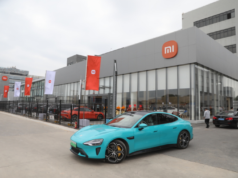
Xiaomi has recruited Kong Yanshuang, formerly Tesla’s General Manager for the China region, to take charge of its growing automotive sales operations. The hire signals a significant professionalization of Xiaomi’s EV retail strategy as the company targets 550,000 deliveries in 2026.
Kong joined Xiaomi in early March and is currently in a work handover phase, replacing Li Xiaorui, the former director of Xiaomi’s automotive division, according to a report from Jiemian News.
Kong’s Tesla career
Kong Yanshuang was a core executive in Tesla’s China sales organization for several years. She initially served as General Manager of Tesla’s South China region, where she oversaw the expansion of Tesla’s retail and service presence across cities like Guangzhou and Shenzhen, as well as into lower-tier markets — a critical part of Tesla’s strategy to grow sales in China.
She later rose to the role of China Regional General Manager, a position she held during 2022-2023, during which she frequently served as a spokesperson for Tesla China at media briefings covering Shanghai Gigafactory milestones and new model launches. In May 2024, as part of a broader management reshuffle at Tesla, Kong was transferred to lead sales for the Shanghai region.
Kong is not the only Tesla veteran to recently join Xiaomi’s auto division. Another former Tesla employee, identified as “Eason,” joined Xiaomi’s Strategy Department to support CEO Lei Jun directly. Industry sources indicate that multiple Tesla executives have made the move to Xiaomi in recent months.
Electrek reached out to Xiaomi for comment and will update this article if we hear back.
Why Xiaomi needs Tesla’s sales expertise
The timing of the hire makes sense. Xiaomi’s EV business has grown at a remarkable pace, the company delivered over 410,000 vehicles in 2025 and crossed 600,000 cumulative deliveries by February 2026, but that explosive growth has exposed gaps in its retail operations.
According to a Xiaomi dealer cited by 36Kr, the company “only focused on product and brand building in the past two years and ignored the personal value of front-line salespeople.” Tesla-trained managers who arrived since late 2025 have already started implementing a more data-driven approach, focusing on “processes, data, and the management of people, goods, and locations” to improve frontline performance.
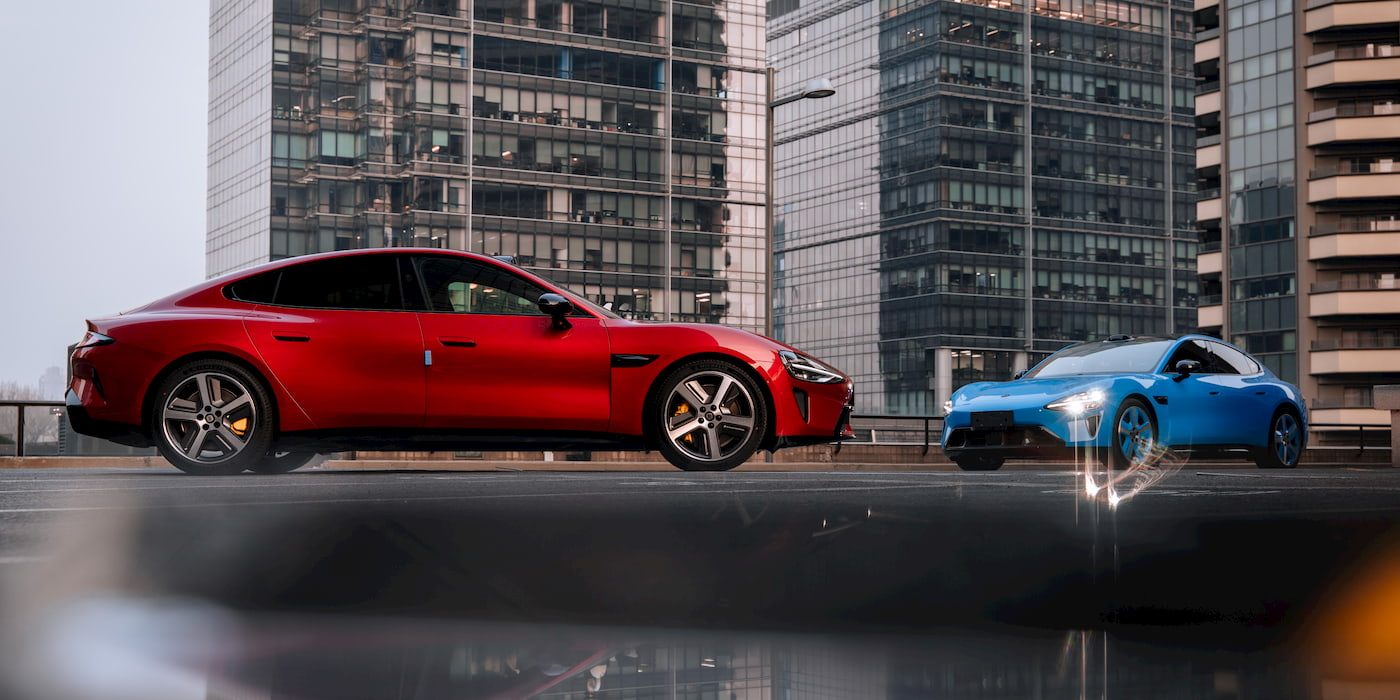
The impact of the product side is clear. Xiaomi’s refreshed SU7 sedan generated over 15,000 orders within 34 minutes of its launch and has racked up more than 30,000 locked orders. The next-gen SU7 now offers 902 km of range and undercuts Tesla on price, starting at 229,900 yuan (~$33,000). The company’s YU7 SUV outsold the Tesla Model Y in China in January.
But converting product hype into sustained, profitable sales at scale requires the kind of retail discipline that Tesla has spent years building in China, and that’s exactly what Kong brings to the table.
Competitive context
The hire comes amid an increasingly competitive Chinese EV market. Tesla’s China sales rebounded 35% year-over-year in the first two months of 2026 to 127,728 units, but the automaker still fell out of the top 10 in market share in January. BYD remains the dominant player with 19.1% of the NEV market in February, while Tesla held 8.2%.
Xiaomi, for its part, has ambitious plans beyond the SU7 and YU7. The company plans to launch four new models in 2026, including an executive SU7 variant and two extended-range SUVs. It also confirmed 2027 as its first year of overseas expansion, with plans to enter Europe.
Electrek’s Take
This is a smart move by Xiaomi, and it reveals something important about where the company is in its evolution. Building a great EV is one thing, Xiaomi has proven it can do that, but building a sales machine that can sustain 550,000 deliveries a year and beyond is a completely different challenge.
It’s telling that Xiaomi’s retail system was reportedly designed with Tesla’s model as a blueprint from the start, and that many of its provincial and regional managers already came from Tesla. Bringing in Kong Yanshuang to run the whole show is just the logical next step.
Though Xiaomi had a great advantage over Tesla thanks to its existing retail presence in China for its electronics division.
For Tesla, this is part of a broader pattern. The company has effectively become a training ground for Chinese EV talent, with executives leaving to join domestic competitors that are increasingly eating into Tesla’s market share in China. It’s the kind of brain drain that’s hard to quantify but clearly has an impact.
The question now is whether Xiaomi can maintain its momentum as growth inevitably normalizes. Having someone who built Tesla’s sales infrastructure in China is a pretty good insurance policy.