
The Pentagon has concluded that Alibaba and BYD should be added to a list of companies with alleged connections to the Chinese military, two months before Donald Trump is expected to meet Xi Jinping in Beijing.
The defence department sent its required updated “Chinese Military Companies” list to the Federal Register on Friday morning. However, in a move that has led to confusion, the PDF was abruptly removed from the site following a withdrawal request from an unnamed government agency.
A defence official said the Pentagon would release the new list next week.
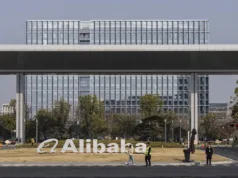
The decision to include Alibaba on what is formally known as the 1260H list comes three months after the FT reported that US intelligence agencies believed the ecommerce giant posed a threat to national security.
The Pentagon will also add BYD, the world’s biggest electric-car maker, and Baidu, the search engine, to the 1260H list, which is mandated by Congress.
While US-China trade tensions have eased since Trump and Xi met in South Korea in October, the addition of the marquee Chinese groups to the list will trigger fresh tension ahead of their summit in April.
In another point of friction, the FT reported last week that the Trump administration is compiling a package of arms sales for Taiwan which could total $20bn after announcing a record $11.1bn package in November.
Craig Singleton, an expert on US-China relations at the Foundation for Defense of Democracies think-tank, said the addition of the Chinese companies to the list was “mutually assured disruption in practice”.
“Even as tariff threats have cooled, tech, capital and security frictions keep heating up,” he said. “Releasing the list weeks before a leader-level summit shows deliberate compartmentalisation: stabilising trade talks while sustaining pressure in national security lanes.”
Henrietta Levin, a US-China expert at the CSIS think-tank, said Beijing would be upset but the move was unlikely to derail the Trump-Xi summit.
“Chinese officials may lament how the administration is not doing enough to foster a ‘positive atmosphere’ ahead of the anticipated summit between Trump and Xi this spring,” Levin said. “But ultimately, Beijing is confident the results of this summit will favour Chinese interests, and they will not want to miss the opportunity to extract concessions from Trump.”
When the Pentagon makes a “Chinese Military Companies” designation, it signals that the US believes the groups have direct ties to the People’s Liberation Army or are involved in China’s military-civil fusion programme, which requires them to share technology with the Chinese military.
Inclusion on the Pentagon list does not have legal implications for most of the companies. But it creates reputational risk for them, particularly because it signals that the US may take punitive action in the future.
However, the Pentagon also put Chinese biotechnology company WuXi AppTec on the list, which will affect its operations in the US.
Under the Biosecure Act, which was passed in December, the federal government is restricted from doing business with “biotechnology companies of concern”, which includes any entity on the 1260H list.
The Pentagon does not publicly disclose many details about why a company has been added to the list. But the China committee in the House of Representatives last year called for WuXi to be added, saying its management committee included members of the PLA’s Academy of Military Medical Sciences and PLA-run hospitals.
Alibaba is one the highest-profile changes to the list. The FT reported in November that US intelligence believed it was providing technical support for Chinese military “operations” against targets in America.
According to a White House security memo obtained by the FT, Alibaba also allegedly provides the Chinese government and PLA with access to customer data. Alibaba strongly rejected the allegations in the memo.
On Friday, Alibaba said there was “no basis” to conclude that it should be added to the list. “Alibaba is not a Chinese military company nor part of any military-civil fusion strategy. We will take all available legal action against attempts to misrepresent our company.”
Baidu said the Pentagon claim was “entirely baseless and no evidence has been produced that would prove otherwise”. It said it would “not hesitate to use all options available” to be removed from the list.
BYD said any proposal to put it on the list was “completely unfounded”. “BYD is not a Chinese military company, nor has it participated in any military-civil fusion strategy.”
WuXi TechApp did not respond to a request for comment. The White House did not immediately respond to a request for comment about why the Pentagon list was abruptly removed from the Federal Register.
Additional reporting by Ryan McMorrow in Beijing, Will Langley in Guangzhou and Kana Inagaki in London