A burgeoning “gray market” for electric vehicle battery recycling is reportedly thriving in China, with unlicensed workshops handling an estimated 75% of the nation’s retired power battery packs. These illicit operations are generating substantial profits, estimated at around 10,000 yuan (1,400 USD) per vehicle, while posing significant environmental and safety hazards and undermining the legitimate recycling industry. As China anticipates a massive wave of EV battery retirements, the unregulated sector’s dominance presents a critical challenge for sustainable development.
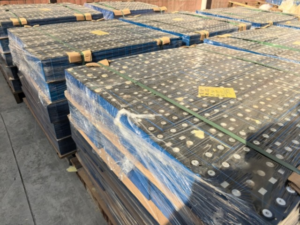
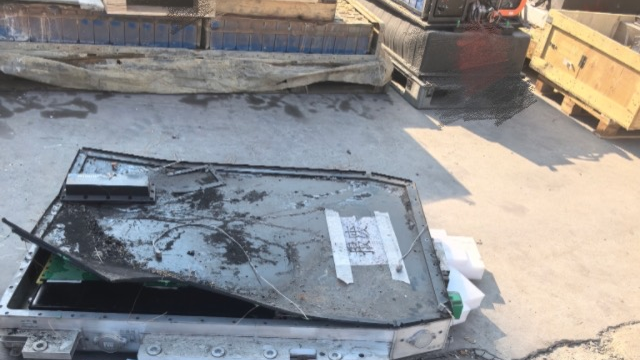
An investigation by Chinese media Yicai uncovered one such clandestine workshop hidden near the Qingcaowo Industrial Park in Huizhou, Guangdong. Operating without a company name and under strict gate control, the facility revealed over 100 disassembled battery packs scattered on the concrete ground, some pried open, others alongside small cutting machines. Inside, workers were observed testing cells, dismantling packs with drills, re-packaging “beautified” cells with new films, and coordinating sales.
A lucrative, unregulated business model
Wu Lei (pseudonym), the workshop’s manager, detailed a simple yet highly profitable process: acquiring used EV battery packs nationwide, disassembling them into individual cells, testing their quality, and then sorting them. High-quality cells (retaining over 50% of their original capacity) are re-filmed and resold, often to manufacturers of two-wheelers, three-wheelers, power banks, and energy storage systems. Lower-quality or damaged cells are broken down to extract valuable metals like nickel, cobalt, and lithium.
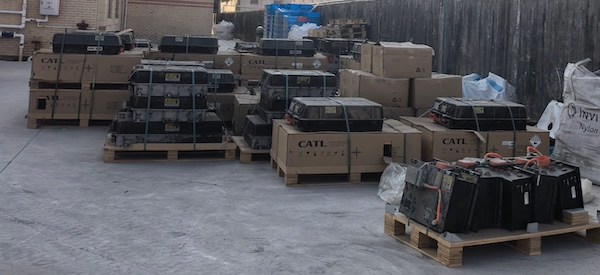
Wu Lei’s phone constantly rings with offers for battery packs, which he collects using tow trucks. Sources for these batteries include insurance companies, auction houses, ride-hailing firms, and individual car owners. He claims to have processed nearly 1,000 battery packs in a single day. While some dismantling occurs on-site, often with hazardous practices like metal shavings scattering and workers lacking protective gear, complex packs are sent to external facilities.
The financial incentive for these illicit operations is substantial. Small workshops can acquire batteries at 0.5-0.6 yuan (8 cents)/Ah and resell “refurbished” cells for 1 RMB/Ah. For a 100Ah cell, this translates to a 50 yuan (7 USD) profit. A typical EV with a 600 km range might contain around 200 such cells, yielding approximately 10,000 yuan (1,400 USD) in profit for the workshop per vehicle. This lucrative margin allows them to offer up to 30% more for retired batteries than legitimate “white list” companies, effectively “intercepting” the supply.
This gray market thrives despite the official recycling capacity. According to the “White Paper on China’s Lithium-ion Battery Recycling, Disassembly, and Cascade Utilization Industry (2024),” while China’s nominal battery recycling capacity reaches 3.8 million tons, “white list” enterprises only processed 623,000 tons, indicating a capacity utilization rate of less than 18%. In stark contrast, non-“white list” entities, particularly small workshops, account for 75% of actual waste battery recycling. Setting up a small workshop costs less than 600,000 yuan (85,700 USD), yet can generate millions in profit.
Environmental and safety hazards
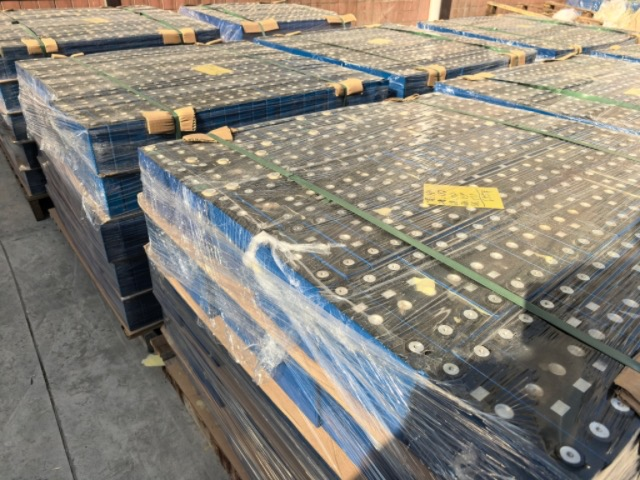
The lack of proper procedures in these workshops poses severe risks. Workers are often seen without safety equipment, and hazardous materials are handled carelessly. Crucially, these workshops lack the advanced technology to achieve high recovery rates for valuable metals.
While legitimate companies like CATL can achieve lithium recovery rates exceeding 90% and nickel, cobalt, and manganese recovery rates above 98%, small workshops can only perform basic disassembly and produce “black powder” – a raw material that still requires processing by larger, specialized facilities. This inefficient and unsafe processing leads to resource waste and environmental pollution.
Furthermore, these operations often lack traceability, making it impossible to track the origin or ultimate fate of recycled batteries. Wu Lei even admitted to substituting cells of different capacities when inventory was short, raising concerns about the quality and safety of these “refurbished” products.
Industry response and new regulations
China is entering a phase of large-scale EV battery retirements, with an estimated 820,000 tons by 2025 and over 1 million tons by 2030. In response to the growing problem, new regulations, the “Interim Measures for the Management of Recycling and Comprehensive Utilization of Waste Power Batteries for New Energy Vehicles,” are set to take effect this April. These measures aim to strengthen information traceability, recycling management, and comprehensive utilization, promoting a “production-recycling-regeneration” industry synergy.
However, many small workshop owners remain confident in their ability to secure supplies, driven by the “highest bidder wins” market dynamic. Feng Siyao, Deputy Secretary-General of the Energy Storage Application Branch of the China Chemical and Physical Power Supply Industry Association, noted that the low utilization rate of legitimate recyclers stems from a mismatch between “capacity expansion” and the “supply of regulatable retired batteries.” He warned that small workshops not only “grab materials” but also create systemic risks, including price inflation and disruption of battery traceability. Sun Xudong, Project Manager at the China Society of Automotive Engineers, added that these workshops “comprehensively squeeze the survival space of compliant enterprises.”
Legitimate “white list” enterprises, despite investing tens of millions, struggle with profitability due to the fierce competition from the gray market. Companies like Green Recycling (Grimm) anticipate significant growth in their recycling volumes, expecting to process 50,000 tons by 2025, representing about 10% of the legitimate market. They hope the new policies will improve the situation.
The path forward
Experts quoted by Yicai suggest a multi-pronged approach to combat the gray market: strengthening policy oversight, optimizing market competition mechanisms, and upgrading technology to expand legitimate enterprises’ profitability.
This includes accelerating the new regulations into departmental rules, clarifying criminal liabilities for illegal recycling, and establishing a “red/yellow card” dynamic exit mechanism for non-compliant recyclers. Suggestions also include learning from the EU Battery Law by linking battery recycling to personal credit and vehicle registration, requiring consumers to provide official decommissioning certificates for vehicle deregistration, thereby channeling retired batteries to legitimate channels.
The Ministry of Ecology and Environment has already conducted over 8,300 inspections on waste power battery dismantling and processing units. They emphasize that the recycling of waste power batteries is crucial for personal safety, property security, and environmental protection, urging consumers to actively support the new regulations and avoid handing over batteries to unregulated channels.

Follow us for ev updates