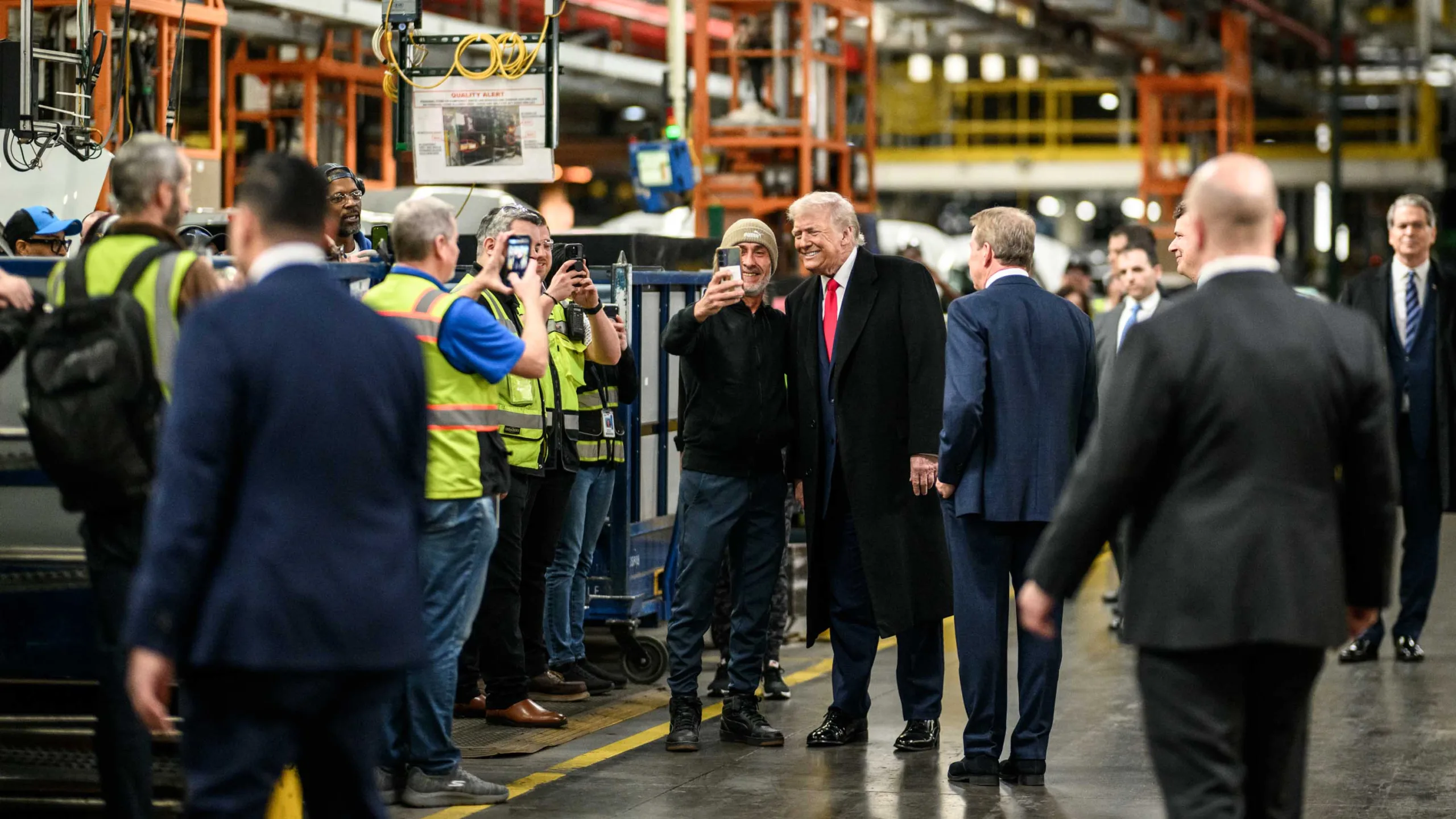
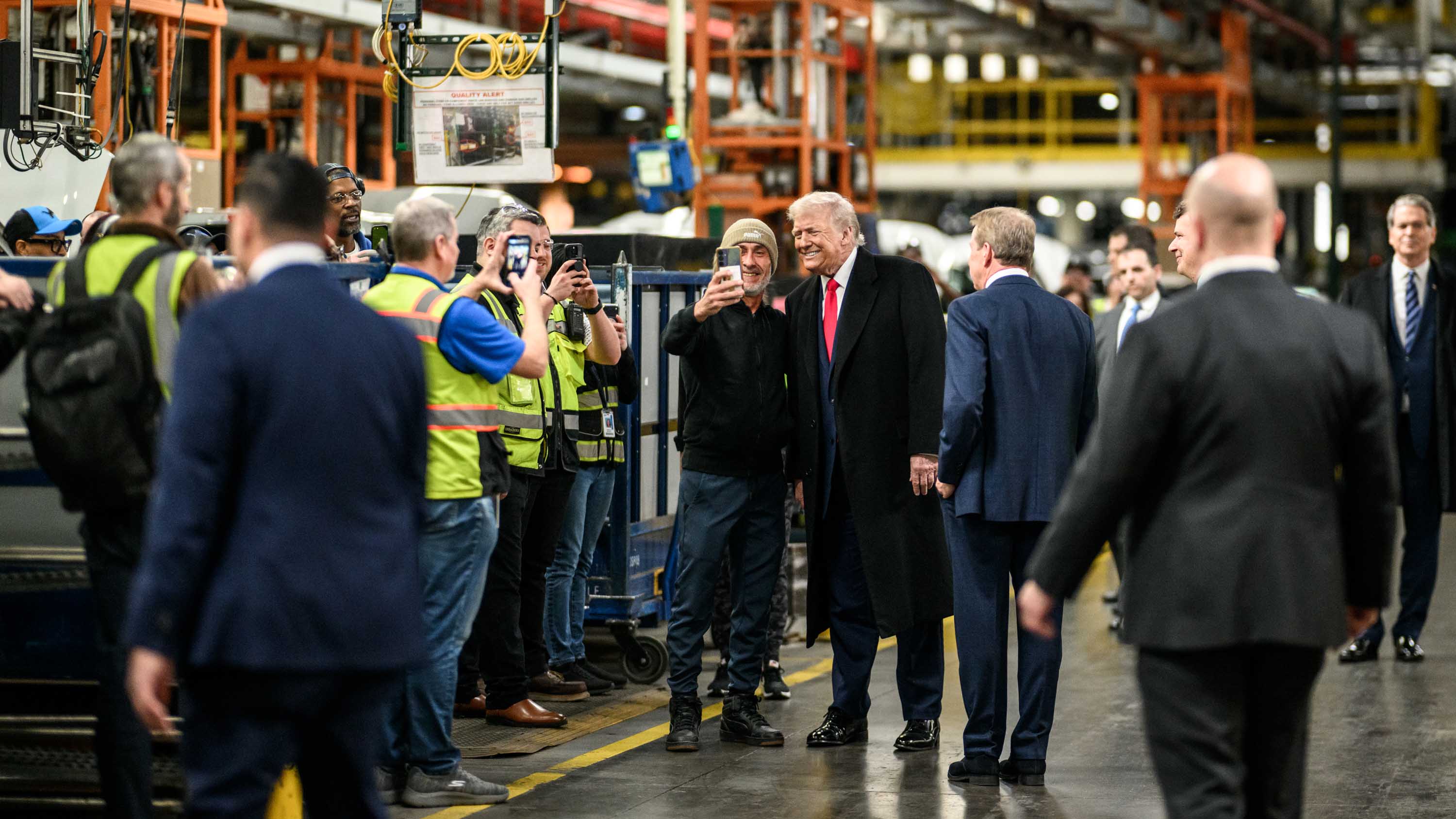
US President Donald Trump commented on Chinese electric vehicles entering the United States, during his visit to Ford’s Dearborn factory on Tuesday.
Questioned about whether he would “ever allow Chinese autos into the US,” the President guided the answer towards the tariffs announced last April — which he said hours later are helping Michigan automakers.
“Well, as you know, we have a tariff on Chinese autos, and in Europe, China’s taking over the auto business,” Trump said. “I wouldn’t say it’s a nice statement, but that’s the way it is.”
In the US, on the other hand, “we have 100% tariffs on any car coming in from China,” he said.
Last April, the President announced a new set of import duties, with rates varying by country.
In the months that followed, trade tensions escalated as China imposed retaliatory tariffs on US goods, and the US responded with additional countermeasures.
Starting April 3, 2025, all imported vehicles and auto parts in the US face a 25% base tariff, regardless of the country of origin.
This is on top of the 100% already set by the Biden Administration on Chinese electric vehicle imports.
Chinese Exports
The Chinese government published an export report on Wednesday revealing that overall exports to the US have dropped 20% in 2025.
In contrast, exports to Africa surged 26%, to Southeast Asian countries 13%, to the EU 8% and to Latin America 7%.
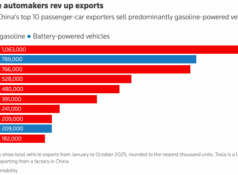
Auto exports also surged 21% overall in 2025, with over 7 million vehicles shipped outside of China, most of them EVs and plug-in hybrids (PHEVs), the China Association of Automobile Manufacturers (CAAM) revealed.
Official data also showed that Chinese imports from Canada dropped 10.4% to $41.7 billion, down from a record high the previous year.
The Canadian Prime Minister landed in Beijing this Wednesday.
The trade talks are expected to progress towards Canada reducing tariffs on Chinese EVs and China lowering duties on Canadian agricultural products.
Depending on the conversations, Canada could allow Chinese EVs into the North American market, a move the US has been trying to prevent.
US Manufacturing
As North American markets renegotiate the USMCA, Trump — who originally signed the deal in 2018 — has called it “irrelevant” to the US.
“The problem is we don’t need their product. We don’t need cars made in Canada, we don’t need cars made in Mexico, we want to make them here,” he stated.
Trump’s visit to Ford‘s production center was made amid a shift towards promoting manufacturing jobs in America.
Referring to the Detroit automaker, the President said that the tariff scenario “makes them able to do very nicely against China.”
“Pretty good, right? Who would have thought that was going to happen, right? Everybody said that the cars are dead in the United States,” the President said.
“If you go back four years ago into the middle of the Biden administration, everybody was closing up their plants,” he noted.
Trump has criticized Biden’s approach to the auto industry, particularly the policies targeting electrified vehicles.
Since returning to office in early 2025, he has revoked fuel-economy and emissions targets and eliminated federal consumer incentives that encouraged the purchase of electric and clean-energy vehicles.
According to Trump, “now we have more plants being built in our country than at any time in history. Nobody’s ever seen anything like it.”
The “biggest” reason for this shift was the implementation of the import duties, as the President highlighted, “it’s the election on November 5th, and it’s other things, but it’s also, I think maybe the biggest part, the election, because I’m the tariff person.”
GM and Ford Restructure EV Business
In recent months, US policy changes have prompted Detroit automakers to adjust their electric vehicle strategies.
Both General Motors and Ford reported significant impairments due to production halts and contract cancellations — over $7 billion for GM and nearly $20 billion for Ford.
These changes have led to factory closures — albeit temporary in some cases — and the layoff of thousands of workers.
Ford is emphasizing hybrid and internal combustion models, alongside its Universal EV Platform, through which will produce a more affordable pickup than the previous fully electric F‑150.
GM has stated it is not abandoning EVs, but stronger demand for hybrids and ICE vehicles has led the company to prioritize those powertrains.
It was the second-best-selling brand for EVs in the US last year, behind Tesla.