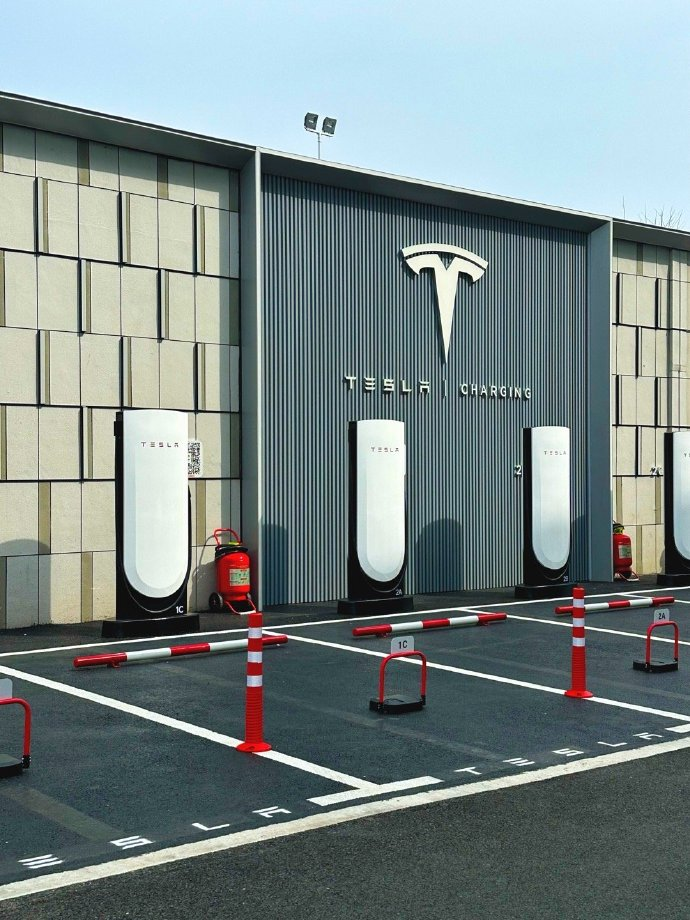
Gasgoo Munich- On March 8, Tesla Vice President Grace Tao shared an update on the company’s charging infrastructure in China through a post on Weibo, outlining the latest progress in the automaker’s efforts to expand its energy network across the country.
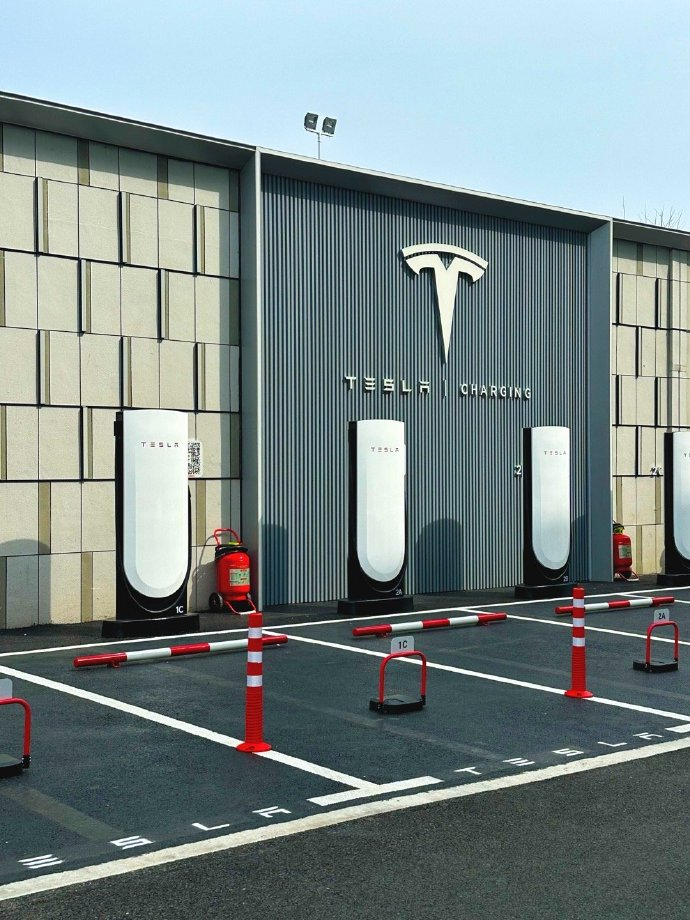
Image source: Tesla
According to Grace Tao, Tesla currently operates what it describes as the world’s largest self-built charging network. In the Chinese Mainland alone, the company has installed more than 2,500 Supercharger stations and over 12,000 individual Supercharger stalls. These are complemented by more than 650 destination charging locations and home-charging solutions, forming a broader charging ecosystem intended to support Tesla owners nationwide. A growing number of these charging stations have also begun allowing access for electric vehicles from other brands.
Tesla’s charging infrastructure in China is generally divided into two categories: high-power Supercharger stations designed for rapid charging and destination chargers installed at locations such as hotels, shopping centers, and office buildings. Since June 2025, Tesla’s latest-generation V4 Superchargers have gradually been introduced in several Chinese cities, including Shanghai, as well as locations in Gansu, Zhejiang, and Chongqing. The new chargers incorporate multiple layers of safety protection—such as weatherproofing measures—and are also compatible with electric vehicles produced by other manufacturers.
Publicly available specifications indicate that Tesla’s V4 Supercharger technology is designed to support charging power of up to 500 kW for electric vehicles and as much as 1.2 MW for Tesla’s commercial Semi truck platform. Compared with the V3 Superchargers widely deployed in China, the V4 generation is capable of delivering significantly higher peak power. In current passenger vehicle configurations, the charging output can reach around 250 kW—roughly double the peak capability of earlier installations.
The V4 charging units also introduce several hardware changes intended to broaden compatibility. These include integrated payment terminals, longer charging cables designed to accommodate vehicles with differently positioned charging ports, and CCS connectors that allow non-Tesla EVs to plug in directly without requiring additional adapters.
Tesla says the V4 system architecture is also designed to accelerate station deployment. Each cabinet can supply power to as many as eight charging posts, while the redesigned hardware simplifies installation and reduces the physical space required for site infrastructure. According to the company, the updated cabinet design improves reliability while delivering roughly three times the power density of earlier hardware at a lower overall cost, enabling faster expansion of the network.