There’s a saying that imitation is the sincerest form of flattery. Apparently, it also saves you a few billion dollars in manufacturing costs — just ask Tesla.
In what might be the most telling confession in recent automotive history, former Tesla president Jon McNeill revealed that the company did what any self-respecting tech giant does when it’s feeling the heat: it bought some Chinese EVs, cracked them open like a Christmas present, and started taking notes.
McNeill, who led the company between 2015 and 2018 — right in the thick of the Model 3 and Model Y development era — told Business Insider that Tesla operated like a «learning sponge.» And apparently, the thing it was most thirsty to soak up was Chinese engineering.
What Was Actually Inside Those Chinese EVs?

Image Credit: BYD.
So what’s the big secret BYD and friends were hiding under the hood? Turns out, it’s almost embarrassingly simple: they reuse the same parts across multiple models wherever customers can’t see them. Windshield wiper motors, heat pumps, drivetrain components — if it’s buried deep enough that a buyer will never lay eyes on it, BYD is using the same one across their entire lineup.
Advertisement
Advertisement
«The Chinese engineers are really disciplined about reusing parts underneath the hood that the customer can’t see, and they save a lot of money that way,» McNeill explained.
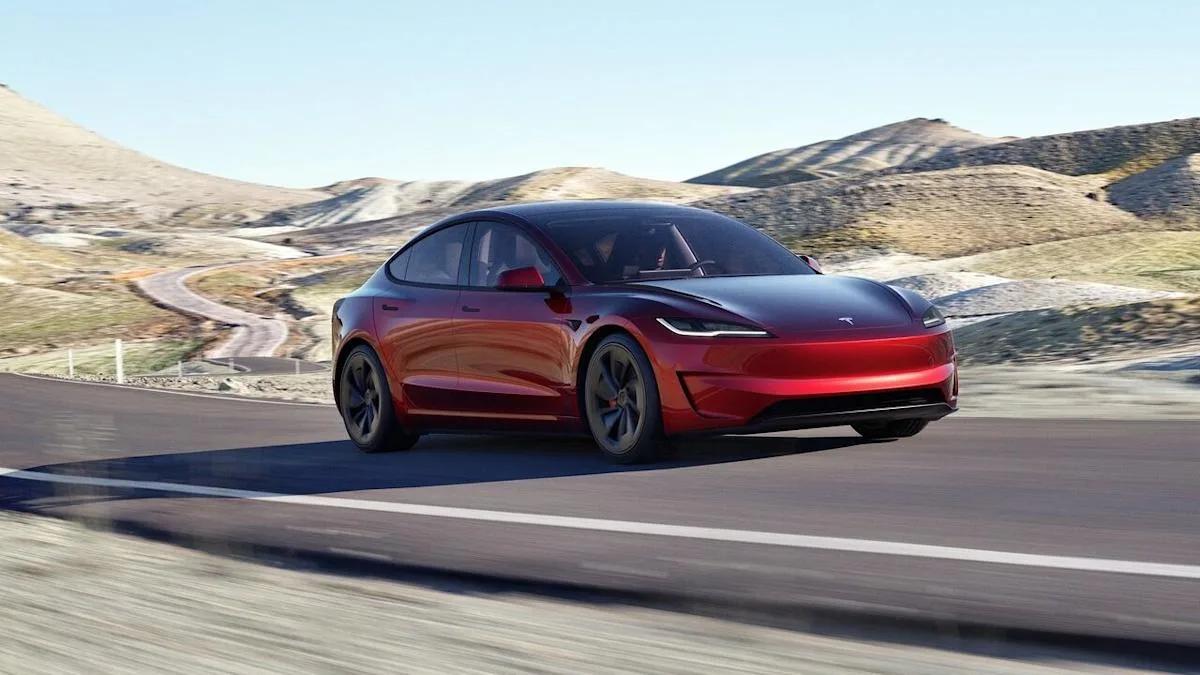
Tesla took that lesson and ran with it. By the time the Model 3 and Model Y rolled out, the two shared roughly 75 percent of the same components — powertrains, door handles, buttons, you name it. The result? Dramatically lower manufacturing costs, and two of the best-selling EVs on the planet. Not bad for a little corporate homework.
Meanwhile, China Isn’t Slowing Down
Here’s the part that should make American automakers slightly nervous: Chinese EVs are on an absolute tear globally. BYD has already overtaken Tesla in European sales and is making serious inroads in the UK and Japan. The only thing keeping Chinese brands out of American driveways right now is a wall of tariffs, which isn’t exactly a permanent solution to a very permanent problem.
Recently, Ford’ CEO came out and essentially said the quiet part out loud, warning that Ford has «no future» if it can’t figure out how to compete with what’s coming out of China. Bold admission. Less bold: the actual plan to compete with it. The future $40,000 and under lineup is not pumping up America’s morale when Canada is getting a small batch of China’s cheapest EVs each year.
Advertisement
Advertisement
And with studies showing more than half of Americans are open to buying a Chinese car, the tariff shield won’t hold consumer curiosity at bay forever.
The Bigger Picture
Tesla’s teardown strategy was smart, and it clearly worked — for a while. But the gap is closing fast, and learning from your competition only gets you so far when that competition keeps innovating. Tesla can’t exactly tear apart a new BYD every time it needs a product refresh.
The EV war is no longer a story about whether American companies can dominate. It’s about whether they can keep up. And right now, the answer involves a lot of disassembled Chinese cars and some very humbling engineering notes.