Gasgoo Munich- On February 26, Tesla China rolled out a new round of financing incentives: orders placed by March 31 qualify for seven-year ultra-low interest loans across the entire lineup. Notably, its three core models—the Model 3, Model Y, and Model Y L—offer an additional option for five-year interest-free financing, meaning buyers pay zero interest on their loans.
Breaking it down: The Model 3 starts with a down payment of 79,900 yuan and a first-month monthly payment as low as 1,759 yuan. Orders placed and delivered by a specified date also qualify for a limited-time 8,000 yuan insurance subsidy. The Model Y starts at 79,900 yuan down with monthly payments from 2,188 yuan, while the Model Y L requires a 99,900 yuan down payment with monthly installments beginning at 2,849 yuan.
This marks the second time Tesla China has launched a similar promotion this year. Back in January, the company offered a seven-year low-interest financing plan that ran through the end of the month. Rolling out two major financial incentives in just two months is widely interpreted by the industry as another round of «disguised price cuts» aimed at shoring up end-market sales.
Tesla Feels the Urgency
That urgency is clearly visible in the sales data.
Data shows Tesla China’s wholesale sales totaled 851,732 units in 2025—including domestic deliveries and exports—a decline of 7.08% from the previous year. The pressure is even more acute in the domestic market: sales in China for the first 11 months of 2025 reached 531,900 units, down 7.37% year-on-year.
The situation hasn’t improved as we move into 2026. In January, the Model Y lost its sales crown to the Xiaomi YU7, with monthly volume slipping to 16,845 units. The Model 3 fared even worse, moving just 1,640 units that month.
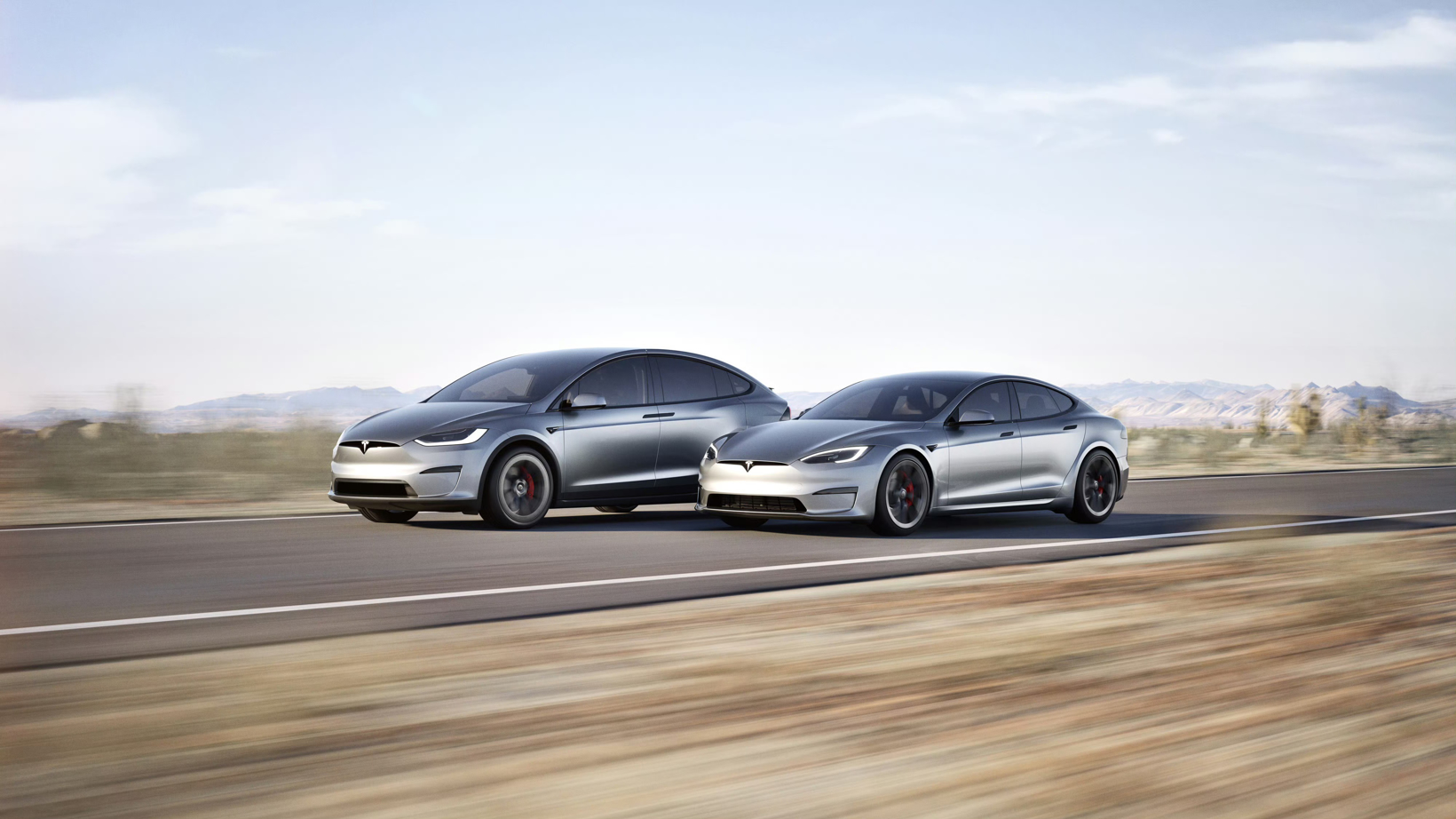
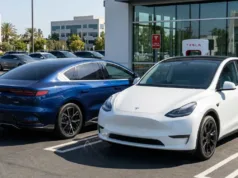
Image Source: Tesla
The global picture is equally grim. Tesla delivered 1.636 million vehicles worldwide in 2025, a drop of roughly 8.6% and the second consecutive year of declining deliveries. It also marks the first time in history that Tesla’s annual electric vehicle sales were surpassed by BYD, whose pure electric models sold 2.2567 million units last year—a 27.86% surge.
On the financial front, Tesla generated approximately $94.8 billion in revenue in 2025, down 3% year-on-year. Net profit plummeted 46% to about $3.794 billion, marking the company’s first-ever annual decline in revenue.
Addressing the sales volatility, Tesla Vice President Tao Lin attributed it primarily to temporary capacity constraints caused by product iterations. «In 2025, we launched the refreshed Model Y globally, starting in China, followed by production line adjustments at almost all our global factories,» she explained. «Because we hold no inventory, production capacity directly determines sales volume.»
There is merit to this explanation. In 2025, Tesla China rolled out a dense slate of new products: the refreshed Model Y launched in January, followed by the long-range rear-wheel-drive Model 3 and the six-seat Model Y L in August. Switching production lines would inevitably impact short-term output.
Yet, rolling out similarly aggressive financial policies for two straight months suggests the competitive pressure on Tesla far exceeds expectations. Amid a landscape where price wars and a technology survival race intersect, even the former market disruptor is now forced to aggressively fight for orders.
A Competitive Landscape Teeming with Rivals
Tesla’s shifting situation reflects a profound reshaping of China’s new energy vehicle market.
There was a time when Tesla was the absolute benchmark in the pure electric sector, with the Model 3 and Model Y long dominating the charts. But now, competitors are swarming from every direction—BYD has claimed the sales crown, startups like Xiaomi are rising fast, and traditional automakers are accelerating their transition. In 2025, BYD’s pure electric sales exceeded 2.25 million, overtaking Tesla’s global battery-electric volume.
BYD is making similar strides in Europe. Data from the European Automobile Manufacturers Association shows BYD’s new car registrations in the region reached 187,600 units in 2025, a 268.6% year-on-year jump. Tesla, meanwhile, saw registrations fall 26.9% to 238,600 units over the same period.
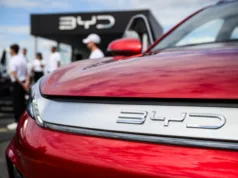
Image Source: Tesla
This means Tesla is feeling the heat not just on its home turf, but in global markets where Chinese rivals are closing in.
Returning to the five-year interest-free policy, its purpose is clear: lower the barrier to entry and stimulate end-market sales.
Take the Model 3: the combination of a 79,900 yuan down payment and a 1,759 yuan monthly installment significantly lowers the entry barrier for younger consumers. Compared to January’s offer, the monthly payment has dropped from 1,918 yuan to 1,759 yuan, and the addition of an 8,000 yuan insurance subsidy further sweetens the deal.
But for Tesla, this serves as both a short-term «market rescue» and a buffer for its long-term transformation.
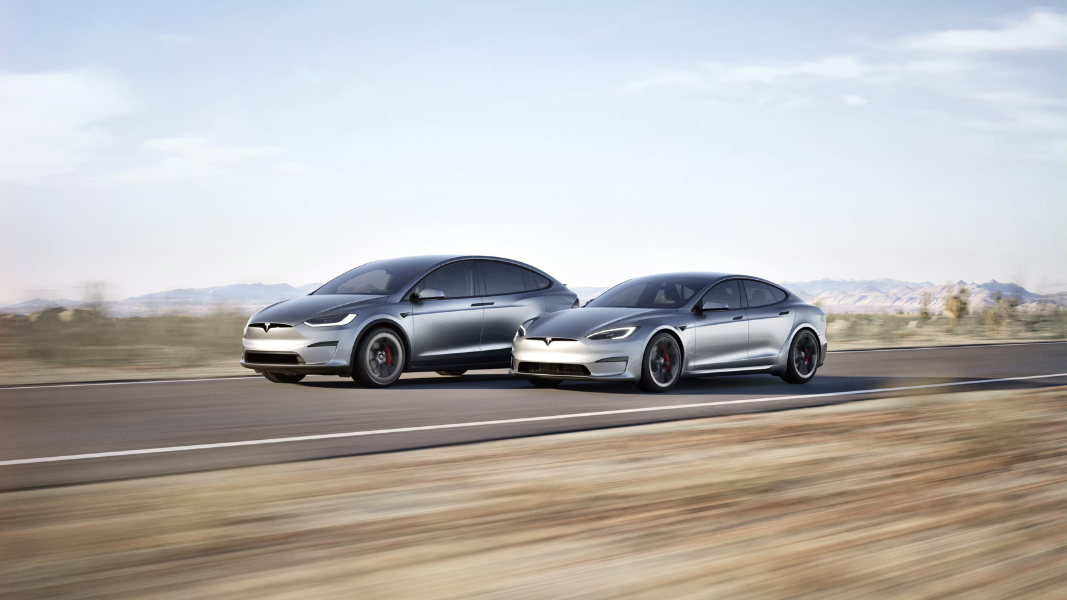
During an earnings call, Elon Musk announced plans to halt Model S and Model X production next quarter. He intends to convert California factory lines to produce Optimus robots, targeting an annual output of one million units. «It is time for the Model S and Model X to retire gracefully as we move truly toward a future centered on autonomous driving,» he stated.
This signals that Tesla is accelerating its pivot from a carmaker to an autonomous driving and artificial intelligence company. Stabilizing current vehicle sales is about buying time and space for that future transition.
Conclusion:
The five-year interest-free offer is just another card Tesla China played at the start of 2026. Behind it lies the pressure of sliding sales, the reality of intensifying competition, and the grand narrative of a transition toward an AI-driven future.
For consumers, this is undoubtedly a good buying window. But for Tesla, discounts can buy short-term sales, not a long-term moat. The real deciding factors will likely be the progress of FSD’s entry into China, the launch of the next-generation platform, and when Musk’s «autonomous future» becomes reality.
After all, when «disguised price cuts» become the norm, a brand’s luster begins to fade. And Tesla clearly has no intention of being just another automaker that relies on price cuts to sustain volume.