Tesla’s stock moved higher this week, supported by strong China sales, improving margins, and a broader market rally fueled by easing…
•
Last updated: Tuesday, March 31, 2026

Quick overview
- Tesla’s stock rose this week, driven by strong sales in China and a broader market rally due to easing geopolitical tensions.
- The company reported a 91% year-over-year increase in vehicle sales in China, despite a seasonal decline compared to January.
- Tesla’s Shanghai Gigafactory remains crucial for both domestic demand and exports, providing a competitive edge in the crowded EV market.
- While Tesla’s earnings showed mixed results, improving margins and free cash flow indicate solid financial health amid ongoing challenges.
Tesla’s stock moved higher this week, supported by strong China sales, improving margins, and a broader market rally fueled by easing geopolitical tensions.
Market Optimism Lifts Tesla Shares
Shares of Tesla climbed this week, with a notable 5% surge on March 31, driven largely by improving global risk sentiment rather than company-specific developments. Comments from Donald Trump suggesting that the conflict involving Iran could soon de-escalate helped fuel a broad rally across equity markets. Additional reports indicating openness to peace talks from Iranian leadership further boosted investor confidence.
This easing of geopolitical tensions, which had previously unsettled oil markets and raised inflation concerns, created a supportive backdrop for growth stocks. Tesla benefited alongside the wider market, extending its weekly gains despite underlying concerns about revenue pressures and intensifying competition.
China Sales Strength Reinforces Growth Narrative
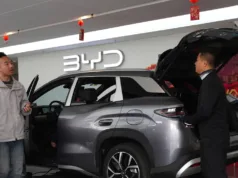
A key factor underpinning Tesla’s recent momentum has been strong vehicle sales data from China. The company reported selling 58,600 China-made Model 3 and Model Y vehicles in February, a figure that includes both domestic deliveries and exports to international markets such as Europe.
On a year-over-year basis, this represents a striking 91% increase, highlighting robust demand and reinforcing Tesla’s position in one of the world’s most important electric vehicle markets. However, the data also showed a 15.2% decline compared to January, which the company attributed to seasonal factors and a temporary production pause during the Lunar New Year holiday.
Despite the monthly dip, February marked the fourth consecutive month of growth in China-produced deliveries, signaling sustained momentum and underscoring the importance of Tesla’s regional performance.
Tesla Steadies After a Powerful Run
Tesla entered the final stretch of 2025 with extraordinary momentum, carrying its share price to a record high just shy of $500. That rally reflected strong enthusiasm around the company’s long-term vision in autonomy, artificial intelligence, and next-generation manufacturing. As often happens after such a sharp advance, however, the stock entered a period of consolidation as investors took profits and reassessed positioning.
Shares retreated roughly 30% from the December peak of $498.80, briefly testing support indicators near the $350 area. The pullback coincided with broader market unease, including the war on Iran from US-Israeli armies.
TSLA Chart Daily – The 100 SMA Acting A Support
Following the earnings release, Tesla shares rebounded but the broader market weakness weighed on TSLA as well, sending it to $352 on Monday but the stock found support at the 200 daily SMA (purple), before rebounding strongly on Tuesday to close the day $20 higher. However TSLA stock will have to push above $400 to enter the bullish zone again.
Shanghai Factory Remains a Strategic Pillar
Tesla’s Shanghai Gigafactory continues to play a central role in its global operations. The facility not only serves domestic Chinese demand but also functions as a key export hub supplying vehicles to Europe and other international markets.
Its scale and efficiency provide Tesla with a significant competitive advantage, particularly as global demand for electric vehicles continues to expand. Strong output from Shanghai also demonstrates Tesla’s ability to compete effectively in China’s increasingly crowded EV market, where local manufacturers are rapidly scaling production and intensifying price competition.
Maintaining this competitive edge will be crucial as Tesla navigates a market environment defined by aggressive pricing strategies and growing domestic rivals.
AI Strategy Shifts Toward Tesla Ecosystem
Beyond its automotive business, Tesla is also advancing its ambitions in artificial intelligence. Elon Musk has reportedly shifted focus away from certain projects at his AI venture xAI, redirecting resources toward initiatives more closely aligned with Tesla’s core ecosystem.
One such initiative is Digital Optimus, an AI-driven system designed to integrate with Tesla’s broader technology stack, including automation, robotics, and autonomous driving capabilities. This move reflects a strategic effort to deepen the connection between Tesla’s AI development and its long-term vision of intelligent, self-driving systems and robotic applications.
Earnings Highlight Mixed but Improving Fundamentals
Tesla’s fourth-quarter 2025 earnings report presented a mixed picture, though with several encouraging elements. Adjusted earnings per share came in at $0.50, beating expectations and indicating stronger operational efficiency. However, reported earnings declined significantly from the previous year, reflecting ongoing pressure from price reductions and rising competition.
Revenue for the quarter reached $24.90 billion, slightly below analyst forecasts. While the miss was modest, it reinforced concerns about demand trends and pricing dynamics, particularly as legacy automakers and Chinese EV companies continue expanding their electric vehicle offerings.
At the same time, Tesla delivered a positive surprise on profitability. Operating income exceeded expectations, and gross margins improved to 20.1%, well above consensus estimates. This suggests that cost efficiencies, easing input prices, and disciplined expense management are helping to offset some of the external pressures.
Cash Flow and Long-Term Outlook
Tesla generated $1.42 billion in free cash flow during the quarter, slightly below expectations but still indicative of solid financial health. The shortfall appears largely tied to continued investment in manufacturing capacity, technological innovation, and future growth initiatives.
For now, investors seem willing to look past short-term fluctuations in cash flow, focusing instead on Tesla’s improving margins and long-term opportunities in areas such as autonomous driving, software services, and robotics.
Conclusion: Tesla’s recent stock gains reflect a combination of improving market sentiment, strong performance in China, and encouraging signs of margin recovery. However, the company continues to face meaningful challenges, including revenue pressures, rising competition, and evolving market expectations.
As the electric vehicle market matures, Tesla’s ability to sustain growth while protecting profitability will remain central to its investment case. The coming quarters will be critical in determining whether the company can maintain its leadership position in an increasingly competitive global landscape.

Skerdian Meta
Lead Analyst
Skerdian Meta Lead Analyst.
Skerdian is a professional Forex trader and a market analyst. He has been actively engaged in market analysis for the past 11 years. Before becoming our head analyst, Skerdian served as a trader and market analyst in Saxo Bank’s local branch, Aksioner. Skerdian specialized in experimenting with developing models and hands-on trading. Skerdian has a masters degree in finance and investment.