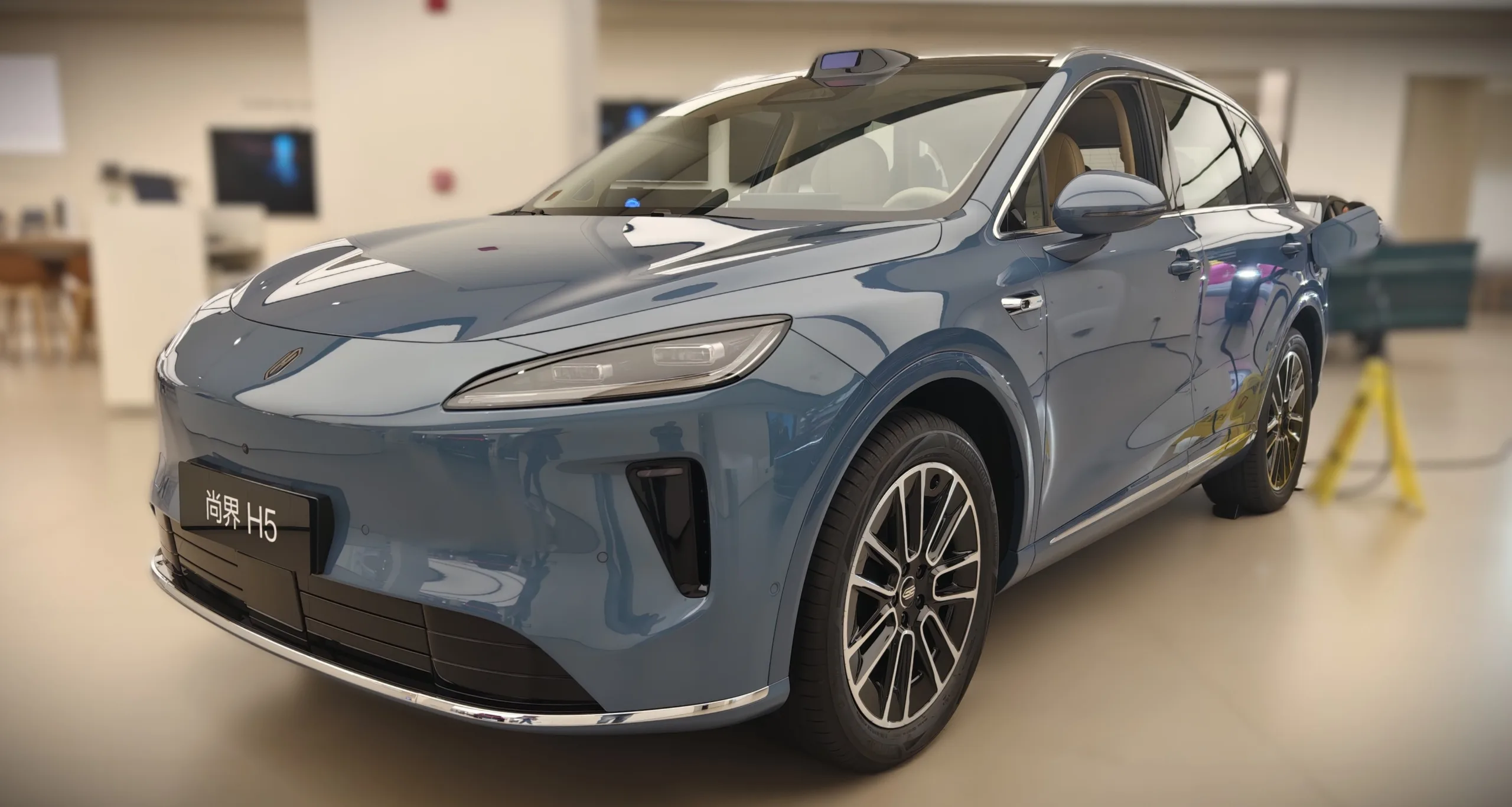
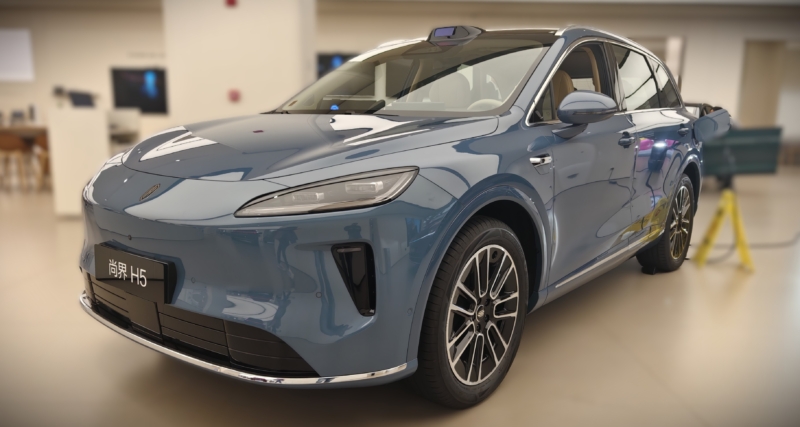
The Saic H5 entered the Chinese market as the most affordable entry point into the Harmony Intelligent Mobility Alliance (HIMA), marking the first collaboration between Huawei and SAIC. Starting at 159,800 yuan (22,040 USD), the H5 utilises SAIC’s existing technical infrastructure, combined with Huawei’s full-stack intelligence suite. This vehicle is a strategic deployment intended to lower the barrier to entry for advanced autonomous-driving hardware in the mid-size SUV segment, currently competing against the Leapmotor C11.
The tested Max EREV trim is priced at 179,800 yuan (24,800 USD) and features the Huawei ADS 4.0 system. This model represents a shift in HIMA’s strategy, moving away from the premium pricing of the Aito and Stelato brands to capture high-volume youth segments. The H5 serves as a high-stakes test of whether Huawei’s technical branding can sustain market share at lower price points where margin compression is highest.
Exterior
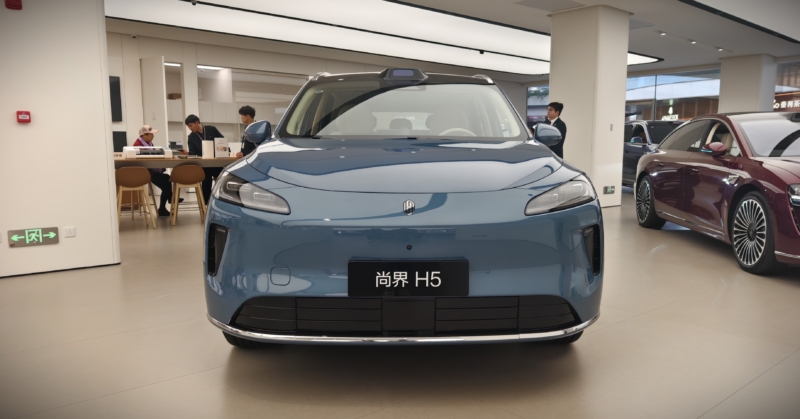
The Saic H5 is a mid-size crossover measuring 4,780 mm in length, 1,910 mm in width, and 1,664 mm in height, with a wheelbase of 2,840 mm. The design logic prioritises aerodynamic efficiency and dimensional restraint. Rather than following the trend of oversized proportions, the H5 maintains a compact footprint relative to its wheelbase. This approach is intended to improve manoeuvrability in dense urban environments and appeal to drivers who prioritise ease of parking.
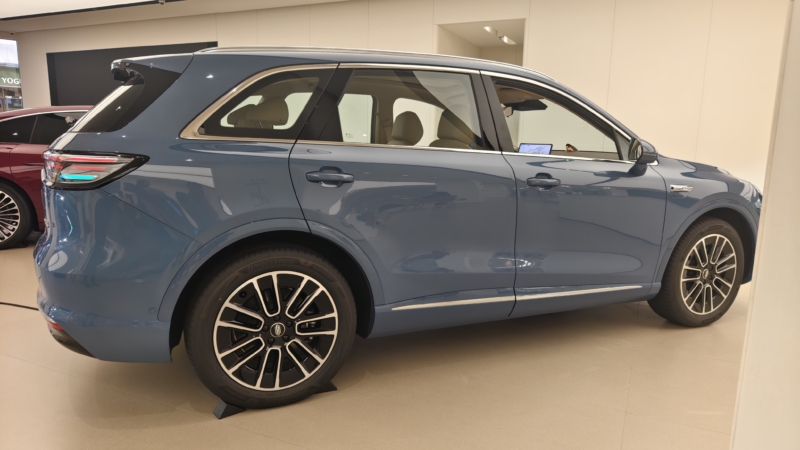
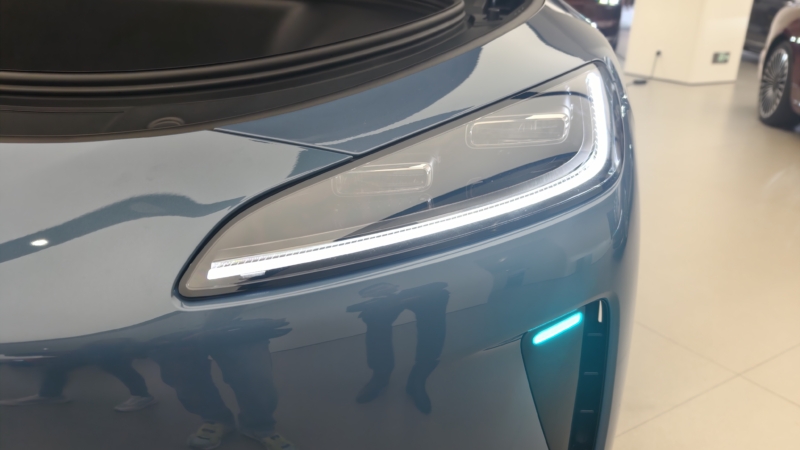
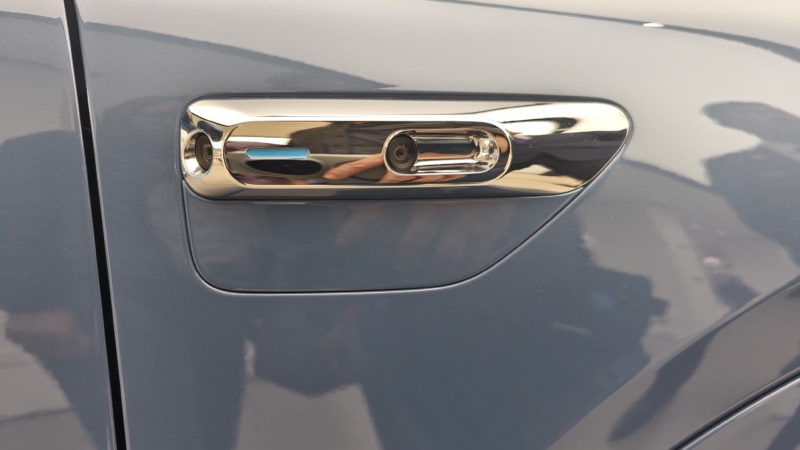
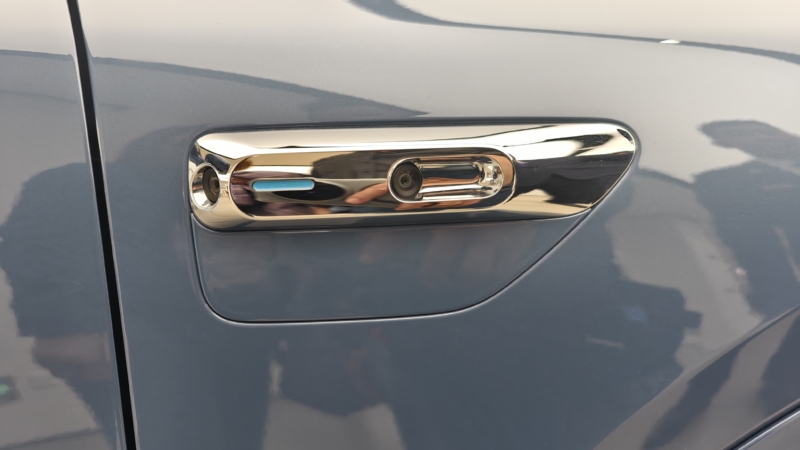
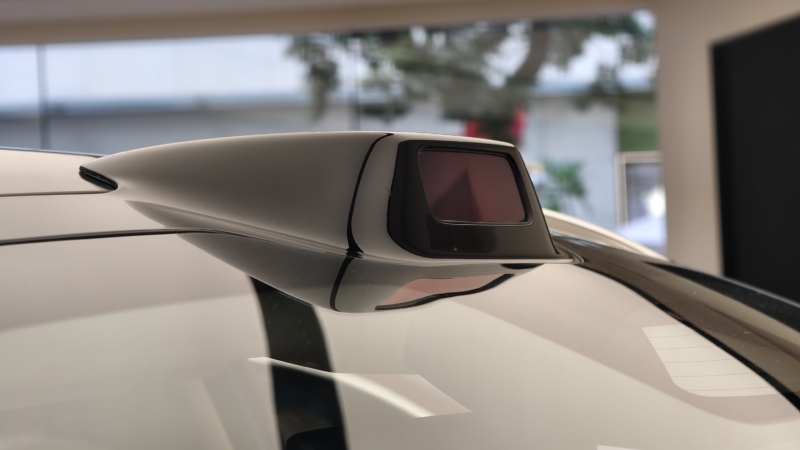
Lighting is integrated into a minimalist front fascia, featuring an active air intake system that meets the thermal requirements of the range extender. The side profile reveals a departure from current HIMA trends by utilising conventional mechanical door handles rather than retractable units. This decision aligns with upcoming Chinese industrial standards regarding emergency access and mechanical reliability. A roof-mounted 192-line lidar unit is the primary sensor for the autonomous driving suite.
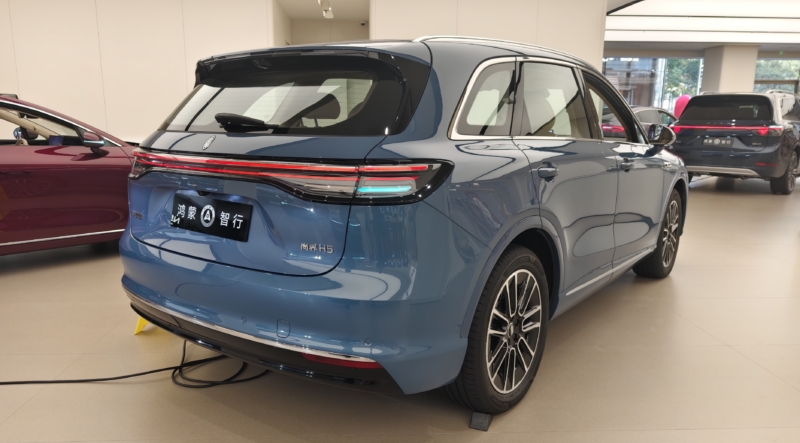
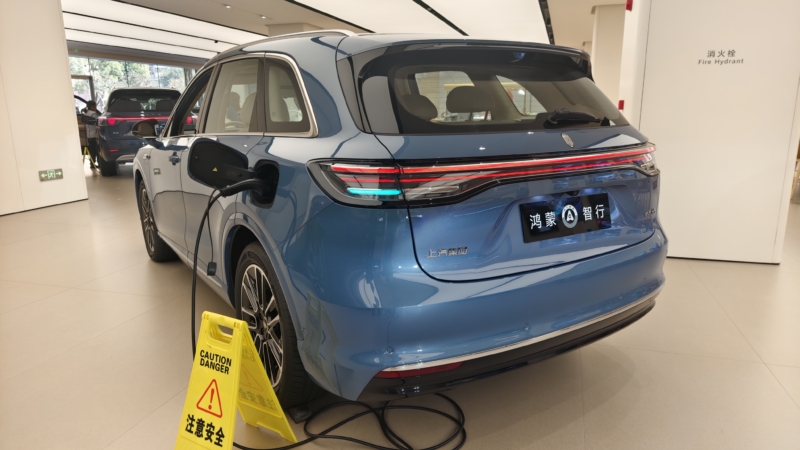
The rear design is characterised by a single continuous taillight unit and a steep tailgate angle. The vehicle sits on a platform derived from the SAIC Roewe ES39, which dictates the suspension hardpoints and overall stance. Aerodynamics are further enhanced by a flat underbody tray and specifically tuned wheel arch liners, which reduce turbulence. The curb weight for the EREV variant is 2,000 kg, while the BEV variants weigh less than 2,000 kg, thanks to weight-saving measures in the chassis casting.
Interior
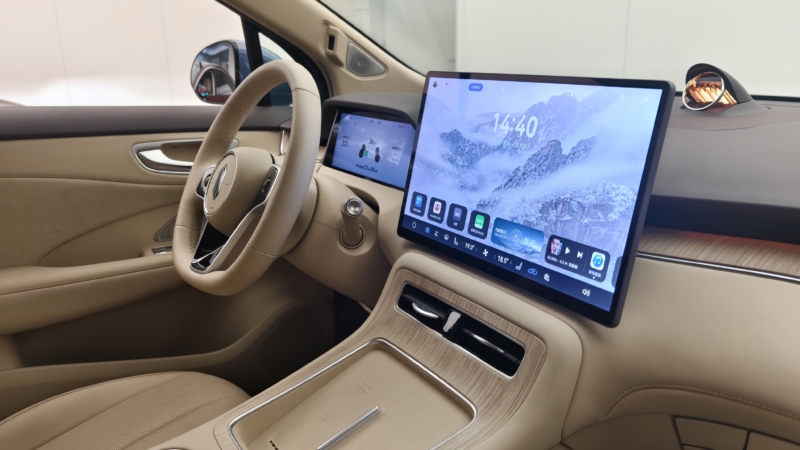
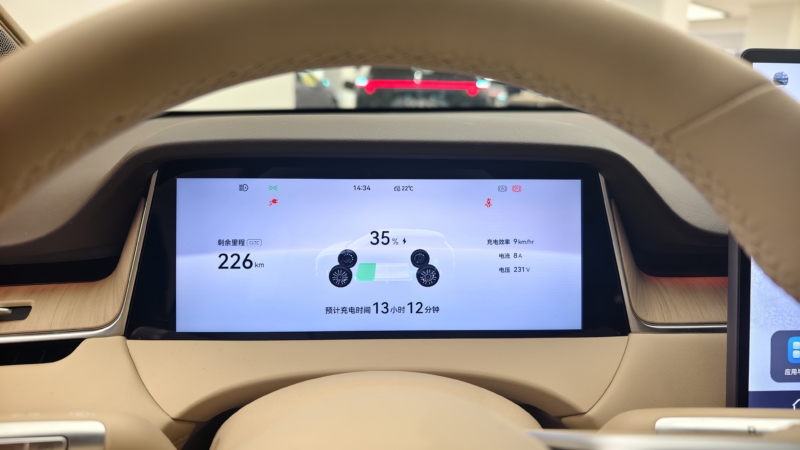
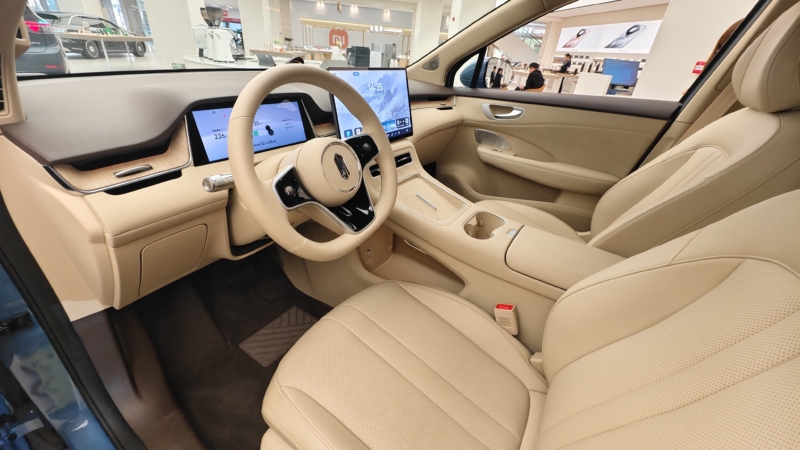
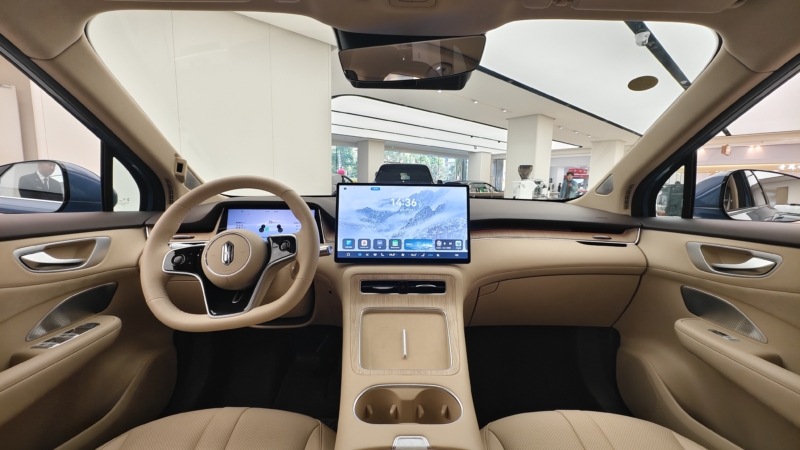
The cabin is centred around a 15.6-inch floating touchscreen powered by the HarmonyOS cockpit system. A distinct departure from other HIMA models is the software layout: the central screen is dedicated primarily to navigation, while the SR (Surrounding Reality) environment visualisation is moved to the instrument cluster. Below the main screen, the H5 includes two 50W wireless charging pads and a large hollowed storage area in the centre console capable of holding large personal items.
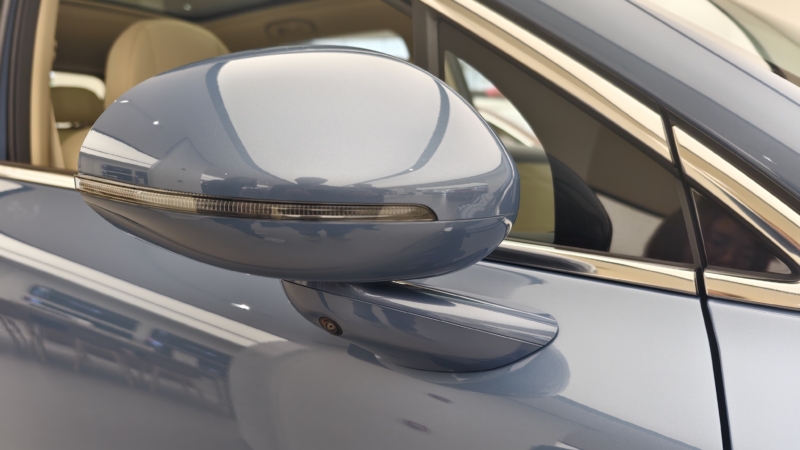
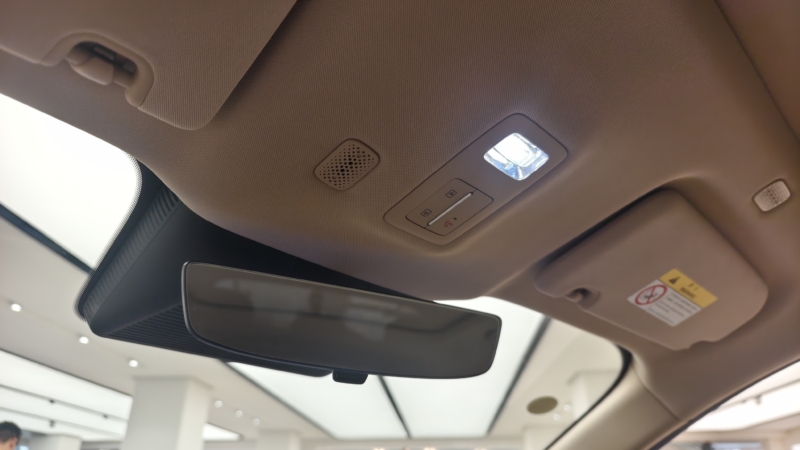
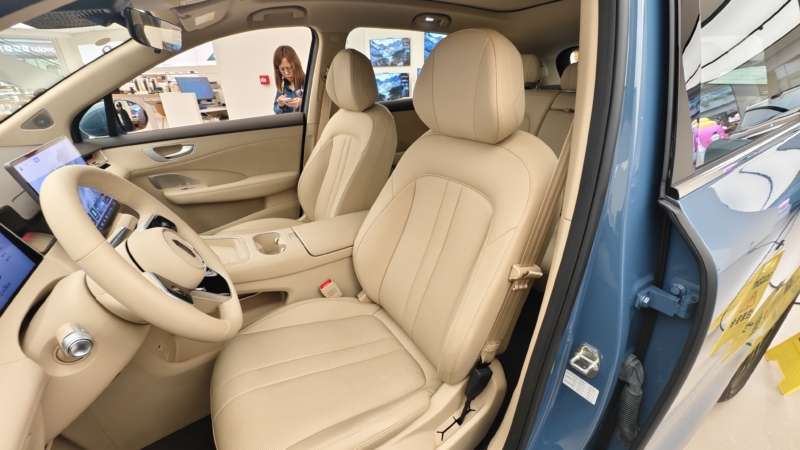
Materials consist of a multi-layered execution. The upper door cards and dashboard are finished in soft-touch plastics, while the middle sections use a combination of synthetic leather and faux suede. The headliner is finished in a woven fabric rather than microfiber, a choice consistent with the vehicle’s price positioning. Physical controls are nearly non-existent, with most vehicle functions, including side mirror adjustments and climate control, integrated into the screen or the D-shaped steering wheel buttons.
The interior build quality shows close attention to material consistency, with soft-touch materials covering approximately 99% of the visible surfaces. The door panels feature a quad-layer material stack that maintains a consistent texture from the front to the rear of the cabin. However, the B-pillars and C-pillars are finished in hard plastic, which is the only notable exception to the soft-wrapped interior theme. The mechanical door release handles operate with a firm, spring-loaded action, suggesting robust construction.
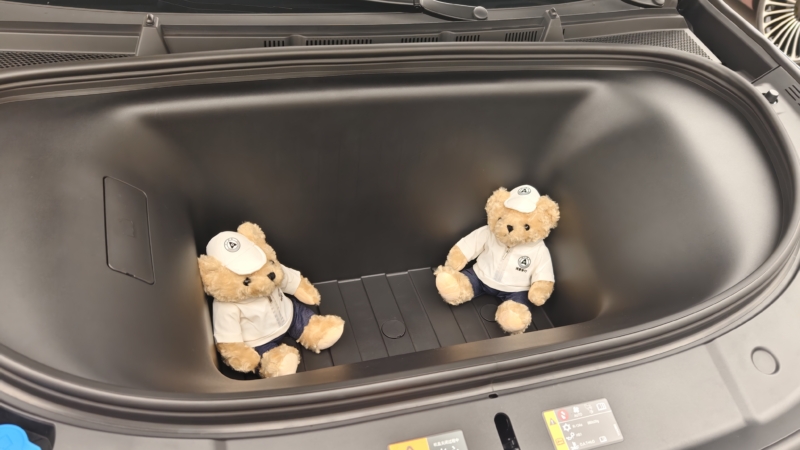
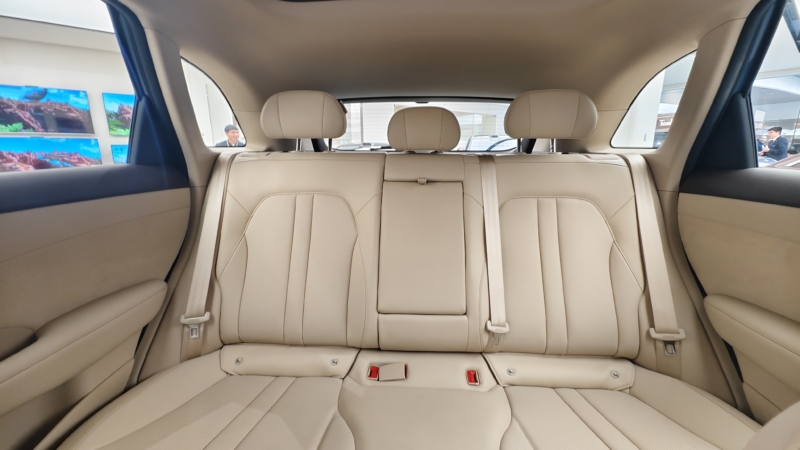
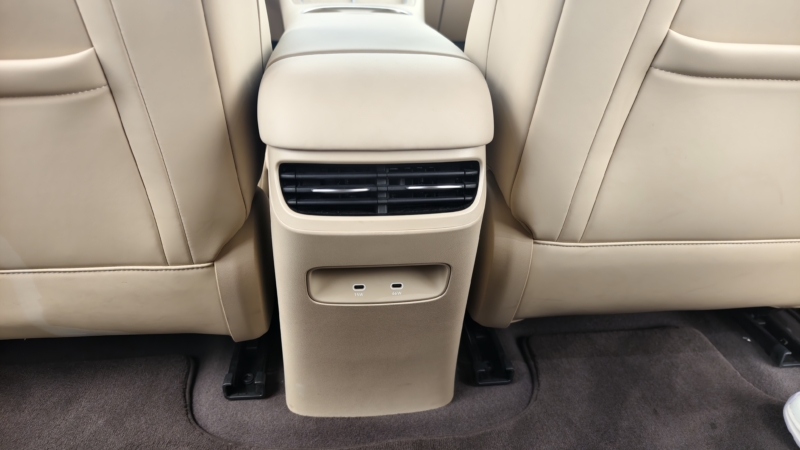
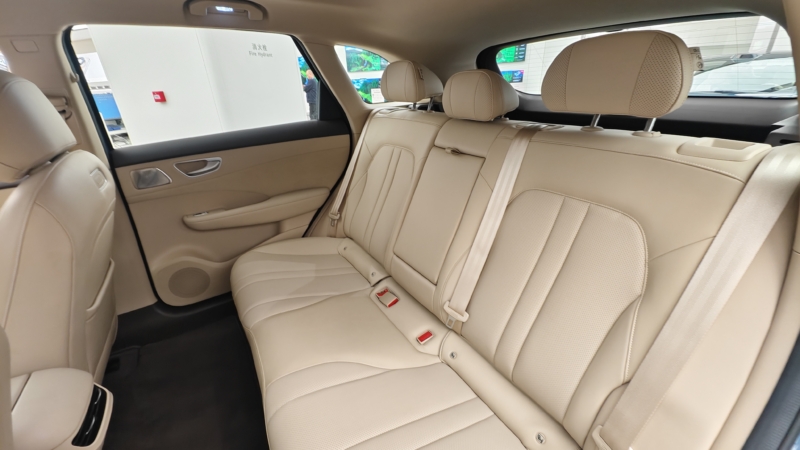
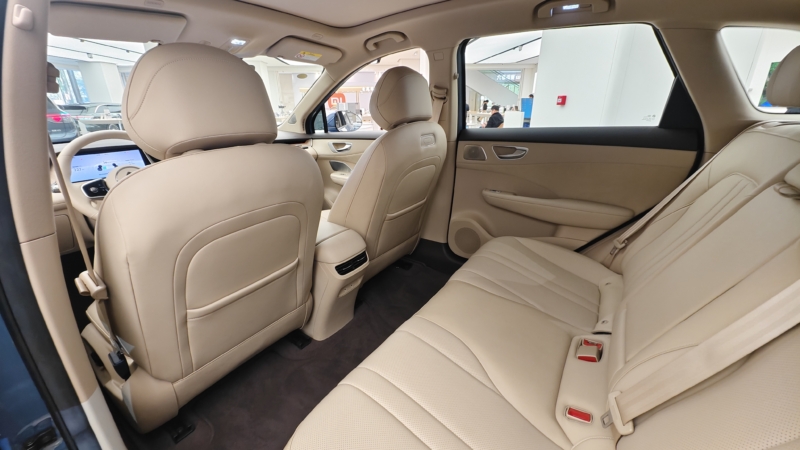
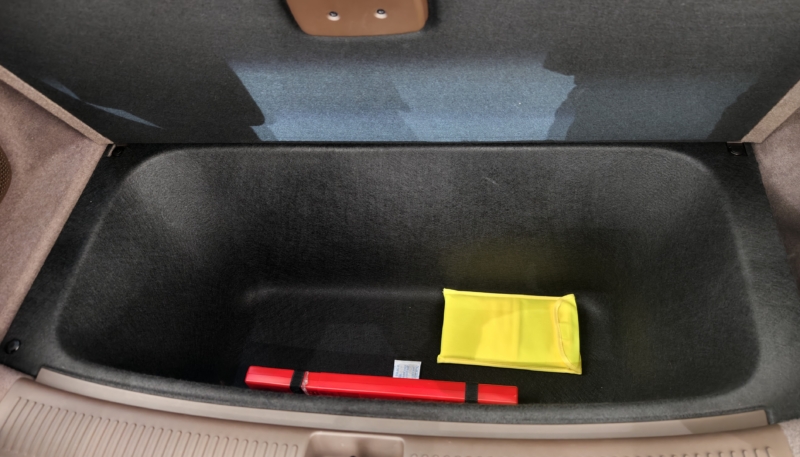
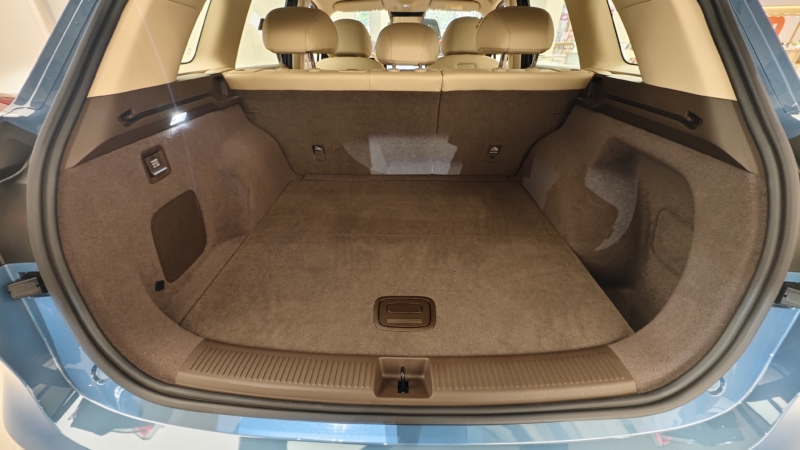
The rear passenger area features a flat floor due to the dedicated electric architecture, eliminating the centre tunnel. Rear seats offer two stages of backrest adjustment at 27 and 32 degrees. Legroom is supported by the 2,840 mm wheelbase, which provides longitudinal space comparable to larger SUVs in the HIMA lineup. The trunk provides 601 litres of volume and fits up to six 20-inch suitcases when positioned vertically.
Driving Experience
The Saic H5 Max EREV uses a 1.5-litre four-cylinder range extender producing 72 kW (97 hp). This engine serves exclusively as a generator and does not drive the wheels directly. Propulsion is handled by a rear-mounted permanent magnet synchronous motor delivering 150 kW (201 hp) and 280 Nm of torque. The battery is a 32.6 kWh lithium-iron phosphate (LFP) pack, providing a CLTC pure-electric range of 235 km and a combined range of 1,360 km.
The suspension hardware consists of MacPherson struts at the front and a multi-link independent setup at the rear. Unlike higher-end HIMA products, the H5 utilises a purely mechanical suspension without air springs or continuous damping control. The tuning, performed in collaboration with SAIC’s engineering team, prioritises lateral stability and damping rebound. During high-speed cornering, the chassis demonstrates controlled body roll and a high degree of mechanical grip, reflecting a more European-style calibration compared to the softer tuning of the Aito M7.
Steering is calibrated with a high ratio and minimal dead zone, approximately 0.5 degrees from center. The electronic power steering (EPS) provides linear weight gain as the steering angle increases, particularly in the sport setting. Braking is handled by a drive-by-wire system that integrates regenerative braking with mechanical friction. The transition between these two modes is seamless, with the brake pedal maintaining a consistent pressure felt throughout the stroke. NVH levels are managed through acoustic glass and thick insulation in the firewall, though the range extender is audible when operating at high RPM to maintain battery state-of-charge under load.
The Huawei ADS 4.0 system in the Max trim utilises a 192-line lidar, three 4D millimetre-wave radars, and 11 cameras. In urban driving, the system demonstrates end-to-end neural network behaviour, successfully navigating complex construction zones and identifying non-standard obstacles such as small toolboxes placed on the road. The system maintains a conservative gap during merging and displays human-like decision-making when navigating around delivery vehicles or pedestrians.
Verdict
The Saic H5 is positioned to capture the entry-level premium market by offering high-tier autonomous hardware at a significant discount compared to established players. Its primary value proposition is the integration of the Huawei ADS 4.0 system and the HarmonyOS ecosystem into a chassis developed by SAIC. While it lacks the air suspension and prestige of the larger HIMA models, its mechanical tuning and weight management provide a more agile driving characteristic.
Factually, the H5 competes directly with the Leapmotor C11 and the Tesla Model Y in the Chinese market. It offers a higher lidar specification than the Leapmotor and a more advanced software suite than the Tesla at a lower price point. The trunk utility and rear cabin space are optimised for family use, though the exterior dimensions remain urban-friendly.

Follow us for ev updates