
Stellantis NV is considering tapping electric-vehicle technology from its Chinese partner Leapmotor to help lower costs across its mass-market European brands such as Fiat, Opel and Peugeot, according to people familiar with the plans.
The manufacturer is weighing expanding the scope of its joint venture with Leapmotor to access the Chinese company’s battery and EV powertrain technology, the people said. Stellantis in Europe currently sells Leapmotor models such as the C10 SUV through its dealership network.
Talks are at an early stage, and any agreement would need to clear hurdles related to data protection when using technology from China, the people said. The partners also need to address U.S. regulations that, beginning in 2027, ban the import or sale of connected vehicles with technologies linked to China or Russia. Still, they are aiming to seal a deal within the year, the people said.
It would be the first time a major Western automaker relies on a Chinese company’s vehicle underpinnings and software to bolster models in Europe. Stellantis shares rose 5.4% as of 5:03 p.m. in Milan. The stock remains down more than 25% this year.
Stellantis said its venture with Leapmotor is intended to combine the strengths of both partners, with regular discussions about expanding cooperation. In a presentation Thursday, the company said “2025 was a year of strategic implementation for the partnership, setting the stage for deeper integration.”
Both companies have “a technical partnership that will help us in getting to higher level of competitiveness especially with electric cars and it is very important for Europe,” Stellantis Chief Executive Officer Antonio Filosa said during a call with analysts Thursday. It will “improve our collaboration also on new tech development.”
Leapmotor representatives were not immediately available for comment.
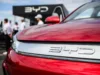
The pact could help Stellantis reduce development spending and better compete with China’s BYD Co. and MG in Europe, as well as rivals including Volkswagen AG and Renault SA.
“Looking ahead, the central question is whether Leapmotor’s expertise will be integrated to strengthen existing Stellantis brands or whether it will gradually displace them,” said Adrien Brasey, an analyst at Alphavalue.
The manufacturer is scaling back its EV strategy and earlier this month announced writedowns and charges of €22.2 billion ($26.1 billion), part of a broader effort to stem declining market share and profits.
As part of the reset, Stellantis is bringing back the Hemi V8 engine for its Ram truck brand. In Europe, the company is reintroducing diesel engines in models such as the Opel Astra and Peugeot 308 and introducing a hybrid version of the Fiat 500. The company is now focusing on using more of the partner’s technology, the people said.
Stellantis is not alone in seeking Chinese expertise. Volkswagen is building EVs on Xpeng Inc.’s platform, while its Audi brand uses partner SAIC’s technology. Renault’s new electric Twingo relies on the French manufacturer’s R&D operations in China for design and technology.
Manufacturers are racing to match China’s development speed and cost reductions, with companies there often bringing new vehicles to market twice as fast. Buyers in China are shifting away from Western brands, while models such as BYD’s Seal crossover are gaining traction in Europe.
Stellantis’ venture with Leapmotor dates to 2023, established under then-CEO Carlos Tavares. The deal included Stellantis taking a 20% stake in Leapmotor for $1.1 billion, later diluted to about 15%, and creating a joint venture called Leapmotor International.
Since then, Leapmotor has begun offering three models through Stellantis’ European distribution network. After initial assembly in Poland, the company plans to manufacture vehicles this year at Stellantis’ Zaragoza plant in Spain.
A broader pact with Leapmotor would come as Stellantis regroups from market share losses in the U.S. and Europe. Filosa, who took over in June, is expected to outline the company’s next strategic steps at a capital markets day in May.
The company is seeing early returns from last year’s pledge to invest about $13 billion in the U.S., its largest profit center. In Europe, factories face overcapacity and intense competition pressuring returns.
With assistance from William Wilkes.