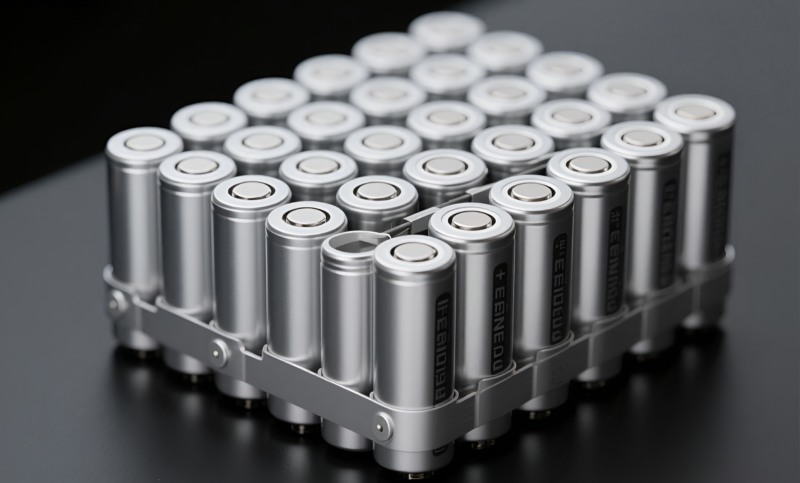
Sodium-ion batteries could reach cost parity with lithium-ion batteries within the next two years, according to Li Shujun, general manager of Zhongke Haina, also known as Hina Battery Technology, as cited by IT-Home.
Li said lithium battery costs currently range from 0.3 to 0.5 yuan per Wh (0.044–0.073 USD/Wh), while sodium batteries remain higher at 0.5 to 0.7 yuan per Wh (0.073–0.102 USD/Wh) depending on application scenarios. However, he stated that sodium battery costs are declining rapidly, while lithium battery costs are under upward pressure, setting the stage for convergence.
Crossover by 2027
He expects the two cost ranges to intersect around 2027, describing the timing as relatively certain. By 2028, the ranges are projected to overlap, indicating that sodium batteries could become economically competitive across a wider set of applications.
According to Li, this crossover point would signal market adoption, as cost alignment is typically required before large-scale substitution across battery chemistries.
Hina targets
Looking further ahead, Li said that after 2028, sodium-ion battery production could scale to the hundred GWh level, while cell costs fall to around 0.3 yuan per Wh (0.044 USD/Wh). The energy density of energy-oriented sodium battery products is expected to exceed 180 Wh/kg as technology advances.
Hina Battery Technology is among the companies advancing the commercialisation of sodium-ion batteries in China, with deployments already extending to commercial vehicles and energy storage systems.
Scaling up
At the industry level, multiple manufacturers are advancing sodium-ion battery performance toward lithium-equivalent benchmarks. CATL has introduced a sodium battery platform with energy density around 175 Wh/kg, targeting applications across passenger vehicles and energy storage.
These developments, alongside emerging real-world validation data, indicate that sodium-ion batteries are moving beyond early-stage deployment.
Hina also disclosed new real-world testing data for sodium-ion batteries in heavy-duty truck applications at a March 31 industry event in Wuhan. The company said its “Haixing” sodium cells demonstrated an operating range from -40°C to 60°C, with discharge capacity retention above 90% at -20°C and fast-charge cycle life exceeding 8,000 cycles.
According to the company, sodium-powered heavy trucks showed around 15% lower energy consumption per kilometre compared with lithium-ion equivalents, while deeper discharge capability enabled roughly 20% longer range under typical conditions. The company stated that these results indicate that sodium battery heavy trucks have moved from technical validation into early-stage commercial application.
Industry push
Vehicle-level and system-level developments provide additional context. A previous CarNewsChina report highlighted BAIC’s sodium-ion battery prototype, capable of charging in approximately 11 minutes, with an energy density exceeding 170 Wh/kg and improved performance at low temperatures.
Another report noted that BYD is advancing sodium battery durability toward 10,000 charge cycles alongside solid-state battery development, with both technologies targeting around 2027 timelines.
Policy backdrop
Policy direction has also supported multiple battery chemistries. In 2025, Chinese authorities outlined plans to develop lithium, sodium, and other advanced battery technologies as part of a broader push for high-safety and long-duration energy storage systems.
Within this framework, sodium-ion batteries are positioned as an alternative that reduces reliance on lithium resources while supporting applications in energy storage, commercial vehicles, and cold-climate environments.
Taken together, the projected 2027–2028 cost convergence window may become a key timing factor for broader adoption, as pricing alignment, performance improvements, and industrial scaling continue to develop in parallel.

Follow us for ev updates