Support CleanTechnica’s work through a Substack subscription or on Stripe.
For much of the past decade, China has been the global reference case for electric vehicle (EV) adoption.
It scaled faster, built deeper supply chains, and turned industrial policy into market dominance. By contrast, India’s EV journey has been slower, noisier, and far more fragmented. Yet as of early 2026, that divergence may be India’s strategic advantage—not its weakness.
CleanTechnica wrote this piece after starting to develop stories on India’s EV expansion and realized the numbers don’t reflect the internal situation in India. Though profitability and business sense come with volume, the availability of information coming from market acceptance is sparse, and usually expensive. That is why I thank the anonymous yet collaborative information from the Automotive Research Association of India (ARIA) which is under the Ministry of Heavy Industries of India as well as the Society of Indian Automobile Manufacturers (SIAM), as well as information from the China Electric Vehicle Association (AVA).
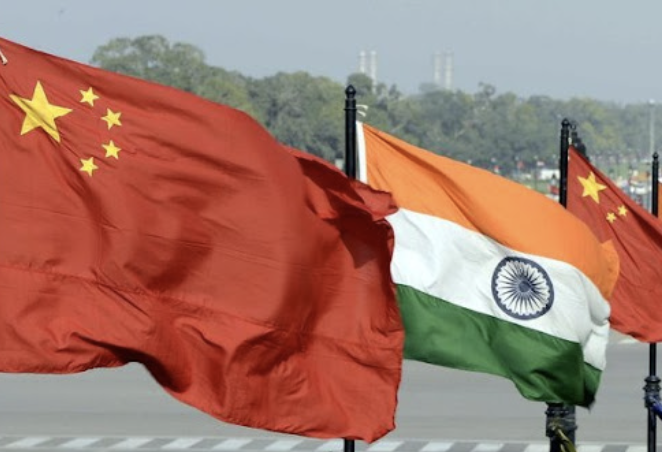
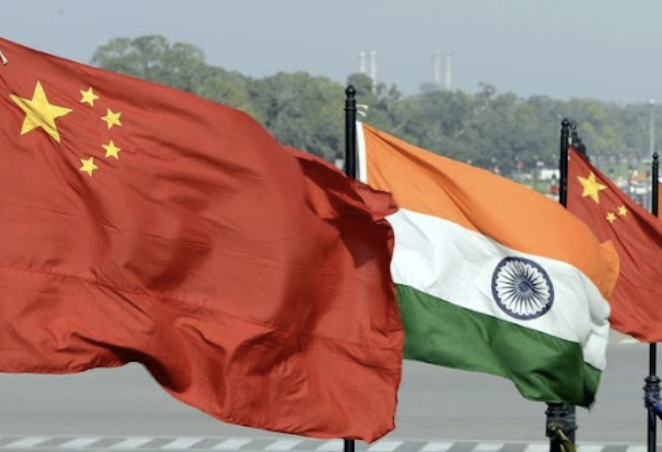
The numbers make more sense when the context is clear. These two countries have proven that in the global EV transition, the choice is no longer between moving fast and falling behind. China demonstrated how to industrialize electrification. India is demonstrating how to mainstream it.
Scale first, market later
Where China pursued scale through centralized control and manufacturing primacy, India has engineered a more distributed, incentive-stacked model that blends federal direction with aggressive state-level experimentation. The result is not a carbon copy of China’s playbook, but a distinctly Indian EV ecosystem—one optimized for affordability, political federalism, and mass-market mobility rather than export-driven dominance.
Take a look at China’s latest EV sales reports. Although brand led, China’s EV success was neither accidental nor purely market-driven. Beginning in the late 2000s, Beijing treated electrification as a strategic industrial project. Central subsidies were massive, long-term, and tightly coordinated with local governments. Automakers were protected, foreign players were controlled, and the battery supply chain—from lithium refining to cathode chemistry—was localized at speed.
This produced three decisive outcomes.
First, manufacturing scale. Chinese firms reached production volumes that collapsed unit costs, particularly in batteries. Second, infrastructure certainty. Charging networks, urban access rules, and license plate restrictions all pushed consumers toward EVs regardless of personal preference. Third, platform dominance. By the early 2020s, China wasn’t just the world’s largest EV market—it was its technology exporter.
But the model had limits. Subsidy dependence distorted competition. Overcapacity emerged. And the system relied heavily on centralized fiscal power—something India does not possess, nor politically tolerate.
Federalism as strategy
India approached electrification later and more cautiously, constrained by fiscal limits, a fragmented auto market, and deeply entrenched two- and three-wheeler mobility. Rather than forcing the transition from the center, New Delhi gradually shifted toward a coordinated federal model—one that lets states compete, specialize, and innovate.
By 2026, this has evolved into what policymakers increasingly describe as a “double-incentive” framework.
At the center is the PM E-DRIVE scheme, the successor to FAME-II, which focuses less on private passenger cars and more on system-level impact: electric buses, commercial fleets, charging infrastructure, and last-mile logistics. The central government sets broad direction, demand incentives, and manufacturing signals through instruments like the Production Linked Incentive (PLI) scheme.
States, meanwhile, do the political heavy lifting—shaping consumer behavior, land use, and local industrial policy.
This division of labor is not accidental. It reflects India’s constitutional reality—and, increasingly, its economic logic.
Three paths, one market
Nowhere is this divergence from China clearer than at the state level.
Maharashtra, India’s financial and logistics hub, has positioned itself as the country’s Total Cost of Ownership (TCO) leader. Its EV Policy 2025—extended through 2030—prioritizes operating economics over sticker-price subsidies. Toll-free access for EVs on major expressways such as the Mumbai–Pune corridor and the Samruddhi Mahamarg directly targets fleet operators and high-usage vehicles. For commercial buyers, the math is compelling: lower fuel, lower tolls, lower taxes.
Delhi, by contrast, has shifted toward density and retrofitting. Under its Draft EV Policy 2.0, the capital is deprioritizing simple purchase subsidies in favor of ecosystem saturation. A proposed ₹50,000 incentive for vehicle retrofitting—allowing older petrol and diesel vehicles to be converted to electric—signals a pragmatic response to urban pollution constraints. Charging infrastructure targets are similarly aggressive, with a focus on metro stations and last-mile delivery hubs.
Uttar Pradesh, India’s most populous state, has taken a volume-first approach reminiscent of China—but without central command. By waiving road tax and registration fees for early adopters and introducing women-focused subsidies for electric two-wheelers, UP has driven adoption in rural and semi-urban markets where EV penetration was once assumed impossible. The result: India’s highest number of EV registrations by volume.
China centralized. India diversified.
Manufacturing: China’s fortress vs India’s battery belt
China’s manufacturing advantage rests on vertical integration. Battery giants sit alongside automakers, raw material processors, and electronics suppliers, all within tightly managed industrial zones.
India has chosen a different route. Rather than building a single national EV cluster, it is allowing regional specialization to emerge. Tamil Nadu and Karnataka anchor what industry insiders increasingly call India’s “battery belt.” Tamil Nadu now accounts for an estimated 35–40% of EVs manufactured in the country, supported by incentives such as state GST reimbursements and public-private partnerships for ultra-fast charging corridors. Karnataka’s Clean Mobility Policy, meanwhile, focuses on battery swapping, electronics, and software—leveraging Bengaluru’s deep technology base.
This decentralized approach lacks China’s brute-force efficiency, but it offers resilience. Supply chains are less concentrated, political risk is diffused, and states compete to attract capital rather than waiting for central allocation.
Adoption at scale
By the end of 2025, India crossed a symbolic threshold: 2.3 million cumulative EV registrations, equivalent to roughly 8% of new vehicle sales. The mix matters.
Electric two-wheelers remain the backbone, accounting for more than half of all EV sales. Three-wheelers—critical to urban mobility—have reached nearly 35% electrification in new registrations. Passenger vehicles, long considered India’s EV laggard, are finally accelerating, with year-on-year growth exceeding 70%.
According to Federation of Automobile Dealers Associations data, 2025 marked the point at which EV adoption moved beyond early adopters and into the mainstream consideration set. This is a quieter transition than China’s—but arguably more durable.
From subsidies to mandates
China moved decisively from subsidies to mandates, using license plate restrictions and fleet electrification rules to force adoption. India is approaching that inflection more cautiously.
The PM E-DRIVE scheme, with an outlay of ₹10,900 crore (~$1.2 million) reflects this shift. Demand incentives are increasingly targeted at buses, trucks, and commercial fleets—segments with clear emissions and economic impact. Meanwhile, NITI Aayog has begun openly advocating a transition from incentives to obligations, including proposals to fully electrify select pilot cities over the next five years.
At the same time, manufacturing policy is tightening. The PLI scheme has pushed tens of thousands of crores into local EV component and battery investment, gradually reducing dependence on imports—without attempting to replicate China’s full-stack dominance overnight.
Adoption at scale
By the end of 2025, India crossed a symbolic threshold. Annual EV sales reached about 2.3 million units, equivalent to roughly 8 percent of all new vehicle registrations in a 28.2-million-unit automobile market, according to the India Energy Storage Alliance. In raw volume across all vehicle classes, that already places India in the same conversation as Europe’s battery-electric car market. In 2025, the EU-27 plus EFTA registered about 1.88 million new BEVs, while China remained in a different league altogether with approximately 16.5 million new-energy vehicles sold during the same period.
The composition of that 2.3-million figure is the real story.
Electric two-wheelers accounted for about 1.28 million units, or 57 percent of total EV sales. Three-wheelers—still the backbone of short-distance urban mobility and last-mile logistics—added roughly 0.8 million units, or 35 percent. Passenger vehicles, long considered India’s EV laggard, contributed around 175,000 units. Just a year earlier, electric car sales had been close to 100,000. Electrification in new three-wheeler registrations has reached roughly one-third of the market, a level that industry analysts increasingly describe as approaching maturity.
A steep trajectory
The growth trajectory is more complex than the headline unit numbers suggest. India’s EV market expanded from roughly 2 million units in 2024 to 2.3 million in 2025, an increase of about 15 percent year on year, following a 24 percent surge the previous year. Two-wheelers, commercial fleets, and logistics vehicles drove most of that expansion, reflecting the country’s focus on high-utilization segments rather than private passenger cars.
China, despite its size and increasing maturity, still grew faster in percentage terms in 2025, with new-energy vehicle sales rising by just over 28 percent, even as that marked a clear deceleration from the roughly 40 percent growth recorded in 2024. Europe’s battery-electric car market, coming off a weaker base, posted one of the strongest rebounds among major regions. Market share jumped from 13.6 percent to 17.4 percent in a single year, implying full-year growth in the 30 percent range, with fourth-quarter sales in the largest European markets surging by more than 40 percent year on year.
Across developing Asia outside China, electrification is accelerating even faster in percentage terms, albeit from a much smaller base. About 400,000 EVs—mostly passenger cars—were sold in those markets in 2024, up roughly 40 percent from the previous year, with Southeast Asia contributing an increasing share of the total.
Taken together, the comparison highlights a structural distinction. In absolute unit terms, India has already become one of the largest EV markets in the world because electrification is happening first in the vehicle classes that move the most people and goods. In percentage growth, it is no longer the outlier. China’s transition, though slowing, is still expanding faster; Europe’s BEV rebound has been sharper; and several emerging Asian car markets are growing more quickly from a smaller base.
Slow charging, long term energy
Its EV penetration remains low versus its total vehicle market, which is one of the largest globally, and its electrification is anchored in cost-sensitive, high-utilization mobility rather than discretionary private consumption. That makes the transition less explosive in year-to-year percentage terms, but potentially more durable over the long term. It also explains why capital is increasingly flowing into financing, fleet aggregation, battery services and public transport rather than into premium private vehicles.
That shift in the center of gravity—from early adoption to system integration—is the hinge that connects India’s market reality to its long-term strategic position.
Where India may outperform China
China’s EV success is undeniable—but it is also facing headwinds: slowing domestic demand, export pushback, and intense price competition that is stretching supplier payment cycles and margins across the value chain.
India’s model is moving in the opposite direction. Electrification is being driven by vehicles that generate daily income—scooters, rickshaws, delivery fleets, and buses—and the transition is tied directly to cash flow rather than consumer sentiment. The EV finance market alone is projected by NITI Aayog and the Rocky Mountain Institute to reach ₹3.7 lakh crore (~$40.8 million) by 2030. Electrification is becoming embedded in logistics, urban planning, and public transport procurement rather than remaining a standalone automotive category.
In other words, China scaled supply first and is now searching for demand beyond its borders. India is scaling demand in the segments that cannot function without cost discipline—and supply is organizing itself around that reality.
Two countries, Two logics
China built the world’s EV factory through centralized authority, industrial concentration, and more than $230 billion in state support over a decade and a half. It achieved majority market share in new vehicle sales, created the deepest battery supply chain on the planet, and turned scale into export power.
India is doing something structurally different.
Its transition is being shaped by federal competition rather than central command, by operating economics rather than consumer subsidies, and by the vehicle classes that move the most people and goods rather than the ones that carry the highest margins. That is how a market that only recently crossed 2.3 million annual EV sales has already become one of the largest in the world by unit volume, even with penetration still in the single digits.
The same decentralization that slows policy alignment is accelerating real adoption. States compete for manufacturing, for charging deployment, for fleet conversion and for financing models. High-utilization vehicles electrify first because they have to. Capital follows cash flow. Supply chains form around proven demand instead of speculative capacity.
This is why India’s lower year-on-year growth rate is not a sign of weakness. It reflects a market that is expanding on top of a rapidly widening base, embedded in daily transport economics and backed by one of the largest underlying vehicle markets in the world. Penetration remains low, the addressable demand is enormous, and the transition is being integrated into public transport, logistics, and urban development at the same time.
China scaled supply and is now pushing outward to sustain it, while India is scaling demand in the segments that cannot revert to internal combustion once the cost equation turns.
Neither model is universally transferable. But for emerging economies that do not have China’s fiscal firepower or political centralization, India’s pathway—messier, slower, federally contested, and economically grounded—may prove far more replicable.
Sign up for CleanTechnica’s Weekly Substack for Zach and Scott’s in-depth analyses and high level summaries, sign up for our daily newsletter, and follow us on Google News!
Have a tip for CleanTechnica? Want to advertise? Want to suggest a guest for our CleanTech Talk podcast? Contact us here.
Sign up for our daily newsletter for 15 new cleantech stories a day. Or sign up for our weekly one on top stories of the week if daily is too frequent.
CleanTechnica uses affiliate links. See our policy here.
CleanTechnica’s Comment Policy