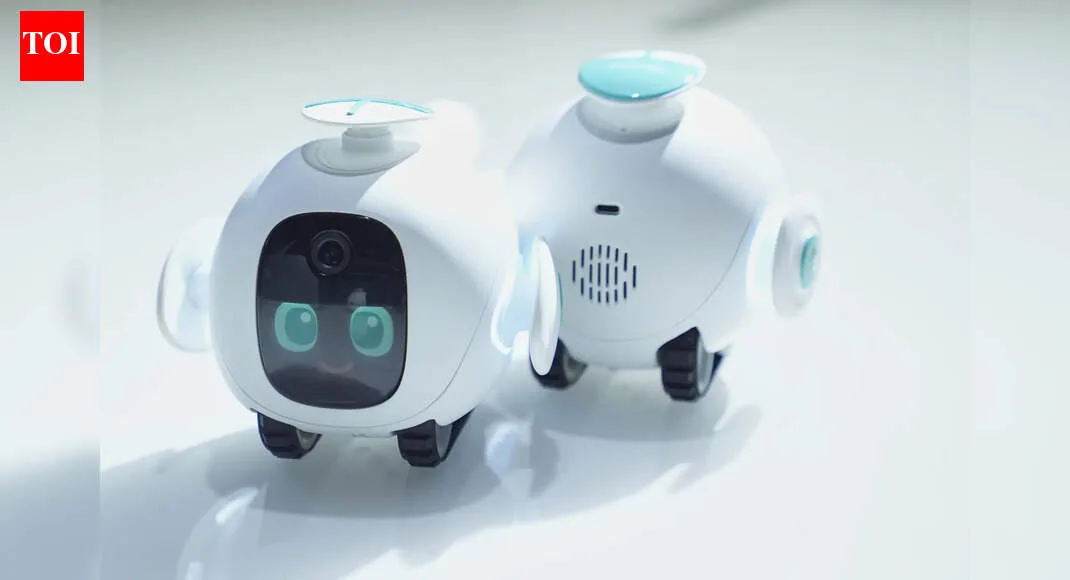
Tesla CEO Elon Musk‘s big concern about China dominating the humanoid robots sector and leaving America behind was wide at display at this year’s Consumer Electronic Show (CES) in Las Vegas. Chinese-made human-like robots were everywhere across the exhibition floor. One could see them playing table tennis, sweeping floors, practicing Kung Fu and more. In April 2025, Elon Musk warned America during a conference call that while he believes that Tesla Optimus robots lead in performance, China might ultimately dominate the field. «I’m a little concerned that on the leaderboard, ranks 2 through 10 will be Chinese companies,» Musk said, as reported by Bloomberg.As analysts say, China’s latest robotics innovations were delivered to the heart of America’s technology showcase, serving as a constant reminder of the technological race between the world’s two biggest economies. Several big and small Chinese robot creators occupied booths with their machines.Tencent-backed Agibot unveiled Genie Sim 3.0, its next-generation simulation platform. Genie Sim 3.0 is reportedly built on Nvidia Isaac Sim, which provides more realistic virtual environments for training and testing robots. Agibot, which made its US debut at CES, told Bloomberg that the system will cut training time and costs, and make it easier to transfer skills from simulation to the real world. Like many Chinese humanoid robot makers, Agibot hopes to expand overseas this year. A company official, who didn’t want to be named, said that it plans to target markets with labor shortages, such as Japan, as well as countries like the US, where robots could also play promotional or entertainment roles.
Cost factor works for Chinese robots
Chinese startups including EngineAI, Unitree, AgiBot and Galbot are leveraging artificial intelligence to help robots learn new tasks independently. Humanoid robot makers in China accounted for the vast majority of the roughly 13,000 units shipped globally last year, far outstripping US companies like Tesla Inc. and Figure AI in sheer volume, according to research firm Omdia. China’s leadership now may help the country as the number of robots is projected to surge to 648 million in 2050, according to research from Citigroup Inc.“Chinese vendors are setting benchmarks in large-scale production,” Omdia said. Pricing too reportedly works for Chinese humanoid robots as they are cheaper than Western-made models, with Unitree offering an entry-level model for just $6,000 and AgiBot asking about $14,000 for a scaled-down version. By comparison, Elon Musk has previously given a price range of $20,000 to $30,000 for Tesla’s Optimus humanoid robots, which haven’t yet reached full-scale production.Omdia expects global humanoid robot shipments growing to 2.6 million units in 2035 as factors including AI models, dexterous hands and self-reinforcement learning have made the robots viable for industrial, service and eventual household roles. The research firm’s report covers two-legged humanoid robots as well as wheeled-based products with a human-like upper torso.Reports suggest that China is trying to build a globally competitive industrial ecosystem for humanoid robots, which government policies have prioritized as «disruptive products,» with the market expected to reach $43 billion by 2035.