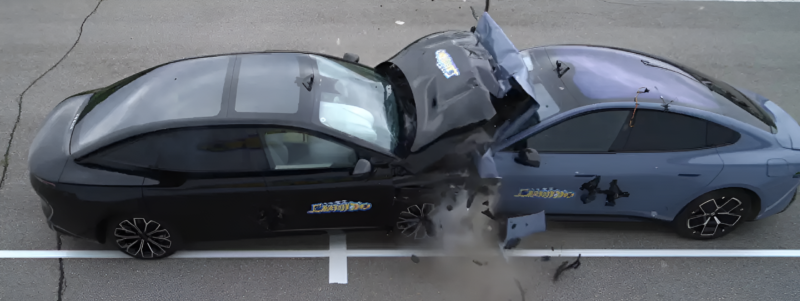
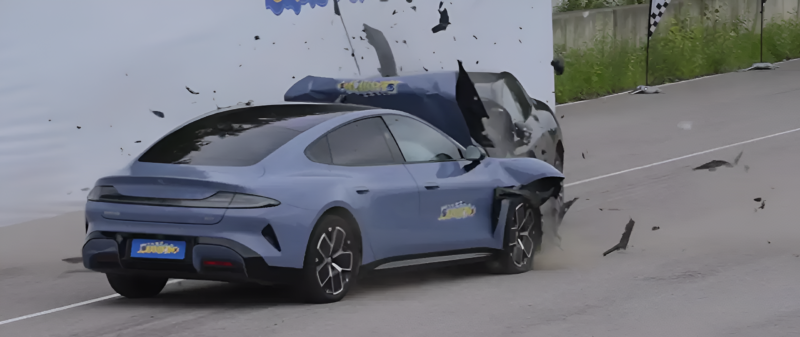
The Chinese court has opened a trial of a high-profile automotive content creator accused of damaging the reputation of a product through a controversial crash-test video featuring the Xiaomi SU7 and Zeekr 007. The case was heard on February 6 at the Haidian District People’s Court in Beijing, with no verdict announced at the conclusion of the hearing.
According to Chinese media reports, prosecutors charged the defendant, identified as Gao, with damaging commercial reputation. The trial lasted more than three hours, during which prosecutors and defense lawyers debated the allegations outlined in the indictment. The defendant pleaded not guilty during the hearing, while his defense team argued for an acquittal.
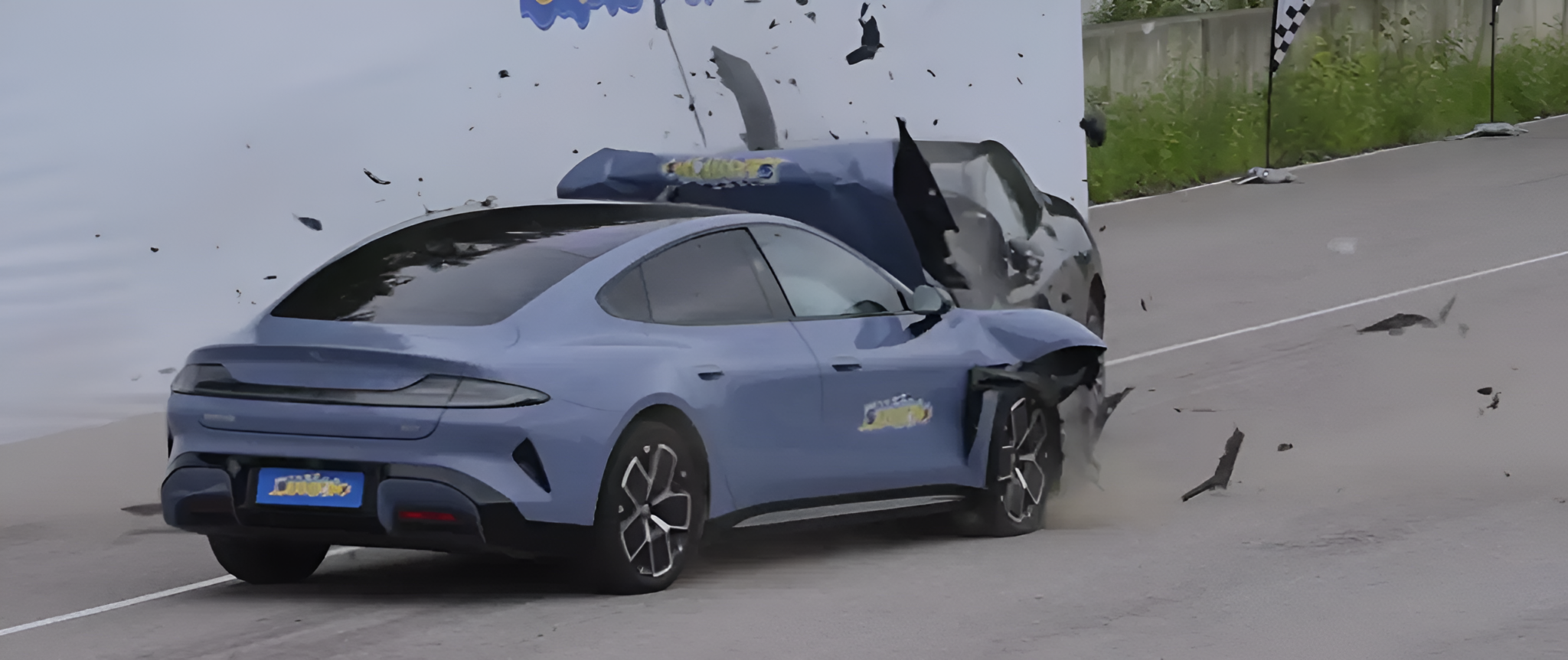
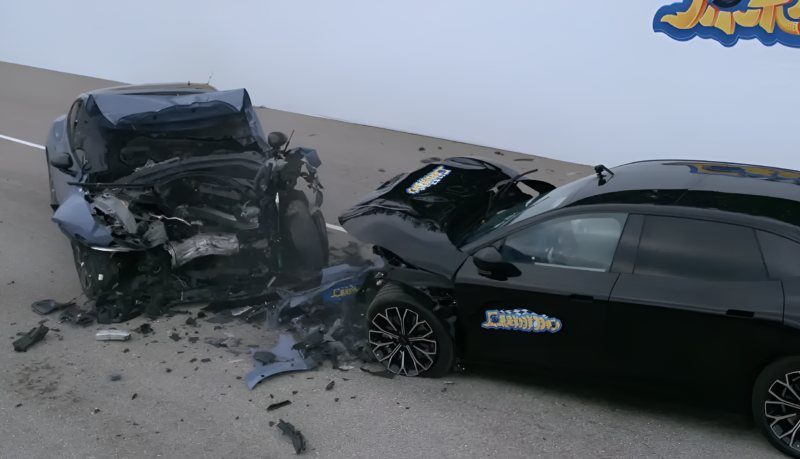
Prosecutors stated that between July 22 and August 12, 2024, Gao organized and filmed a head-on collision test between the Xiaomi SU7 and another brand’s vehicle, later identified as the Zeekr 007. Investigators alleged that the defendant concealed the fact that the SU7’s auxiliary battery power cable had been manually disconnected before the collision and used misleading images to describe battery damage. The indictment also stated that Gao claimed, without verification, that the SU7’s emergency call system failed after the crash, and that these statements constituted false information.
The video was published on Bilibili on August 13, 2024, and prosecutors argued that it caused significant reputational damage to Xiaomi’s automotive products. Chinese media previously reported that the collision test was conducted at approximately 60 km/h with a high overlap ratio, and that the video suggested differences in post-collision performance between the two vehicles.
Police detained Gao on November 27, 2024, on suspicion of damaging commercial reputation, and he was formally arrested on January 3, 2025. Prosecutors later filed charges in September 2025. Chinese media reported earlier that Xiaomi described the test as lacking rigor, incomplete records, and unreliable conclusions.
The Zeekr legal department stated in August 2024 that it had not cooperated with any individual or organization on such tests and reserved the right to pursue legal action regarding false information.
Chinese regulators have also cited similar cases in broader enforcement actions against misleading automotive performance content, with multiple accounts penalized for selectively disclosing test data and publishing conclusions considered misleading.
The case remains pending judgment following the court hearing.

Follow us for ev updates