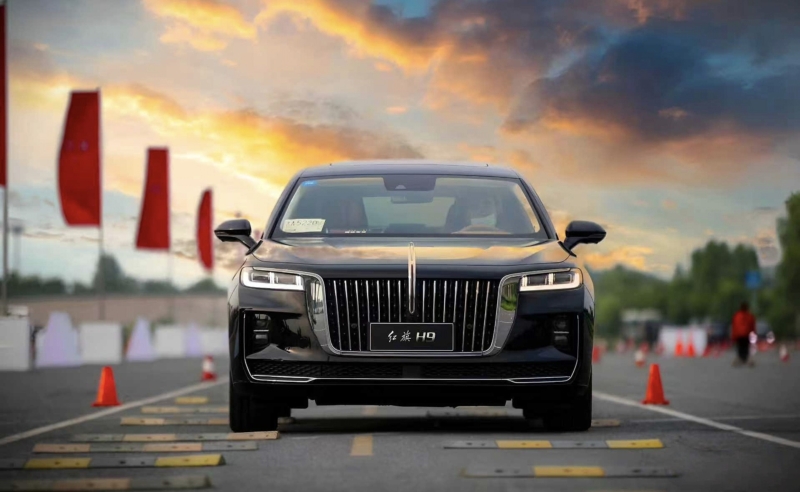
China’s FAW Group is accelerating the development of solid‑state batteries for its Hongqi brand, signalling a significant push by a traditional automaker into next-generation EV energy storage. According to recent Chinese media reports, FAW aims to transition from prototype production to small-batch production of its flagship Hongqi sedans and SUVs by the end of 2027, CLS reports.
FAW has reportedly completed trial production of 66 Ah solid-state cells and is collaborating with 27 industry partners on research, development, and testing. These collaborations aim to address technical challenges, including energy density, cycle life, thermal management, and scalability, while preparing the batteries for automotive conditions. The prototype cells are undergoing validation for long-range operation in high-end Hongqi sedans and SUVs.
Industry forecasts suggest that all-solid-state batteries could enter small-batch vehicle deployment in China by 2026–2027, aligning closely with FAW’s planned timeline. Early implementations are expected to achieve energy densities around 350–400 Wh/kg, with long-term projections estimating 400–500 Wh/kg by 2030 and over 500 Wh/kg by 2035. These metrics indicate potential improvements in driving range and safety compared with conventional lithium-ion batteries.
FAW’s approach combines vehicle electrification with industrial collaboration, leveraging its partner network to accelerate development and commercialisation. The company’s strategy suggests that solid-state batteries will first appear in high-end Hongqi models, with broader integration possible as technology matures and energy densities increase over the next decade.
Beyond FAW, the Chinese solid-state battery sector has seen strong investor interest, with concept stocks averaging ~60.91% gains this year, and nine companies reporting over 100% growth, reflecting optimism about future commercialisation. Meanwhile, other automakers, such as GAC Group, have built large-capacity pilot production lines, illustrating the industry-wide move toward scaling next-generation battery technology.
The initiative also benefits from national policy support, aligning with China’s long-term plans for advanced energy storage in electric vehicles. Analysts note that FAW’s timeline indicates when traditional Chinese OEMs may begin deploying solid-state technology in consumer vehicles, potentially narrowing the gap with emerging EV manufacturers pursuing advanced battery solutions.
While mass production is not yet underway, FAW’s timeline and collaboration network indicate a clear pathway from prototype to consumer-ready solid-state batteries by 2027. Ongoing testing of the 66 Ah prototype cells will inform future iterations, enabling FAW to scale energy capacity and improve reliability for commercial production.
The plan underscores a trend in which legacy automakers in China are actively pursuing next-generation battery technologies, combining R&D, industrial partnerships, and strategic timelines. By targeting a 2027 mass deployment, FAW aims to ensure that Hongqi vehicles are among the first premium EVs in China to adopt solid-state battery technology, potentially shaping consumer expectations and industry standards.

Follow us for ev updates