When US President Donald Trump recently announced the rollback of vehicle fuel efficiency regulations, he called it the end of the «green new scam.»
He was referring to efforts to electrify transportation in the US by the outgoing Biden administration, which gave incentives for automakers to phase-out internal combustion engine cars in favor of low emission, climate-friendly electric vehicles (EVs).
Since coming to power in January, the Trump administration has already repealed a range of incentives aimed at getting fossil-fuel powered cars off the road. These include revoking a Biden executive order stipulating that 50% of cars sold in the US by 2030 should be electric; freezing billions in funding for charging infrastructure, and eliminating a $7,500 (€6,444) tax credit on EV purchases. Trump has concurrently defunded green energy programs in favor of oil and gas.
Arguing that the «absurd tailpipe emissions standards» were «killing» the automobile industry, Trump confirmed to a retinue of car company executives gathered in the Oval Office that fuel efficiency regulations also made cars too expensive.
Industry experts claim the EV incentives were spurring greater investment in electric cars and charging infrastructure, as well as creating new jobs. But Trump has now promised to forgo an electrified future in favor of 19th century technology.
Will petrol cars really be cheaper than EVs?
As a result of the rollbacks, US vehicles will only require a fuel economy of around 35 miles (56 kilometers), as opposed to 50 miles per gallon under Biden’s updated fuel economy standards for 2022-2031 model passenger cars and light trucks.
Both the climate and consumers will lose out due to the roll backs, say critics.
California Governor Gavin Newsom, a Democrat whose state is a renewable energy and EV powerhouse, said Trump was «handing his Big Oil donors exactly what they want: weaker protections for consumers and bigger profits for polluters.»
Confirming US National Highway Traffic Safety Administration (NHTSA) estimates, Newsom said that national fuel consumption would have been reduced by 70 billion gallons (265 billion litres) a year under the outgoing efficiency standards.
Steven Higashide, Director of the Clean Transportation Program at the US nonprofit advocacy group, the Union of Concerned Scientists, says weakened fuel economy rules will ultimately raise the price of gas.
«US vehicle pollution and reliance on oil have dropped and drivers can save money by choosing more efficient vehicles,» he said in a statement.
Fifty years of increasing fuel efficiency standards have helped shield drivers from oil market shocks, given them cleaner air, and ultimately saved them over $5 trillion (€4.26 trillion), said Higashide.
China set to consolidate its clean car dominance
Trump’s move to rollback auto efficiency standards is «a clear win» for the US oil industry, noted Ben Scott, Head of Energy Demand at UK-based climate think tank, Carbon Tracker. «But it’s an even bigger victory for China, as it pushes the US further behind in the EV transition,» he added.
Some 20% of cars sold worldwide were electric in 2024 — a massive 25% increase from 2023. Of the 17 million sold, 11 million were in China – as opposed to about 1.6 million in the US. Near half of China’s domestic car sales were electric in 2024, compared to 10% in the US.
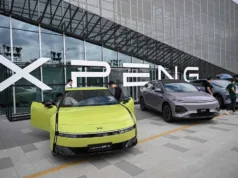
And China, in direct contrast to the US, is dominating the global EV market through massive state incentives that have also helped to drive down costs, making low emission cars cheaper than most petrol models within the country.
Trump’s EV rollbacks will worsen this divide as they tie US domestic automakers to outdated internal combustion engine technology «instead of committing fully to the future,» said Scott.
US auto giant Ford announced this week it was retreating from plans to electrify larger vehicles, in part due to regulatory changes, and will shift focus to gas-powered and hybrid trucks.
Though China now has an EV oversupply problem, in part due to US and European Union tariffs that are limiting exports, Scott believes these cheaper cars will make their way to price-sensitive markets across the Global South.
«The shift to electric vehicles is inevitable everywhere,» he said.
Refueling petrol car market a major setback to climate
Moving people and goods around in the US contributes to 29% of planet-heating carbon emissions, the largest share by sector in the economy.
But the latest fuel economy standards were preventing more than 710 million metric tons of climate pollution from getting into the atmosphere, according to NTSHA.
Electric cars that generate one third of the emissions of petrol cars were set to hasten the decarbonisation of US roads as EV sales broke records throughout the first nine months of 2025.
But this progress is set to stall.
«Clearly the unpredictable nature of US policy related to fuel economy standards and EV incentives will slow the decarbonization of US vehicle fleets,» said Ben Scott.
This will ultimately lead to the «slowing of climate progress,» he added.
Despite concerns that EV batteries too expend a lot of energy and resources, «robust battery recycling can significantly reduce the amount of newly mined materials required,» said Ellen Kennedy, clean transportation expert at the Rocky Mountain Institute, a US energy think tank.
More than 90% of lithium and 95% of nickel and cobalt can be recycled from batteries, she notes.
«Battery mineral recycling and recovery is continuing to improve, whereas fossil fuels are limited in supply and can only be used once,» she told DW.
In contrast to the one-time consumption of 2,150 million tons of oil in 2024 for global on-road transportation, some 125 million tons of minerals can create an inexhaustible circular economy for batteries through reuse and recycling, Kennedy explained.
«This is a self-sustaining extraction that can keep EVs on the road into the future,» she said.
Edited by: Tamsin Walker