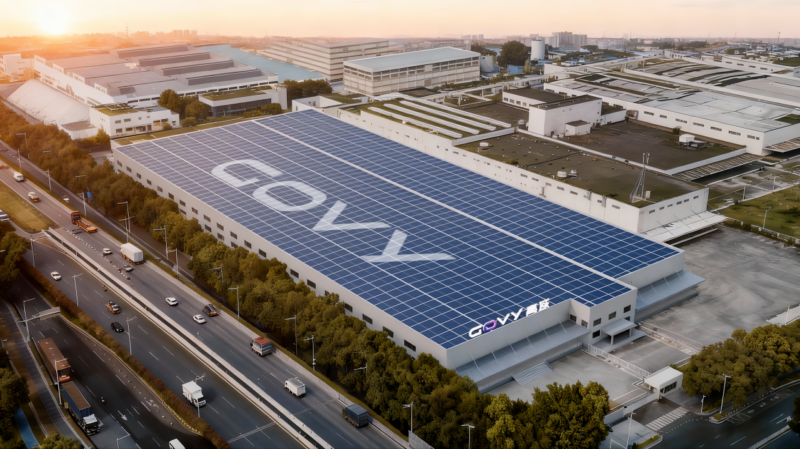
GAC Govy, the flying car brand under GAC Group, announced yesterday that its new Guangzhou factory is slated to commence trial production next month, in January 2026. This is expected to accelerate the airworthiness certification and mass production timelines for the company’s multi-rotor flying car, the Govy AirCab (GAC-A6).
The facility features dedicated workshops for general assembly, sub-assembly, composite material manufacturing, and painting. It will be instrumental in the pilot production and PC certification processes for the Govy AirCab.
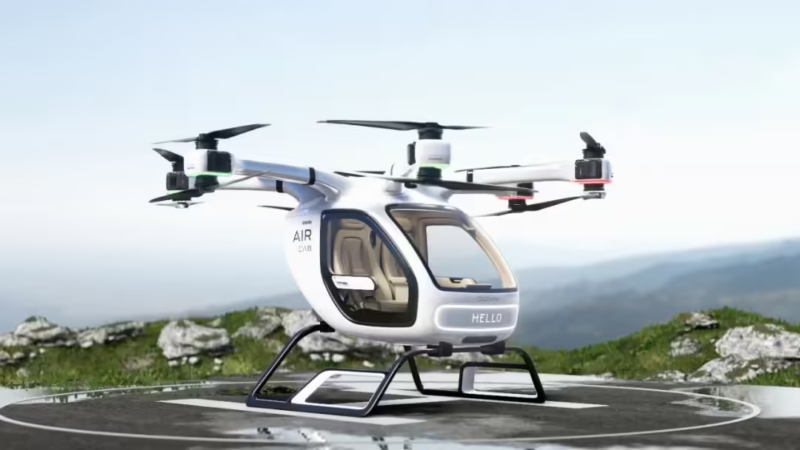
The Govy AirCab has already garnered substantial market interest, with nearly 2,000 customer orders secured to date. The vehicle is currently undergoing a comprehensive airworthiness review, with certification targeted for completion by the end of 2026, paving the way for initial deliveries. The Govy AirCab’s official guide price aims not to exceed 1.68 million yuan (233,000 USD).
GAC Govy recently completed a 200 million yuan (27.7 million USD) Pre-A round of financing in November, bringing its total funding for 2025 to 500 million yuan (69.3 million USD).
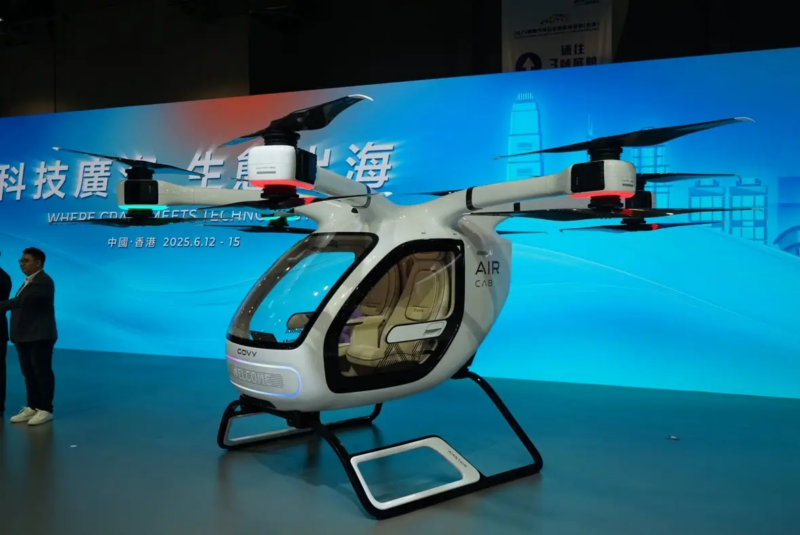
The Govy brand was first unveiled by GAC in December 2024. The Govy AirCab flying car made its official debut in Hong Kong in June 2025, where it attracted attention, securing nearly 1,000 intent orders. Following its launch, GAC Govy held a delivery ceremony for the first Govy AirCab prototype in Hong Kong in July 2025.
The Govy AirCab’s specifications and features highlight advanced technology and safety:
- Range: 30 km.
- Battery & charging: High-density, large cylindrical batteries support a full charge in 25 minutes, with a 50% to 100% charge achievable in 15 minutes.
- Cabin experience: Equipped with 5G network connectivity, an intelligent assistant, fragrance selection, temperature control, and music switching.
- Safety: Features a redundant flight control and navigation system, continuous system monitoring, and cloud-based self-inspection. The separable design of the flight cabin and chassis ensures safe operation even if the power unit malfunctions.
- Materials: Extensive use of aviation-grade carbon fibre composite materials, comprising over 90% of the structural components, resulting in a weight reduction of over 30%.
- Intelligent driving: Incorporates an L4 intelligent driving system with computing power exceeding 500 TOPS and a maximum detection range of over 300 meters.
- Precision: High-precision positioning, synchronisation systems, and precise power and flight attitude control achieve a heading accuracy of ±0.1°.

Follow us for ev updates