

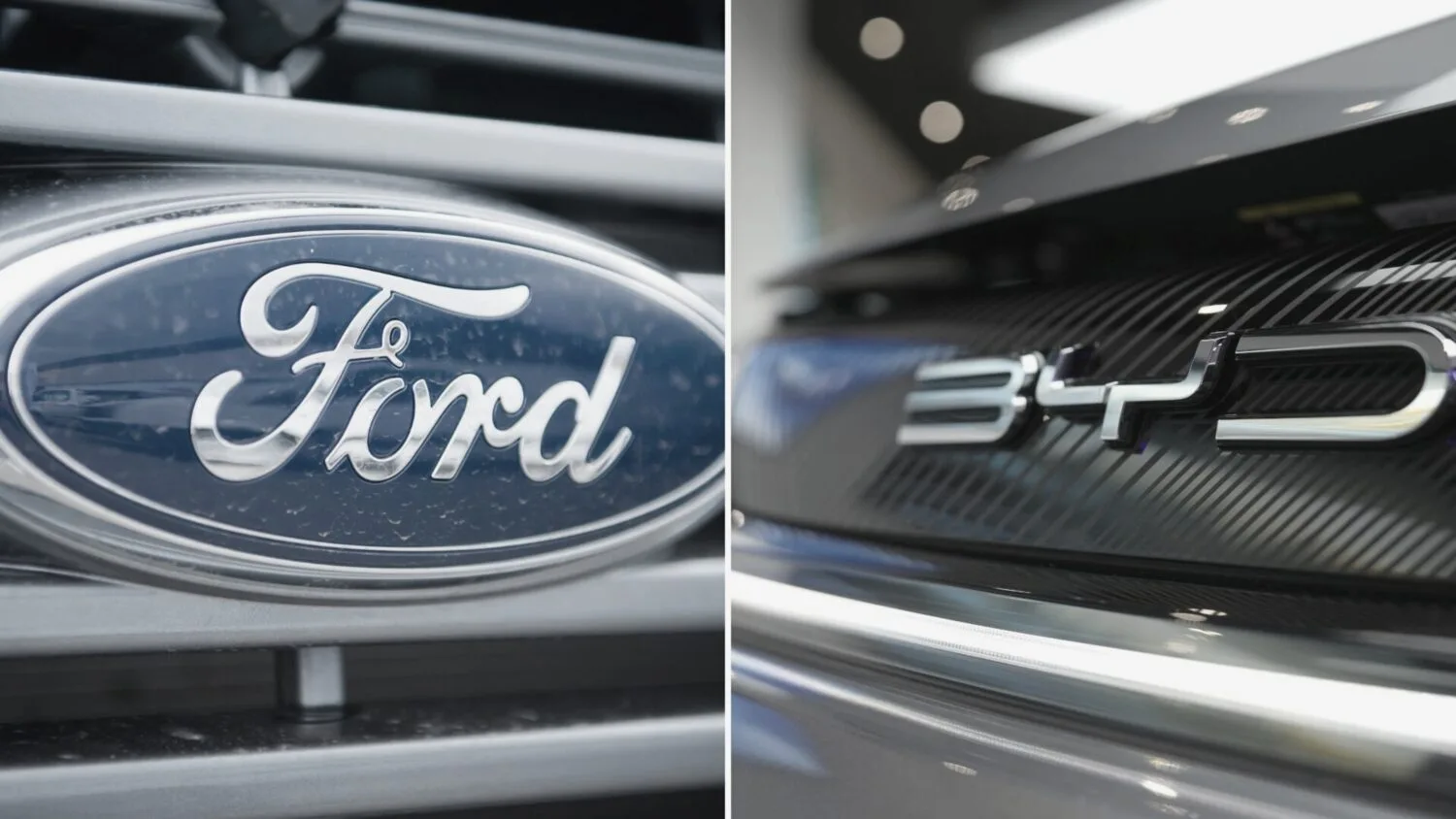

A potential partnership would support Ford’s expanding hybrid strategy as the automaker pulls back from EVs and seeks reliable battery sourcing.
On the Dash:
- Ford is exploring BYD as a battery supplier to support its growing hybrid vehicle lineup.
- The talks highlight Ford’s shift away from EVs and toward hybrids amid changing demand.
- Any deal would face political scrutiny given BYD’s status as a major Chinese automaker.
Ford Motor is in discussions with China’s BYD over a potential partnership in which the U.S. automaker would purchase batteries for some of its hybrid vehicles, according to an exclusive WSJ report.
The companies are currently negotiating the terms of this arrangement, and the discussions remain nonbinding. One proposal under consideration involves Ford importing batteries from BYD for use in Ford factories outside the United States. However, it’s possible that a deal may not ultimately be reached.
If completed, the partnership would pair Ford with the world’s largest Chinese automaker, a company that has unsettled much of the U.S. auto industry with its ability to produce affordable vehicles equipped with advanced technology.
For Ford, the talks address a growing need. As the automaker pulls back from electric vehicles amid softer demand and accelerates its push into hybrids, it requires additional battery supply tailored to hybrid powertrains. BYD, which began as a battery manufacturer and has since become a global auto giant, has extensive experience producing batteries for both electric and hybrid vehicles.
BYD produces most of its batteries in China, but is expanding manufacturing capacity overseas as it expands into markets such as Southeast Asia, Europe, and Brazil.
Following publication of the Journal report, President Donald Trump’s trade adviser, Peter Navarro, publicly criticized the idea, questioning whether the arrangement would make Ford more vulnerable to Chinese supply chains.
Last month, Ford announced it would further scale back its EV plans, taking an expected $19.5 billion in charges, largely tied to its EV business. The company said it now expects hybrids, plug-in hybrids, and all-electric vehicles to account for roughly half of its global sales by 2030, while it expands its lineup of gas-powered and hybrid models.
Hybrid vehicles have emerged as a relative bright spot for the automaker, with its hybrid sales rising 18% in the Q4 of last year to about 55,000 vehicles, and executives have pointed to strong demand for models such as the F-150 hybrid. Speaking at the Detroit Auto Show this week, Jim Farley said the company plans to expand its hybrid and extended-range vehicle offerings.
Ford is also pursuing other battery strategies. The company is building a battery plant in Marshall, Michigan, where it plans to produce lower-cost cells using licensed technology from Chinese battery maker CATL. The project has faced scrutiny from Republican lawmakers but is expected to begin operations this year.
While Chinese automakers remain largely barred from selling vehicles in the U.S. due to tariffs and regulatory restrictions, industry executives continue to view companies such as BYD as a long-term competitive threat. For now, Ford and its peers increasingly see hybrids as the most viable growth segment as consumer demand shifts and EV adoption slows.


