Automakers, battery manufacturers, and companies from around the globe are racing to bring solid-state EV batteries to market, promising significant improvements in energy density, charging, and driving range.
China’s FAW installs first semi-solid-state EV battery
Automakers and battery manufacturers are developing new battery chemistries to reduce EV costs, improve safety, enable faster charging, and deliver longer driving range.
Solid-state batteries are often regarded as the “holy grail” of EV battery technology, with the potential to deliver twice the energy density of traditional liquid lithium-ion batteries. While the tech has shown promise in the lab and in some real-world settings, mass-producing it has not been so easy.
With several “breakthroughs” in the past month or so, that could soon change. FAW Group, one of China’s largest and oldest automakers, is the latest to hit a new milestone.
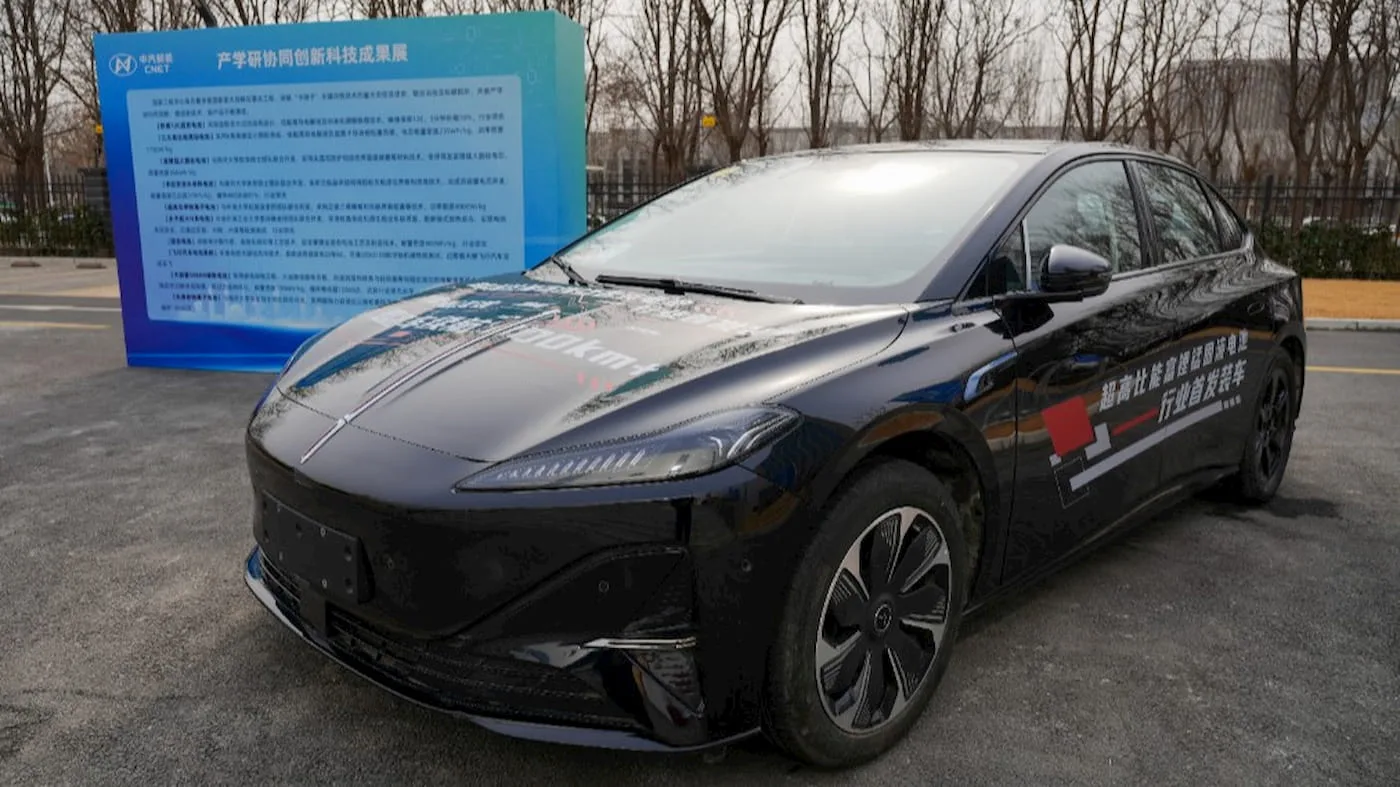
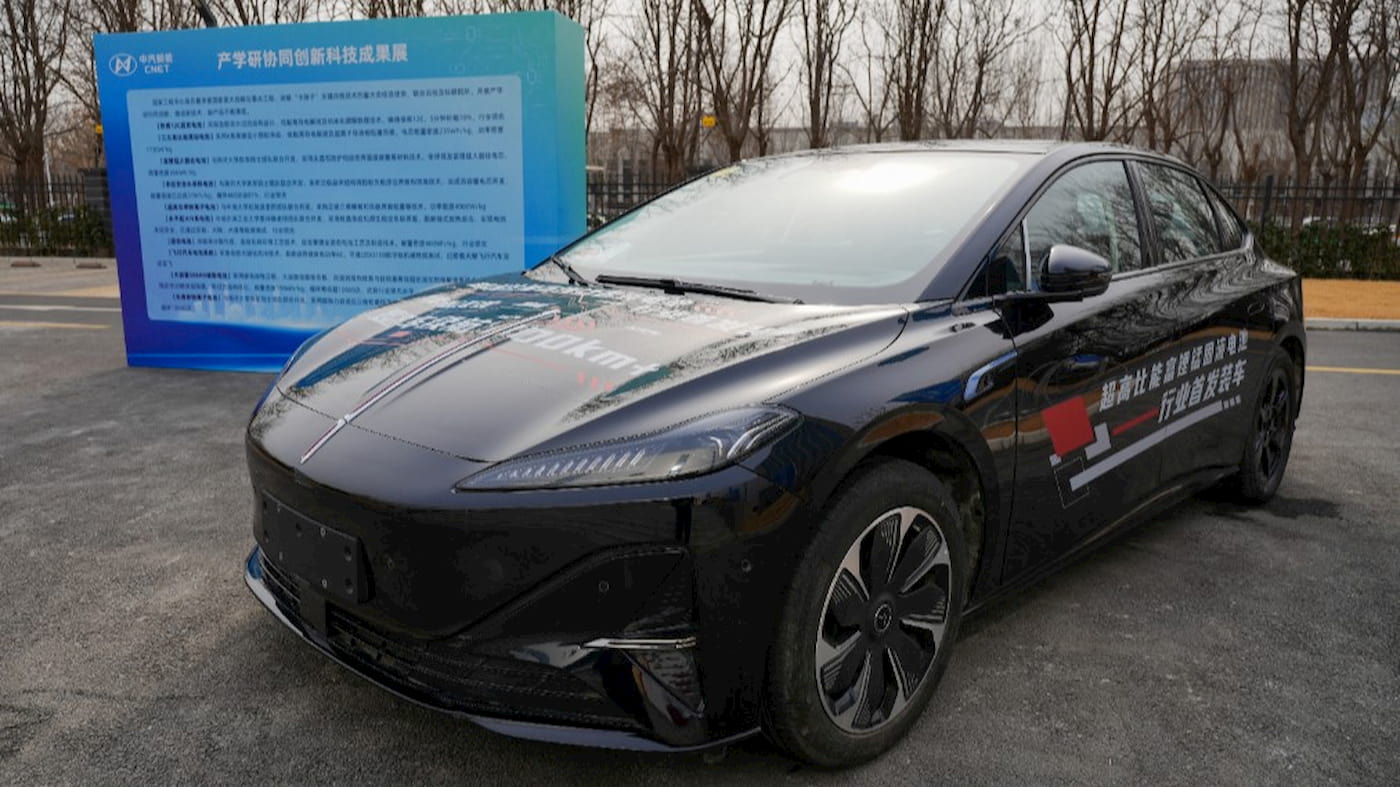
FAW announced on February 10 that it had installed the “industry’s first” lithium-rich manganese semi-solid-state EV battery in a vehicle.
The ultra-high-energy-density battery was developed by FAW’s battery unit, China Automotive New Energy Battery Technology Co Ltd, and a team led by Academician Chen Jun at Nankai University.
According to FAW, the cell energy density exceeds 500 Wh/kg, while the total battery pack capacity is 142 kWh, enabling a CLTC driving range of over 1,000 km (620 miles).
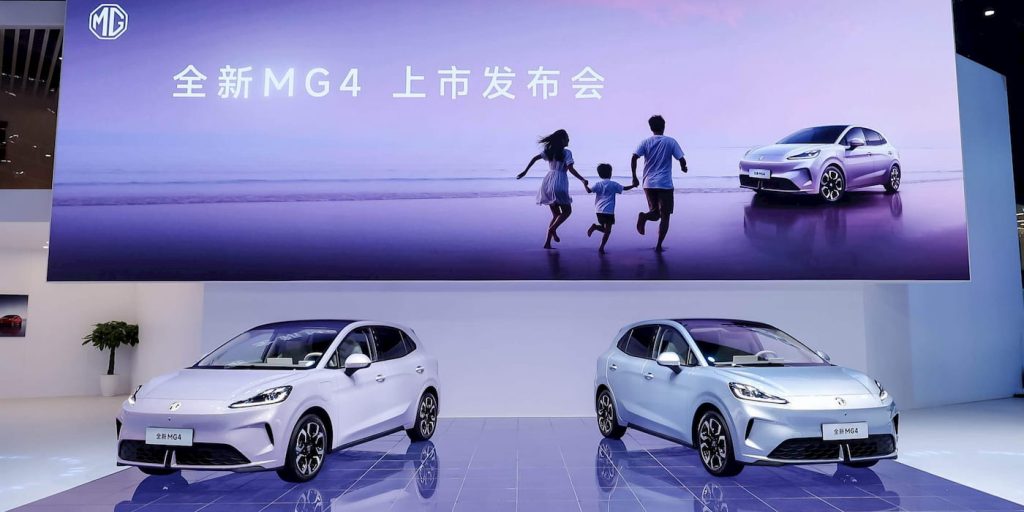
The news comes after SAIC Motors claimed to have delivered “the world’s first mass-produced semi-solid-state” electric vehicle, the new MG4, in December.
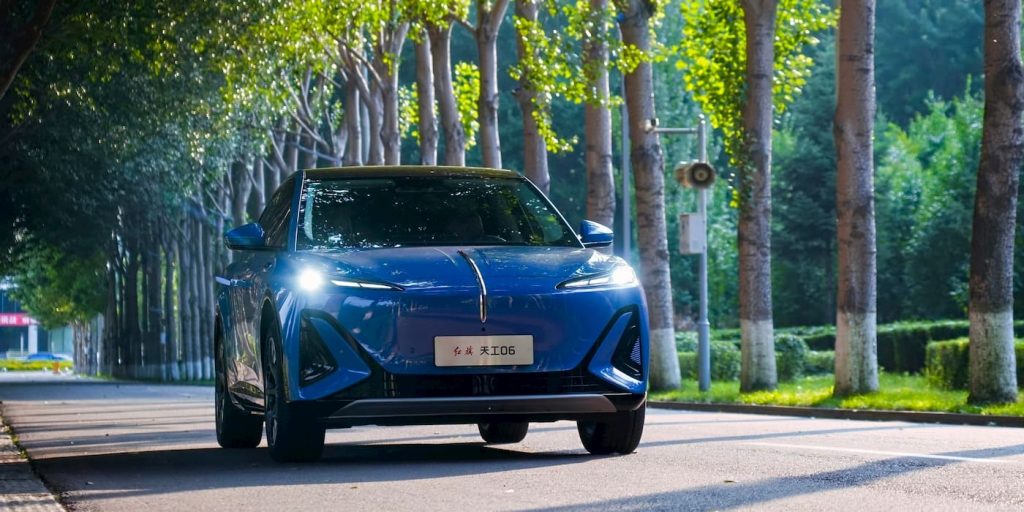
Last month, Dongfeng Motors, another of China’s “big four” automakers, began testing a solid-state battery-powered prototype in extreme cold. Dongfeng also claims its solid-state batteries can unlock more than 1,000 km (620 miles) of CLTC driving range.
While FAW is also using a manganese solution, many Chinese brands are advancing NCM and NCA batteries that also offer higher energy density, but use more Nickel.
Toyota, BYD, CATL, Factorial Energy, Volkswagen, Mercedes-Benz, BMW, and several others are advancing sulfide-based solid-state batteries, which are said to offer superior safety, conductivity, and efficiency.
Electrek’s Take
China is dominating global EV battery sales. According to the latest data from SNE Research, CATL and BYD alone accounted for over 55% of global EV battery usage in 2025.
By advancing new battery chemistries, automakers and battery manufacturers are not only seeking to stay ahead of the competition but also aim to develop safer, more efficient alternatives to traditional lithium-ion batteries.
A report this week from Chinese media outlet Cailian Press claimed that, following a series of “breakthroughs” in key areas, such as battery life and charging, BYD is expected to start producing solid-state batteries in 2027. At first, production will be limited until the new batteries are adopted at scale.
The timeline aligns with what most are aiming for: small-scale production starting in 2027 or 2028, likely for higher-end models, and mass production beginning around 2030.
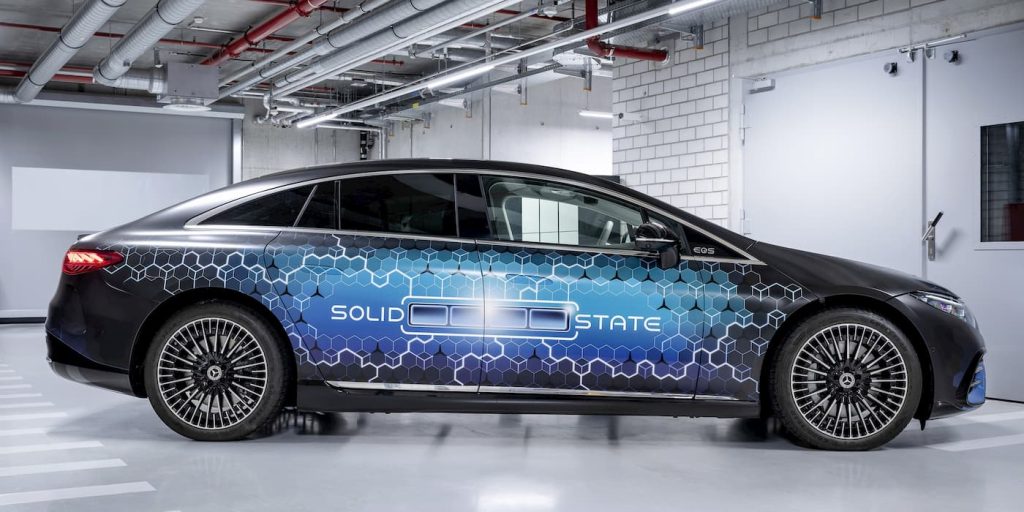
Some are already testing solid-state batteries in real-world situations. For example, Mercedes-Benz announced it had driven a modified EQS, equipped with solid-state EV batteries for 1,205 km (750 miles).
The battery cells were supplied from US-based Factorial Energy, which has partnerships with Hyundai, Stellantis, and other major OEMs to bring solid-state batteries to market. Last week, Factorial launched the first commercial solid-state battery program in the US through a partnership with Karma Automotive.