Replacing tariffs on Chinese electric vehicles (EVs) with a minimum price system would lower consumer prices while raising margins of European manufacturers and Chinese exporters.
Koen De Leus, chief strategist at BNP Paribas Fortis Belgium said that “for European consumers, this is a good move”.
Other economists supported this statement. “Most Chinese manufacturers had already absorbed tariffs, meaning a shift to minimum prices is more likely to boost their profits than sticker [retail] prices”, Matthias Schmidt, analyst at European Automotive, told Brussels Signal yesterday.

“Chinese producers would increase profitability per vehicle sold, and the minimum price would provide more stable protection for EU manufacturers by directly limiting the lowest prices, while still leaving accessible options for consumers, without the sharp price jumps caused by tariffs”, Hayuk Salar, from E-mobility Eurasia said today.
“A minimum price will give western manufacturers more planning security going forward”, Schmidt added.
De Leus brought some nuance: “for European producers, this is not so much a good move”.
A minimum price makes all EVs more affordable, as it replaces the price rise caused by the tax, with a price floor that is typically lower than the tariff-driven price. But it also encourages “Chinese dominance”, he said, as Chinese carmakers still have much lower costs and can outcompete European brands on quality and features. Europe remains “structurally and technologically behind”, he added. The shift to electric vehicles is happening faster than European carmakers can adapt, while Chinese manufacturers already have years of experience.
Brussels and Beijing agreed to swap tariffs for a price floor yesterday. Instead of paying duties at the border, Chinese manufacturers will now have to respect a minimum selling price in the EU.
Tariffs made imported vehicles more expensive, giving local carmakers a cost advantage. It allowed ” the European car industry to survive”, according to De Leus. Minimum prices also raise prices but usually by less — and the extra money goes to the manufacturer, European or Chinese.
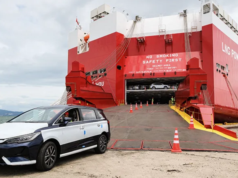
These new rules apply to exporters whose vehicles are currently subject to the anti-subsidy duties; they do not apply to all electric cars. This means that Chinese EV brands such as BYD are directly affected as are European brands that manufacture EVs in China for export to the EU, because it’s about the origin (China), not the brand name. For example, an electric Volkswagen built in China and then shipped to the EU would still be treated as “from China” under these rules.
This comes after years of tensions over low-priced Chinese cars sold in Europe.
Chinese EVs were already priced higher in Europe than in China to avoid dumping accusations and secure stronger margins. Chinese brands typically price at or just below established European models, competing by offering more features rather than marketing themselves as cheap options, Schmidt explains.
“The tariffs did not directly support European EV manufacturers, as they had little effect on prices, import volumes or competition dynamics,” Salar, said. Domestic brands remain under pressure, he said, as Chinese producers avoided or plan to avoid much of the impact by shifting to hybrids and planning local production.
With tariffs, Chinese producers can then offer better features while earning the same profit. The result is “delay, not protection”, De Leus explained.
Schmidt said the shift to a price floor was unlikely to trigger sudden price moves.
“So I don’t expect any price inflation as a result of a minimum price agreement, just creating an artificial bottom,” he said.
This is Because Chinese EVs are already priced above the expected minimum. The price floor would mostly formalise current pricing rather than force increases, merely preventing prices from falling below a set level.
Since October 2024, Chinese electric cars have faced additional EU tariffs, ranging from about 20 to 45 per cent. Despite this, De Leus said, Chinese EVs remained highly competitive due to far lower production costs, driven by in-house battery production, lower labour costs, no dealer networks and fewer legacy expenses.
The EU has maintained a growing trade surplus in electric vehicles. In 2024 it exceeded €10 billion, rising to an annualised €16 billion in the first half of 2025. Despite tariffs exceeding 30 per cent for some brands, consumer prices did not rise. In many cases, Chinese EV prices actually fell, according to a study published a few days ago by the Brussels-based CEPR think-tank.
De Leus said this reverses the combustion-engine era, when China opened its market to European carmakers and absorbed European technology through joint ventures. Now, more Chinese manufacturers are expected to produce vehicles in Europe, often with European partners, transferring technology in the other direction, because Chinese firms now lead in batteries and EV design and are bringing that know-how with them.
Brussels-based Bruegel think-tank wrote that Europe’s trade deficit with China is “unlikely to narrow any time soon”, noting Beijing has shown little appetite for significantly increasing imports of European goods.