

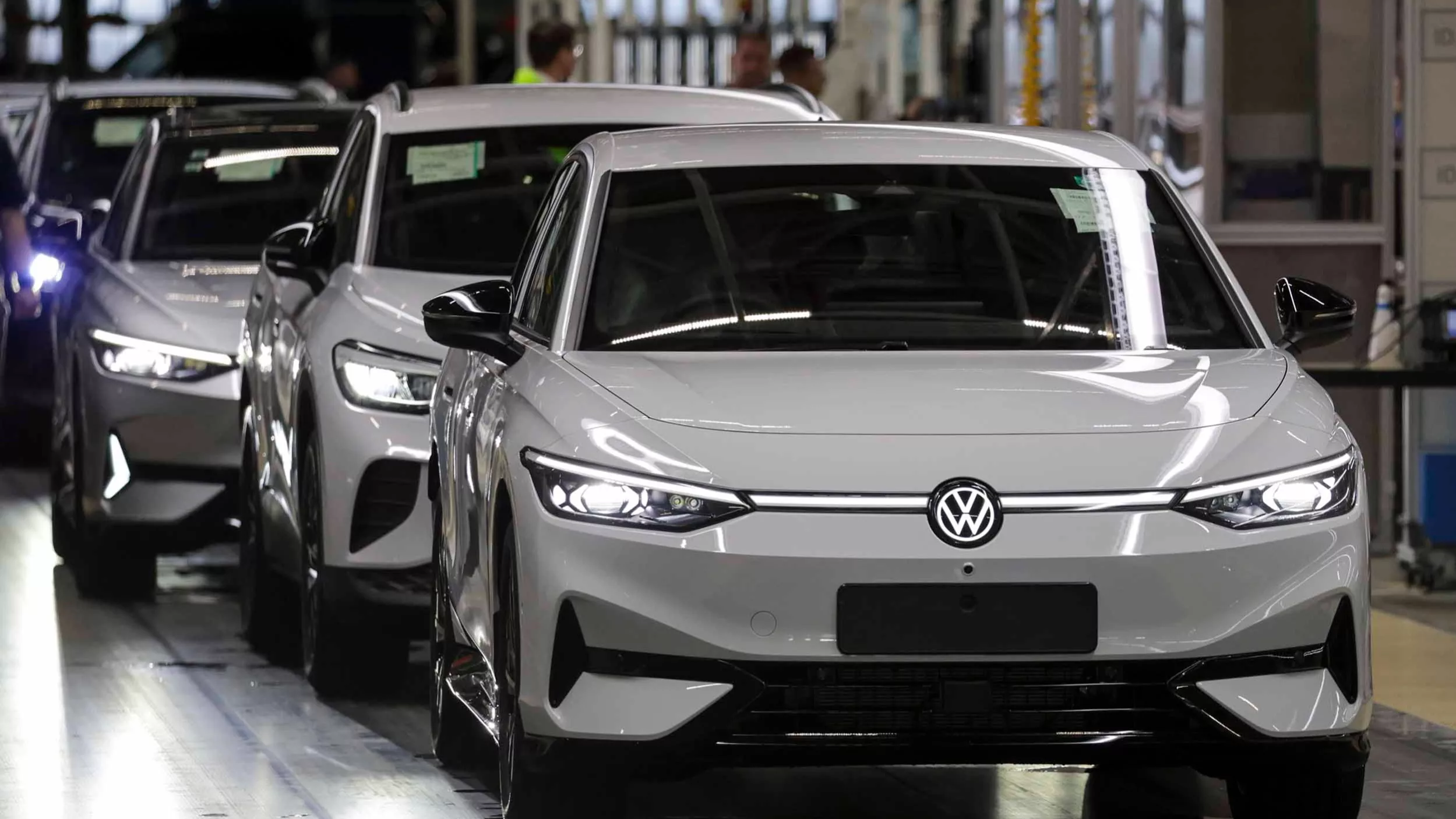

Automotive action plan promises a ‘robust and sustainable’ sector
At a glance
-
The European Commission has published plans to boost the EU’s ailing automotive sector
-
The plans include a delay of emissions reductions targets for cars and vans
-
Next up for an EU action plan will be the steel sector on March 19
The European Commission on Wednesday published an action plan, which promises to deliver a “robust and sustainable automotive sector”. The plan includes €1.8bn to create a “secure and competitive supply chain for battery raw materials”.
In an attempt to stop the EU car industry falling further behind competitors such as China and the US, the commission is also proposing a European Connected and Autonomous Vehicle Alliance, backed by joint public–private investments of around €1bn, to bring together those involved in developing the next generation of vehicles.
The action plan is further accompanied by a communication aimed at encouraging countries to adopt best practices to green corporate fleets, which account for roughly 60 per cent of new car registrations in the EU.
The commission insists its goal is to boost demand for European zero-emission vehicles. However, in the face of fierce lobbying from car lobby groups and some companies, it has pledged to give manufacturers more flexibility in how they can meet stricter carbon dioxide emissions targets.
The EU executive says its will keep its 2035 ban on petrol vehicles, but will amend emissions performance standards for cars and vans. Under the new rules, compliance with emissions targets that car manufacturers should have reached in 2025 will be extended over three years, with fines only levied in 2027. This means that carmakers can fail to meet targets in one of these years and hope to catch up the year after.
‘A smack in the face’
Jos Dings, clean tech expert and former Emea policy director at Tesla, said the decision was “a hardcore postponement of a regulation with one of the best lift-to-drag ratios around” — his aircraft-inspired way of describing how fit for purpose a law is.
“It is like the ref deciding at halftime that the yellow cards given in the first half don’t count any more,” wrote Dings on LinkedIn. “Let’s not forget that last year the EU already made CO₂ compliance for EU carmakers easier by slapping import tariffs on electric vehicles from China.”
He said the decision was a “smack in the face of Stellantis, Volvo and all others who are ready [for the transition] but less vocal”.
Ola Källenius, president of the European Automobile Manufacturers’ Association (Acea) and chief executive of Mercedes-Benz, insisted: “The transition to zero emission mobility and a thriving EU automotive industry must progress together — this is non-negotiable. We appreciate the focus on accelerating autonomous driving deployment and the proposed CO₂ relief measures for 2025 for passenger cars and vans.”
The plan means that “by 2030, the European automotive industry will not be in agony”, wrote Arthur Corbin, adviser to commission executive vice-president Stéphane Séjourné, on LinkedIn. “We will not be importing batteries, steel and components from China like some would say, which would turn Europe into an assembly line with no added value. On the contrary, with this action plan, we are taking decisive steps to strengthen Europe’s industrial base across its entire industry.”
The transition to zero emission mobility and a thriving EU automotive industry must progress together — this is non-negotiable
However, European Consumer Organisation director-general Agustín Reyna suggested the delay in CO₂ emissions reductions was not helpful for delivering this vision.
“This is like putting the car in reverse while it’s already at full speed on the motorway,” he said in a statement. “Electric cars are rolling off the production lines in increasing numbers. This will simply disincentivise carmakers from investing and providing new, more affordable models. Consumers’ choice will be reduced to only more expensive options on the market.”
Acea data shows that in January, battery EVs made up 15 per cent of the EU market share, up from 10.9 per cent a year before. Meanwhile, the combined market share of petrol and diesel cars fell to 39.4 per cent, down from 48.7 per cent a year ago.
The commission’s action plan for the car industry is based on the outcome of a strategic dialogue it launched with the industry in January. A similar action plan for steel will be published on March 19, the EU executive announced on Tuesday when launching a similar process for the sector.


![BYD pulls the cover off its stunning flagship electric SUV for the first time [Images]](https://automundochina.com/wp-content/uploads/2026/03/byd-pulls-the-cover-off-its-stunning-flagship-electric-suv-for-the-first-time-images-100x75.webp "BYD pulls the cover off its stunning flagship electric SUV for the first time [Images]")
