At one point, there were roughly 2,000 U.S. automobile manufacturers. Today, only a few dozen remain.
The legendary Warren Buffett often points to the U.S. automotive industry as a teaching moment for investors. Why? To highlight how difficult it is to pick individual companies in what he believed to be a high-growth, capital-intensive industry.
While the U.S. car market has long been highly consolidated into a handful of firms controlling multiple brands, we believe China’s vehicle market still remains highly fragmented, retaining the ethos of a Wild West-style capitalist competition, with over 150 car makers actively competing with one another.1 Such a market is characterized by rapid technological innovation, volatility, and potential regulatory uncertainty.
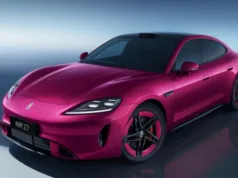
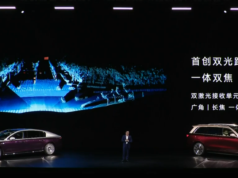
If you want to step back into the dynamism of the 1910s US auto industry, look no further than a Chinese shopping mall. In her latest video, cultural analyst Xiabing Su takes us on a tour of the displays from some of the most prominent car brands in China, all conveniently located in the same place.
In the US, extreme consolidation eventually led the market to be heavily dominated by GM and Ford. However, we believe it is entirely too early to tell whether certain brands will consolidate into one or not in China’s nascent vehicle industry that is just now reaching global scale. As such, we believe a basket approach to China’s electric vehicle (EV) ecosystem is appropriate.
Xiabing stresses that, in today’s China, electric vehicles are the market, as they now account for the majority of new vehicle sales.8 She recalled that, back in 2018, China implemented a policy assigning electric vehicles special green license plates so their drivers could enjoy special privileges.2 Walking through the streets of Shanghai today, she noted that nearly all she could see were green license plates.
China has become the world’s largest electric vehicle market, accounting for over 50% of global EV sales in 2025.3 Xiabing’s license plate observation helps tell part of the story of how China got there; strong policy incentives and a massive, state-led infrastructure build-out have led to the mass adoption of electric vehicles. However, the supply side of the story is more about the evolution of the capitalist competition that has led to the plethora of brands now available to China’s motorists.
According to Xiabing, “What makes China’s EV market truly unique is not just one standout brand, but rather how many strong players exist at the same time.” Each brand in China has carved out its own unique corner of the market. This is akin to how Cadillac is known for luxury cars, while GMC is known for workhorses. The difference, however, is that both Cadillac and GMC are owned by General Motors. In China, on the other hand, most brands are independent of one another, at least for now.
Below, we have summarized Xiabing’s classifications of each vehicle manufacturer she visited.
Xiaomi: Ecosystem & Smart Technology
Xiaomi (3.36% of KARS as of 2/10/20264) has a strategy that centers on extending its existing smart device ecosystem (phones, wearables, and home appliances) into its cars. It has added vehicles like the SU7 to another intelligent node in its “Human x Car x Home” network.
Li Auto: Family-Focused & Extended Range EVs
Another company Xiabing highlighted was Li Auto (2.42% of KARS as of 2/10/20264), which she said emphasizes comfort and practicality. Li Auto built its brand around extended-range EVs that eliminate range anxiety for family users and offer spacious interiors and innovative features designed specifically for multi-person road trips and family scenarios.
NIO: User Experience & Battery Swapping
Xiabing also visited NIO (1.93% of KARS as of 2/10/20264), which differentiates itself through a premium user experience built around its “chargeable, swappable, upgradable” energy model and a fast-growing battery swap network. Its Power Swap Stations can replace a depleted battery with a fully charged pack in about 3 minutes6, reducing wait time compared to conventional fast charging while maintaining similar convenience to refueling with gasoline.
Xpeng: Smart Driving & Artificial Intelligence Focus
Xpeng (1.87% of KARS as of 2/10/20264) positions itself as an AI-first automaker. The automaker uses end-to-end, proprietary large language models (LLMs) to unify an “AI Tech Tree”, which includes the company’s ground vehicles, flying cars, and humanoid robots.
BYD: The Exception
Xiabing also visits BYD (3.64% of KARS as of 2/10/20264), which she said is known for its “deep vertical integration”. BYD manufactures critical components such as batteries, motors, power electronics, and even semiconductors, all in-house. This means that the mobility giant does not have to rely on external suppliers. This strategy lets BYD control a large portion of its supply chain, structurally lowering costs and improving resilience against component shortages or price swings. BYD’s integrated approach also extends to logistics. The company boasts its own shipping network, which has helped it expand into markets from Europe to Latin America while preserving profit margins.
The same legendary American investor we mentioned earlier identified BYD’s exciting growth prospects before anyone else. Warren Buffett’s Berkshire Hathaway invested in BYD in 2008, committing about $230 million to an ownership stake of approximately 10%.5 The firm held that investment for 17 years before selling its stake to realize a return of nearly twenty times.5 Ironically, Buffett did end up picking a winner in China’s auto industry, but the competition has stacked up since then.
Unlike the other carmakers Xiabing visits, BYD has something for many needs and tastes and has multiple brands and a scale approaching those of Ford and General Motors. BYD sells fully electric, hybrid, and gas-powered vehicles. It also manufactures buses and commercial vehicles, including trucks.
How to Invest In EV Growth in China & Globally
China’s auto industry looks a lot like the US auto industry did in the 1910s: highly fragmented, competitive, and full of innovation, but with no clear long‑term winners yet. Allocating to a broad basket of automakers in China, as well as players in China’s broader EV ecosystem offers exposure to multiple participants as dynamics evolve into the future.
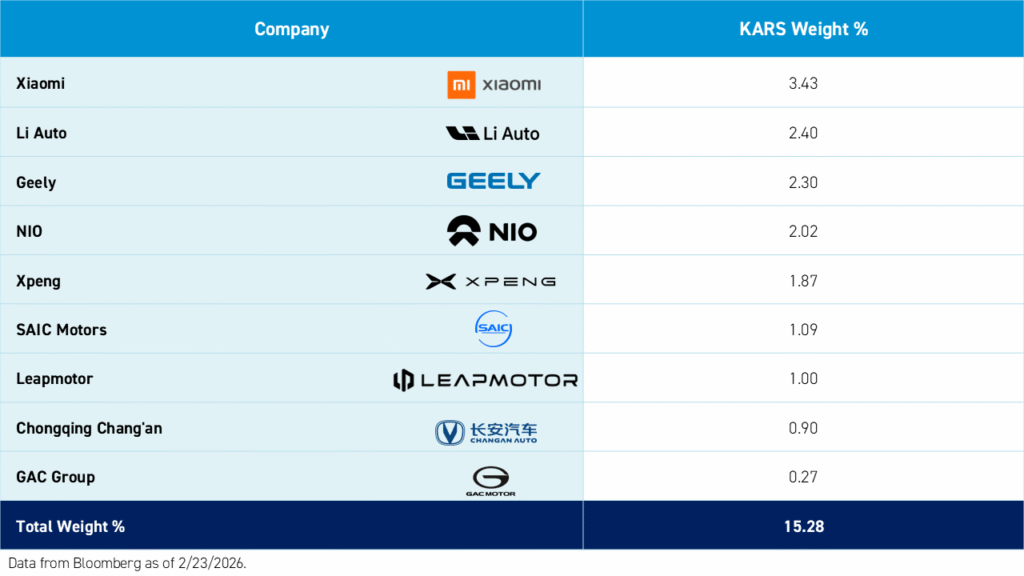
The KraneShares Electric Vehicles & Future Mobility Index ETF (KARS) is designed to provide exposure to the global EV and future mobility universe. KARS invests across global markets, including nine China-based automakers as of February 24, 2026.7
This material is provided for informational purposes only and is not intended as investment advice or a recommendation to buy or sell any security or investment product. The companies referenced represent holdings of the ETF at a point in time and are subject to change. Inclusion of a security should not be construed as an endorsement or indication of future performance.
For KARS standard performance, top 10 holdings, risks, and other fund information, please click here.
KARS Top 10 Holdings as of Latest Quarter End & Latest Month End:
| Top 10 Holdings as of 12/31/2025 Holdings are subject to change. |
Ticker | % |
|---|---|---|
| Panasonic Holdings Corporation | 6752 | 4.57 |
| Bayerische Motoren Werke AG | BMW | 4.31 |
| Tesla Inc | TSLA | 4.26 |
| STMicroelectronics NV | STMPA | 4.17 |
| Albemarle Corp | ALB | 4.14 |
| BYD Co Ltd -A | 002594 | 4.07 |
| Xiaomi Corp – Class B | 1810 | 3.91 |
| Contemporary Amperex Techn – A | 300750 | 3.75 |
| Rivian Automotive Inc – A | RIVN | 3.23 |
| CMOC Group Ltd – A | 603993 | 3.21 |
| Top 10 Holdings as of 01/30/2026 Excluding cash. Holdings are subject to change. |
Ticker | % |
|---|---|---|
| Albemarle Corp | ALB | 4.85 |
| Panasonic Holdings Corporation | 6752 | 4.71 |
| STMicroelectronics NV | STMPA | 4.35 |
| Bayerische Motoren Werke AG | BMW | 3.98 |
| Tesla Inc | TSLA | 3.96 |
| CMOC Group Ltd-A | 603993 | 3.88 |
| BYD Co Ltd -A | 002594 | 3.68 |
| Contemporary Amperex Techn-A | 300750 | 3.48 |
| Xiaomi Corp-Class B | 1810 | 3.42 |
| Samsung SDI Co Ltd | 006400 | 3.20 |
Citations:
- “China’s Auto Industry Leaves Competitors in the Dust Due to Its Agility,” Institute for Energy Research. 9/2/2025.
- “Going Green: China to issue special license plates for green vehicles next year,” CGTN. August 13, 2017.
- “Trends in electric car markets,” International Energy Agency.
- Data from Bloomberg as of 2/10/2026.
- “Warren Buffett Sells Entire BYD Stake After 17-Year Investment,” EV.com, as of 9/22/2025.
- Data from the NIO company website as of 2/10/2026.
- Data from KraneShares.
- Data from China Passenger Car Association as of 12/31/2025.
Index Definitions:
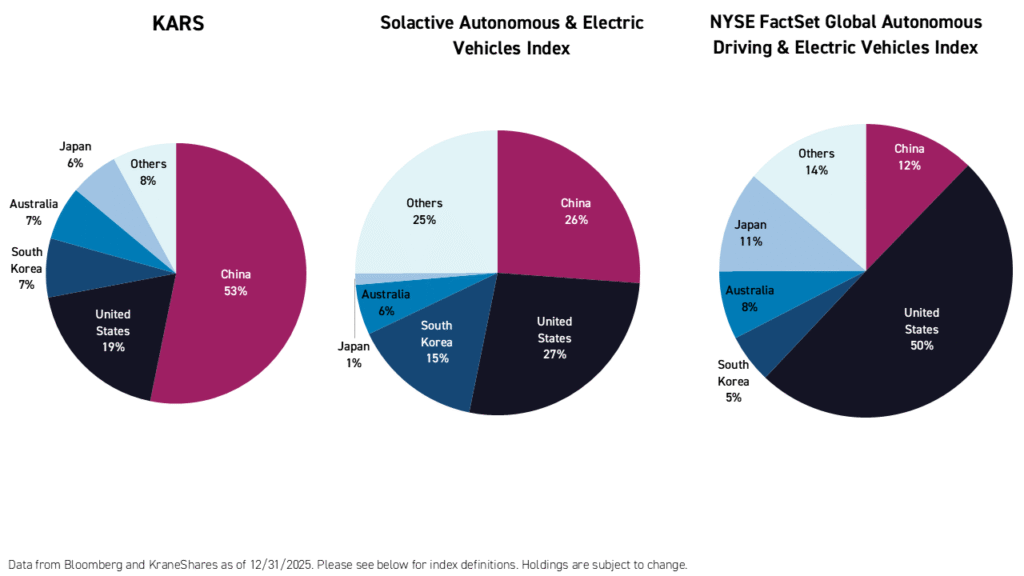
Solactive Autonomous & Electric Vehicles Index: The Solactive Autonomous & Electric Vehicles Index is an equity index designed to track the price performance of companies that are, or are expected to be, actively involved in the electric vehicle and autonomous driving ecosystem. It includes: Electric vehicle manufacturers, Producers of electric‑vehicle components and key materials (such as batteries and relevant raw materials), Companies developing or supplying autonomous‑vehicle technologies (sensors, mapping, AI, ADAS, ride‑sharing, and connected‑transport services). The index is calculated and maintained by Solactive AG, uses free‑float market‑cap weighting with thematic screening, and is reviewed and reconstituted on a regular schedule (ordinary adjustments twice a year). The Solactive Autonomous & Electric Vehicles Index was launched on April 16, 2018.
NYSE FactSet Global Autonomous Driving & Electric Vehicles Index: A rules‑based equity benchmark designed to track the performance of globally listed companies involved in the development of autonomous driving and electric vehicles, including producers of autonomous or electric vehicles, batteries, and related technologies and components (such as sensors, chips, and software for self‑driving systems). The index was launched on January 25, 2019.
Definitions:
Ownership stake: The percentage of a company’s shares an investor or organization owns, representing partial ownership.
Profit Margins: The difference between a company’s sales revenue and its production costs.
Capital-intensive industry: An industry requiring large investments in physical assets (like factories or machines) to operate.
Fragmented market: A market with many small players and no single company dominating, leading to strong competition.
Vertical integration: A business strategy in which a company controls multiple stages of production or supply, reducing dependency on outside firms.
Range anxiety: The fear that an electric vehicle’s battery will run out of charge before reaching a charging station.
Large Language Model (LLM): Advanced AI systems designed to understand, process, and generate human-like text by analyzing vast datasets using deep learning, particularly transformer architectures. They function by predicting the next token in a sequence, allowing them to summarize, translate, and create content. Key features include massive parameter counts, self-supervised learning, and adaptability via fine-tuning.