What were the major events in the new energy vehicle market this week?
Tesla’s Brand Value Plunged by Over $15 Billion in 2025, Study Says
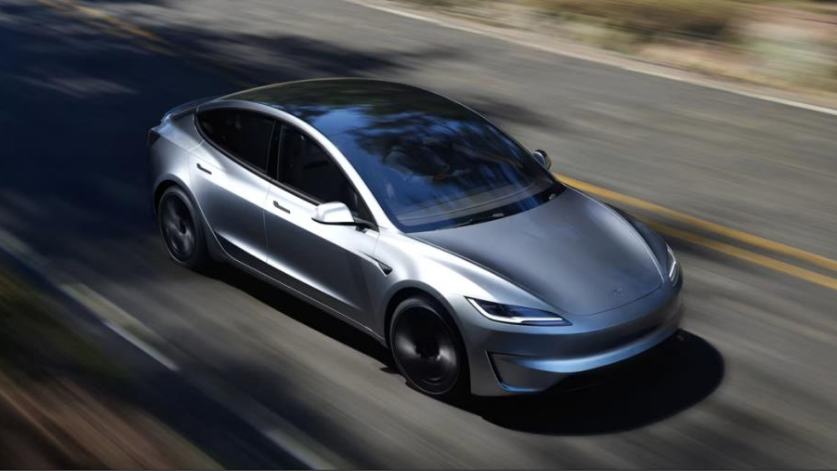
According to the «Global 500 2026» report released by UK-based brand valuation agency Brand Finance, Tesla’s brand value dropped by $15.4 billion in 2025—a 36% decline marking its third consecutive annual slide. Its current valuation stands at $27.61 billion, less than half the peak of $66.2 billion recorded in January 2023. The data is calculated based on hard metrics such as financial performance, licensing agreements, and profit margins, combined with consumer surveys covering 18 countries with at least 1,000 respondents per nation.
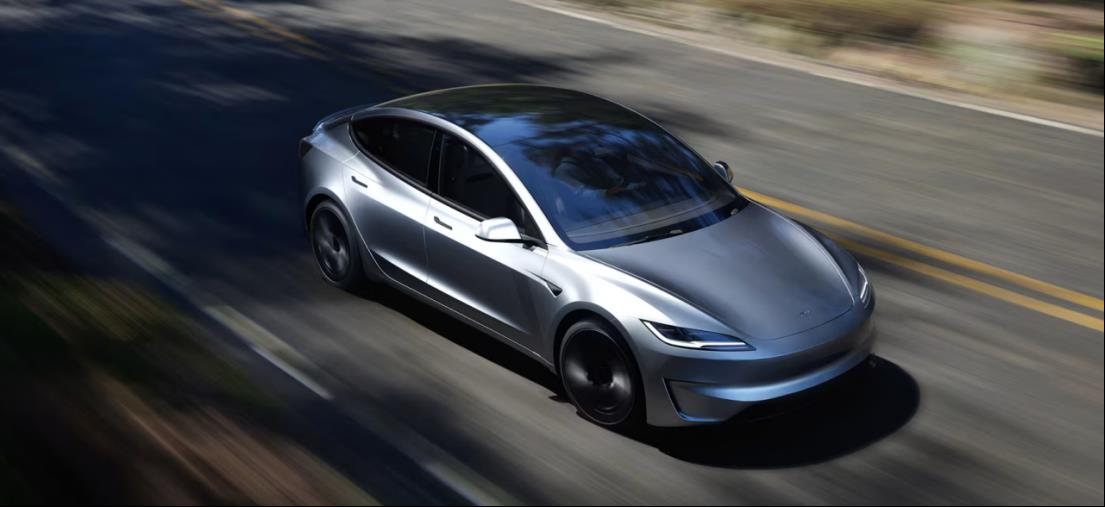
Image source: Tesla
Tesla saw broad declines in key dimensions like reputation, willingness to recommend, trust, and «cool factor» in 2025, particularly in European and Canadian markets. In the U.S., its recommendation score fell to a historic low of 4.0 out of 10—down sharply from 8.2 in 2023—signaling a significantly weakened intent to recommend the brand to friends and family. Meanwhile, customer loyalty in the U.S. actually rose from 90% to 92%, indicating that existing owners are more committed to keeping their Tesla vehicles over the next 12 months.
Brand Finance CEO David Haigh identified three main causes for the brand’s erosion: a lack of breakthrough new models, pricing that remains high relative to competitors, and CEO Elon Musk’s continued entanglement in geopolitical affairs at the expense of the core automotive business. The report notes that Musk’s 2025 involvement with Trump-led White House’s «Department of Government Efficiency» (DOGE), along with his public support for Germany’s AfD and British far-right figure Tommy Robinson, triggered sustained negative consumer reactions across multiple countries throughout the year. Additionally, the termination of the U.S. federal electric vehicle purchase tax credit posed operational challenges for Tesla.
Notably, capital market performance has diverged sharply from brand health. Despite a year-over-year drop in global deliveries for 2025, Tesla’s stock climbed roughly 11% over the year, hitting new highs late in the year as the company launched unsupervised autonomous driving tests and a Robotaxi pilot in Austin, Texas. Musk himself bolstered the stock by spending about $1 billion to buy shares last September.
Gasgoo Take: Three straight years of decline for Tesla’s brand value—behind the $15.4 billion evaporation lies a lack of product innovation and fading brand allure.
Xiaomi SU7 Takes the Throne; China’s High-End Pure Electric Sedan Crown Changes Hands
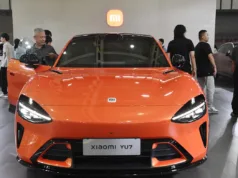
Data from the China Passenger Car Association (CPCA) shows Xiaomi delivered 258,164 SU7 sedans in China in 2025—roughly 30% more than the 200,361 Model 3s delivered by Tesla in the same period. This marks the first time the Model 3 has been overtaken in the high-end pure electric sedan segment since entering the Chinese market in 2019.
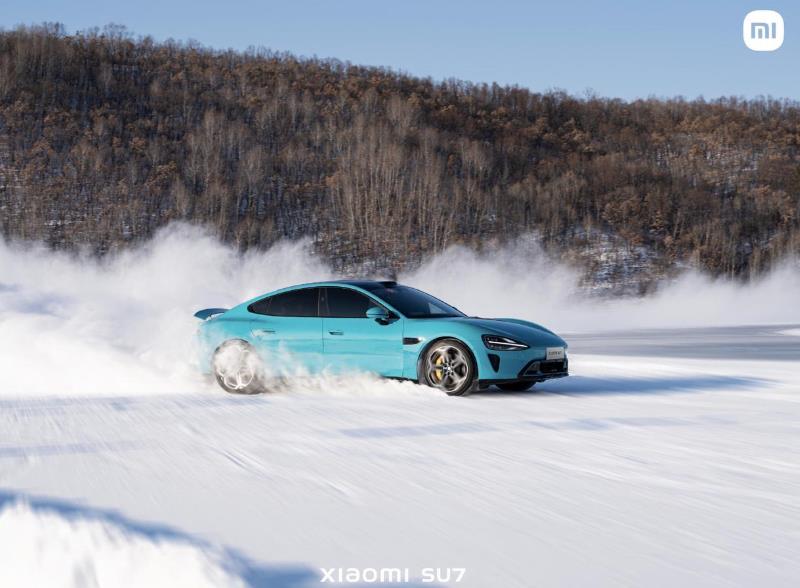
Image source: Xiaomi EV
The Xiaomi SU7 launched in March 2024. Within a year, it was outselling the Model 3 in certain months; in less than two years, it has become the best-selling high-end pure electric sedan in the world’s largest auto market. Its 2025 sales outpaced the Model 3 by 57,803 units.
Xiaomi isn’t stopping at sedans. Its first SUV, the YU7, has already hit the market, putting pressure on the Model Y, and the company plans to roll out more new models in 2026.
By contrast, Tesla’s total deliveries in China fell 4.78% year-on-year in 2025 to 625,698 units. The Model Y, long the market’s best-selling SUV, saw its deliveries drop 11.45%. Previously, Tesla announced an 8,000 yuan insurance subsidy for the Model 3, paired with a previously revealed seven-year low-interest financing plan to stimulate demand.
Responding to the news, Tesla stated that the Model 3 remains a widely recognized high-end electric sedan in China and that the company is continuously optimizing user value through product iterations, service upgrades, and localization strategies. Xiaomi has not yet commented on the comparison with Tesla.
Gasgoo Take: The Xiaomi SU7 takes the crown in its first year—a new king rises in China’s premium pure electric market.
SAIC Shangjie H5 Cumulative Deliveries Top 30,000
On January 26, Harmony lntelligent Mobility Alliance («HIMA») announced that cumulative deliveries of its SAIC Shangjie H5 model have surpassed 30,000 units.
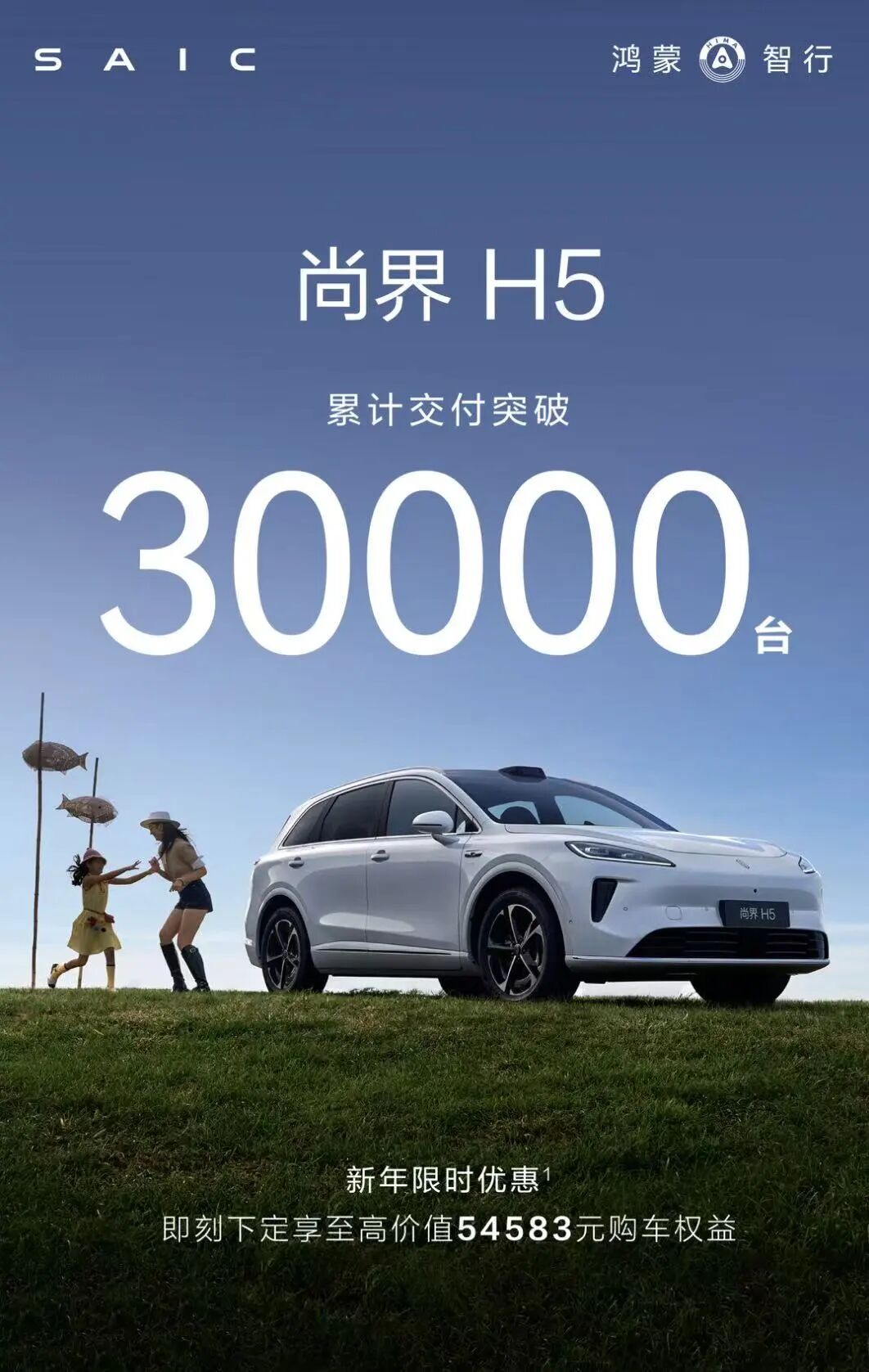
Image source: Harmony lntelligent Mobility Alliance
The brand reached the 20,000-unit milestone on December 9, 2025. It took just over a month to climb from 20,000 to 30,000.
The SAIC Shangjie H5 is the first model under the SAIC Shangjie brand, the brand co-developde by SAIC Motor and Huawei. Positioned as a mid-size SUV, it officially hit the market on September 23, 2025, with a price range of 159,800 to 199,800 yuan.
Built on the SAIC Roewe ES39 model, the H5 features Huawei’s smart cockpit and intelligent driving system, utilizing SAIC’s Nebula BEV-dedicated platform. The vehicle measures 4,780mm long, 1,910mm wide, and 1,664mm high, with a 2,840mm wheelbase. It is equipped with a 192-line lidar and 4D millimeter-wave radar, running on the HUAWEI ADS 4 system. It covers highway, urban, and rural driving scenarios, touted as «the only end-to-end navigation assistance in its class,» along with forward, rear, and side collision avoidance.
SAIC Motor’s President Jia Jianxu previously revealed that Shangjie should launch at least two new models in 2026, aiming to be the «visual icons» of the HarmonySmart Mobility lineup.
Gasgoo Take: The SAIC Shangjie H5 is cracking the mainstream market at a pace of 10,000 units per month, proving the Harmony ecosystem has reached a scale capable of breaking through.
Li MEGA’s Cumulative Deliveries Top 30,000 Units
On the evening of January 26, Li Auto announced that its Li MEGA model officially reached 30,000-unit cumulative deliveries, securing the top spot for cumulative sales among high-end MPVs priced above 500,000 yuan.
The Li MEGA hit the market on March 1, 2024, positioned as a family technology flagship MPV. Initially offered in a single configuration—the MEGA Max—it came standard with 100 ultra-flagship features at a nationwide retail price of 559,800 yuan. Deliveries began on March 11, with the model surpassing 1,000 units in its first full week.
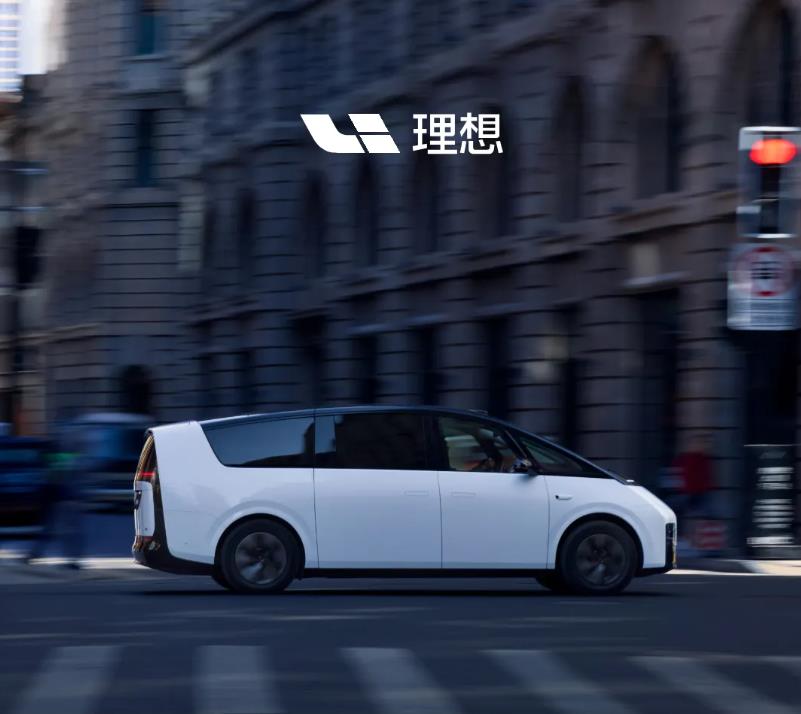
Image source: Li Auto
Later, at the Auto Shanghai 2025, Li Auto introduced the MEGA Ultra smart refresh edition and the Home special edition, priced at 529,800 yuan and 559,800 yuan, respectively.
The MEGA Home special edition is a large MPV with dimensions of 5,350mm by 1,965mm by 1,850mm and a 3,300mm wheelbase. It retains a closed front design, incorporating the family’s streamlined roof and integrated light strip for a high-tech aesthetic.
Inside, the highlight is the second-row rotating zero-gravity seats. The cabin also adds quiet electric front doors with stepless damping, smart assist, and anti-pinch designs for convenience and silence. A 21.4-inch rear screen, flip-down tables for the second row, and 11 double-layer laminated glass panels throughout the cabin further enhance refinement, along with upgraded RNC active road noise cancellation.
For driver assistance, the vehicle features a new-generation ATL lidar and the Thor-U intelligent driving chip, delivering 700 TOPS of computing power. It supports Li Auto’s next-generation VLA architecture, which fuses vision-language models with action models.
Power comes from a dual-motor all-wheel-drive system with a combined output of 400kW and 542Nm of torque, accelerating from 0 to 100 km/h in 5.5 seconds. The CLTC pure electric range reaches 710 km.
Gasgoo Take: From delivery peak to category champion, the MEGA has set a new milestone for Chinese high-end MPVs.
William Bin Li: NIO Cumulative Battery Swaps Exceed 99 Million
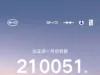
On January 28, NIO founder, chairman, and CEO William Li revealed on Weibo that the company’s charging map shows real-time cumulative battery swaps have now exceeded 99 million.
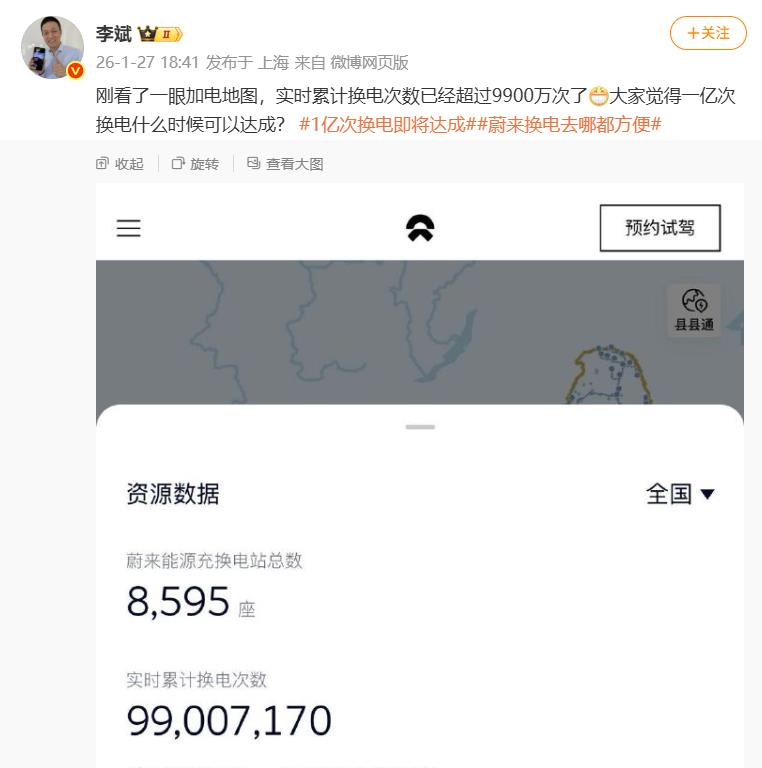
Image source: Weibo screenshot
As of January 27, NIO Power had operated a total of 8,596 charging and battery swapping stations, with cumulative swaps reaching 99,063,908. This includes 3,708 battery swap stations—1,017 of which are located along highways—and 4,887 charging stations that have facilitated 80,218,759 charging sessions.
At the ceremony for the production of the 1 millionth mass-produced vehicle earlier this month, Li stated: «Looking ahead, we will continue to invest decisively in our 12 full-stack technologies to maintain our lead. We will also double down on infrastructure, aiming to exceed 10,000 charging and swapping stations each by 2030. By deepening the synergy across our three brands, we will increase share in every segment while sustaining 40-50% annual growth. We will cultivate the Chinese market and expand globally with greater stability and efficiency, bringing a leading smart electric mobility experience to users worldwide.»
Additionally, NIO’s fifth-generation battery swap stations will begin construction this year. Compatible with NIO, ONVO, and FIREFLY brands, Li set a target to build at least 1,000 of them in 2026.
NIO has invested a cumulative 65 billion yuan in R&D, building systematic capabilities around 12 core smart EV technologies, and another 18 billion yuan in charging and swapping infrastructure.
Beyond building its own network, NIO is actively partnering with other automakers. It has now achieved charging interoperability with brands including ZEEKR, Xiaomi EV, Avatr, Chery, Dongfeng MHERO, Harmony lntelligent Mobility Alliance, Hongqi, Deepal, AION, IM Motors, Lotus, Cadillac, Buick, and XPENG.
Gasgoo Take: NIO’s battery swapping is rapidly rewriting the efficiency rules of the EV landscape.