
The Canada-U.S. border is more than 200 kilometres from Barrie. Nevertheless, Barrie residents should worry about the friction developing in Canada’s trade with our southern neighbour.
Barrie is home to several plants supplying the automotive industry, including SBS Drivetec, Prodomax Automation, Auto Panel Manufacturing, Linear Automation and Yachiyo of Ontario Manufacturing.
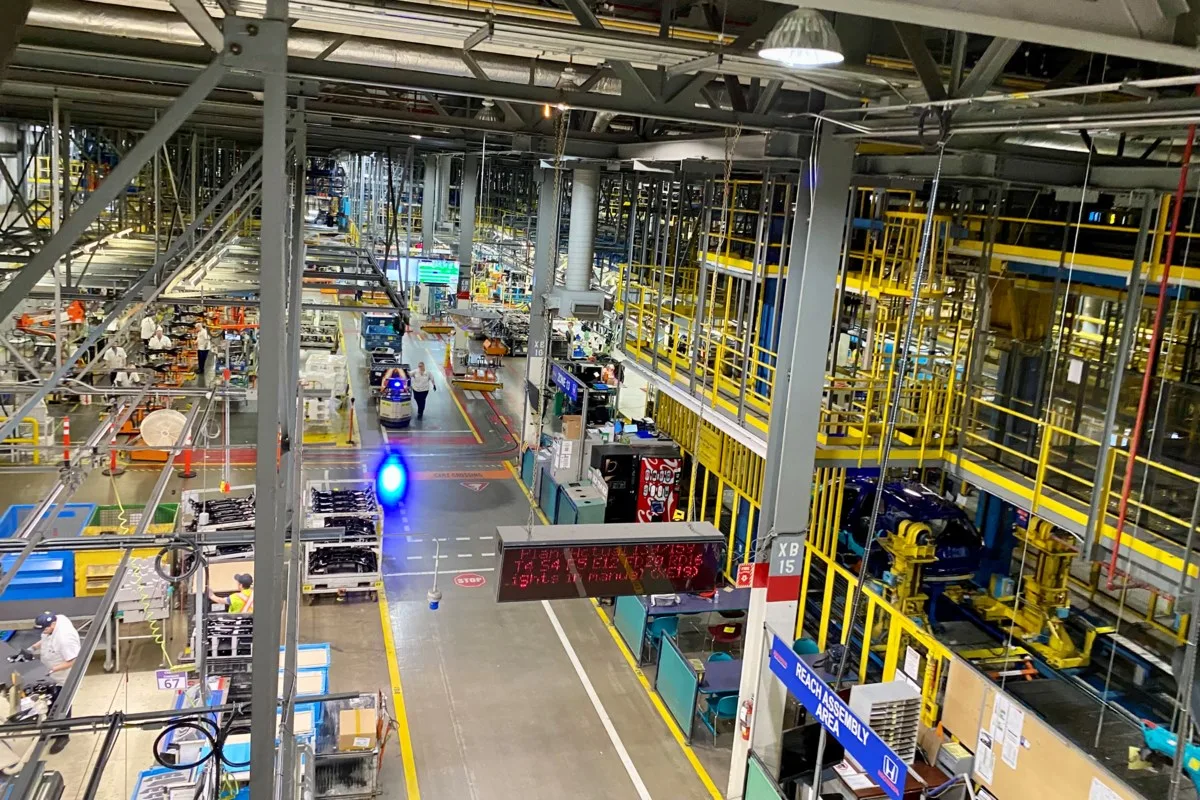
Although not in Barrie, Alliston’s Honda plant employs many local residents. Four months ago, its 11 millionth vehicle rolled off the assembly line.
In April 2024, then-prime minister Justin Trudeau and Ontario Premier Doug Ford visited Alliston to announce that Honda would be investing $15 billion in the plant, specifically to build electric cars. Sadly, U.S. President Donald Trump’s hatred of electric vehicles forced Honda to pause this plan.
Despite this bad news, Honda told us it’s not going anywhere, that production (and employment) would continue at the current pace.
While Honda’s assurance is probably worth more than similar statements from the Big Three (General Motors, Ford Motor Company and Stellantis), one wonders how it might survive President Trump’s tariff war, and how this unpredictable man might meddle with the Canada-Mexico-U.S. trade agreement negotiated during his first presidential term. The agreement is scheduled for revision this year.
Soon after starting his second presidential term, Trump began to threaten (bully?) the world with tariffs. Included were several small islands populated only by birds and marine mammals. Clearly, his tariffs were the result of careful deliberation.
I was very surprised by Premier Ford’s anger earlier in January when Diageo decided to shift its Ontario Crown Royal bottling operation to Manitoba. While nobody cheers any job loss, it’s only 200 jobs and production remains in Canada.
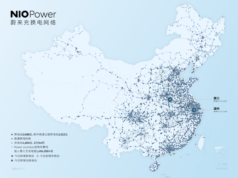
Soon after this outburst, Ford became agitated again following the announcement of a trade deal with China. This drops tariffs on Chinese electric vehicles from 100 per cent to 6.1 per cent. Capped at 49,000 vehicles, it amounts to just three per cent of Canada’s domestic car market.
This agreement is balanced by relief of Chinese tariffs on Canadian canola, a crop representing $44 billion of Canada’s exports and employing some 40,000 Prairie farmers.
While Premier Ford moans about the loss of jobs Chinese imports might cause in the car industry, it’s worth keeping in mind that Ontario lost 300,000 automotive assembly jobs between 2003 and 2013. Most of these were lost to Mexico.
Automobile assembly is important to Ontario, but keep in mind that Trump is determined that all cars sold in the U.S. must be made there with American-made parts. What’s the likelihood that Canada can change his mind?
Meanwhile, the China deal promises to bring some manufacturing to Canada. We have advantages the U.S. lacks. Our health-care costs far less. Our workforce is better educated. Our electricity was cheaper than most American jurisdictions, but who knows what our planned nuclear power will cost?
Ontario Power Generation (OPG) recently applied for, and won permission to, increase electricity rates substantially. In essence, OPG is asking us to help pay for the nuclear power plants it’s currently building in advance.
Unfortunately, OPG will not (or cannot) tell us how much their electricity will cost. We can be certain it will not be cheap.
Finally, the China trade deal lowers Chinese tariffs on seafood.
Prime Minister Carney understands that he’s prime minister for all Canadians, including Maritime fishermen, Prairie farmers, Alberta’s oil patch and British Columbia’s wish to protect its coasts and forests from bitumen spills.
Mr. Ford should appreciate that. The number of Ontario automotive jobs which might be lost due to the China deal is far smaller than the number of Prairie farm and Maritime fishing jobs that have been saved.
It’s also worth keeping in mind that the Big Three have been moving car manufacturing from Canada to the U.S., not Toyota and Honda. In fact, Toyota Canada has never laid off a full-time employee.
The two Japanese manufacturers now build well over half of the vehicles produced in Canada. Ford, GM and Stellantis answer to the wishes of U.S. politicians, Asian manufacturers tend to be more independent.
Furthermore, one has to understand that East Asia (China, Korea, Japan and others) likes to plan for the distant future. The Chinese understand that, in time, the U.S. will embrace electric vehicles. Not only are they better but electric vehicles are still in their infancy, with much room for improvement.
My first electric car, a 2014 Mercedes Smart, had an average range of 117 kilometres in summer and 67 km in winter. My second EV, a 2020 Mini Cooper SE, had an average range of 210 km in summer and 155 km in winter.
The Mini’s range holds up better in winter — 26 per cent drop versus 43 per cent — and its energy consumption is 18 per cent lower despite it being both larger and faster.
My next electric car will probably double the Mini’s range, but may be less fun to drive.
Electric cars are improving by leaps and bounds. I expect some Asian manufacturers will use Canada to establish themselves in North America. They understand they can capitalize on Canadian vehicle-manufacturing expertise, relatively inexpensive energy, ready access to the critical minerals electric motors and batteries require, all in a country with a stable government, strong environmental regulations and an impartial (non-political) system of justice.
When a post-Trump United States awakens to the reality of electrified transport, Canada will be ready. We have unrivalled road, rail, sea and air connections with that huge market, not to mention sharing a common language and time zones.
Peter Bursztyn is a self-proclaimed “recovering scientist” who has a passion for all things based in science and the environment. The now-retired former university academic has taught and carried out research at universities in Africa, Britain and Canada. As a member of BarrieToday’s community advisory board, he also writes a semi-regular column.