Chinese state media outlet China.com has published a report about a Tesla Model Y that lost all power on a highway despite showing 72 km of remaining range, and the story has gone viral across Chinese social media. The incident is drawing attention not just for the failure itself, but for the fact that state-controlled media chose to amplify it, a potential signal of shifting government sentiment toward Tesla in China.
The incident
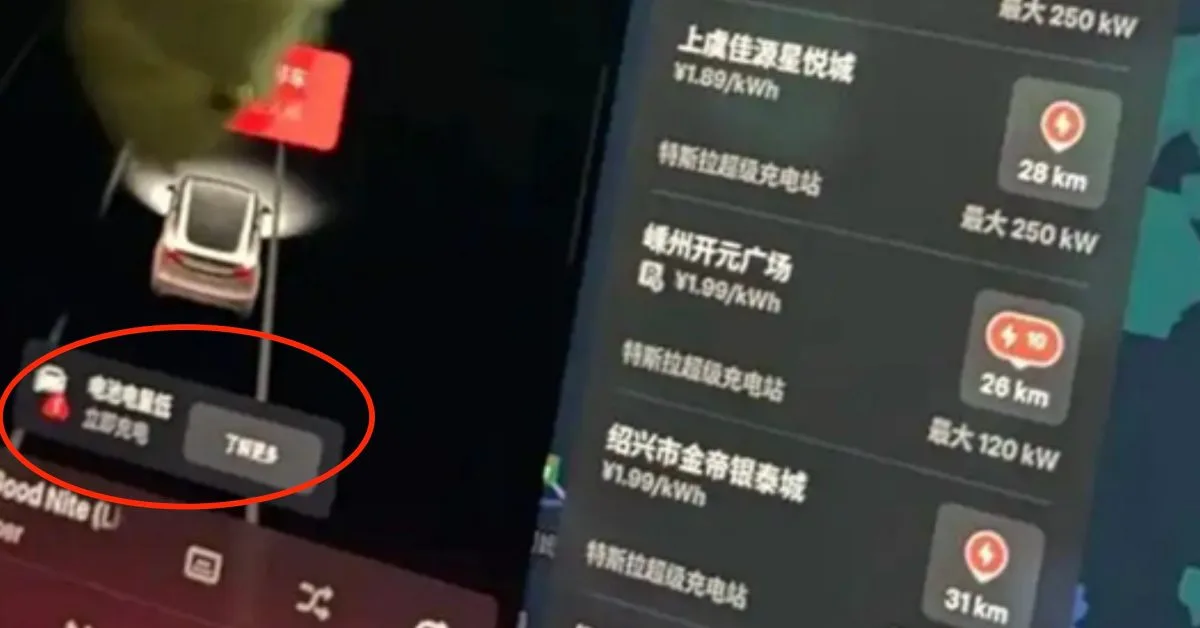
On the evening of February 7, a 2022 Tesla Model Y experienced a sudden and complete loss of propulsion on a highway in Zhejiang province while traveling from Shanghai toward Taizhou. The vehicle stopped approximately 2 km before the Shengzhou service area.
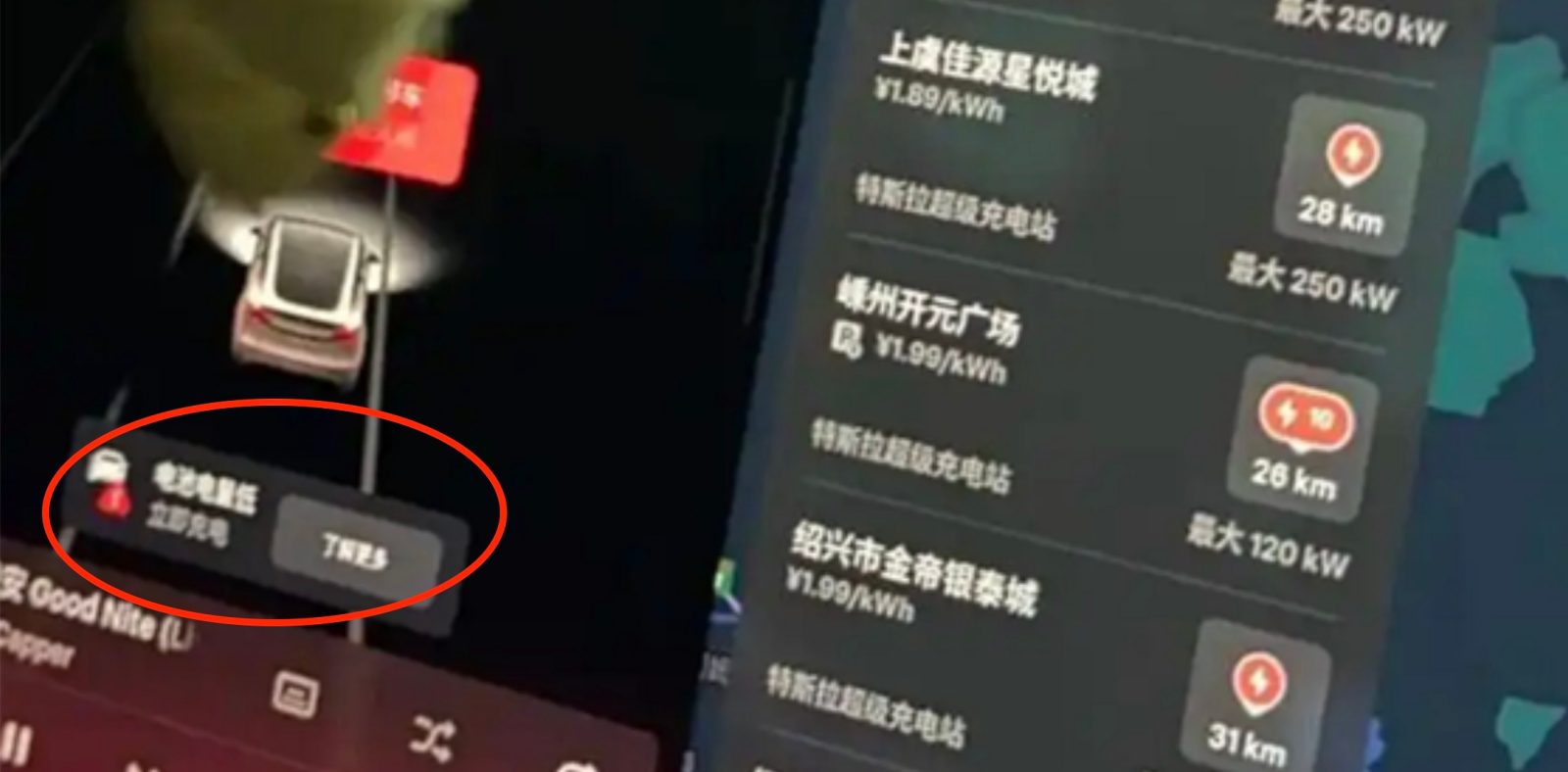
The driver, identified as Ms. Chen, reported that the vehicle’s dashboard displayed roughly 72 kilometers of remaining range when the car suddenly lost power and began decelerating. All electrical systems then shut down, the central display went dark, steering assist was lost, and hazard warning lights could not be activated. Ms. Chen guided the vehicle into the emergency lane using momentum before it became fully immobilized.
The report was published by China.com, which operates under China’s State Council Information Office, making it an arm of the Chinese government’s media apparatus. The story quickly spread across Weibo and other Chinese social media platforms, igniting a debate about EV safety buffers and battery range accuracy.
With well over 1.5 million Tesla vehicles on Chinese roads, the company sold roughly 657,000 units in 2024 and 626,000 in 2025, individual vehicle failures are statistically inevitable. A single Model Y losing power, while concerning for the owner, is not inherently national news.
What makes this story significant is who chose to report it and amplify it.
China’s state media operates under direct government oversight. Editorial decisions at outlets like China.com are not random, they reflect priorities and, at minimum, tacit approval from government communications authorities. The decision to run and promote a story about a specific Tesla failure is a deliberate editorial choice.
This stands in stark contrast to recent history. As an AP investigation found, Tesla has aggressively sued customers and journalists in China who reported on vehicle failures, winning nearly 90% of civil cases over safety and quality disputes. As we reported last year, Chinese car journalists have been told not to be negative on Tesla, creating a chilling effect on critical coverage. Tesla benefited from close ties with Chinese officials, including Premier Li Qiang, who helped broker the Gigafactory Shanghai deal that gave Tesla unprecedented access, the first foreign automaker permitted to operate in China without a local joint venture.
For state media to now amplify a Tesla failure story suggests the political winds in Beijing are shifting.
Comes amid Tesla’s sales collapse in China
The timing of this state media report is hard to ignore. Tesla’s position in China is deteriorating rapidly.
Tesla’s domestic sales in China crashed 45% year-over-year in January 2026, falling to just 18,485 units, the lowest level in over three years. While some of that decline is attributable to a pull-forward effect from December’s rush before a new 5% purchase tax took effect on January 1, a 45% year-over-year crash goes well beyond seasonal adjustments.
The January collapse followed what was already Tesla’s first full year of sales decline in China. Full-year 2025 retail sales fell 4.78% to 625,698 units, while Tesla’s share of China’s NEV market dropped from 10% to 8%. The decline has been accelerating throughout 2025 despite the Model Y refresh and record discounts.
Meanwhile, Chinese competitors are surging. Xiaomi’s SU7 outsold the Tesla Model 3 in China for the first time, delivering 258,164 units in 2025, nearly 30% more than the Model 3. The recently launched Xiaomi YU7 and Xpeng G7 are directly targeting the Model Y with aggressive pricing, and both are believed to have already accumulated over 300,000 combined orders.
Tesla is increasingly relying on its Shanghai factory as an export hub rather than a vehicle for Chinese domestic demand. Of the 69,129 wholesale vehicles in January, 50,644, over 73%, were shipped to export markets.
A political dimension
The state media amplification also comes as Elon Musk’s political activities have drawn global backlash. His role leading the Department of Government Efficiency (DOGE) in the United States damaged the Tesla brand worldwide, on top of his constant ranting about race and gender.
The impact has been particularly significant in Europe and North America.
In China specifically, Chinese state media debunked Musk’s claims about Tesla FSD approval in January 2026, another instance of government-controlled outlets directly contradicting Tesla’s narrative.
The Chinese government has also previously restricted Tesla vehicles from government compounds over camera-related security concerns.
Electrek’s Take
This is one of those stories where the incident itself is less important than who’s telling the story and why.
A Tesla Model Y losing power with displayed range remaining is a legitimate quality concern, and Tesla should investigate and address it. But one vehicle failure among over 1.5 million Teslas on Chinese roads is not, by itself, a national news event. State media choosing to amplify it is the real story.
For years, Tesla operated in China with an extraordinary level of protection. The company sued its own customers and critical journalists into silence, won almost every case, and benefited from government support that no other foreign automaker has ever received. Chinese state media largely stayed away from negative Tesla coverage.
That appears to be changing. Between state media debunking Musk’s FSD claims last month and now amplifying a viral vehicle failure, Beijing is sending signals. Whether this reflects displeasure with Musk’s political activities in the US, a strategic decision to support domestic EV champions like BYD and Xiaomi at Tesla’s expense, or simply a recognition that Tesla no longer needs kid-glove treatment in a market where it’s losing share, the effect is the same.
Tesla is losing the narrative in China at the same time it’s losing sales. When you go from government-protected darling to a target of state media scrutiny, the trajectory rarely reverses. With sales already crashing 45% and domestic competitors circling, Tesla can’t afford to also lose the goodwill of the Chinese government.