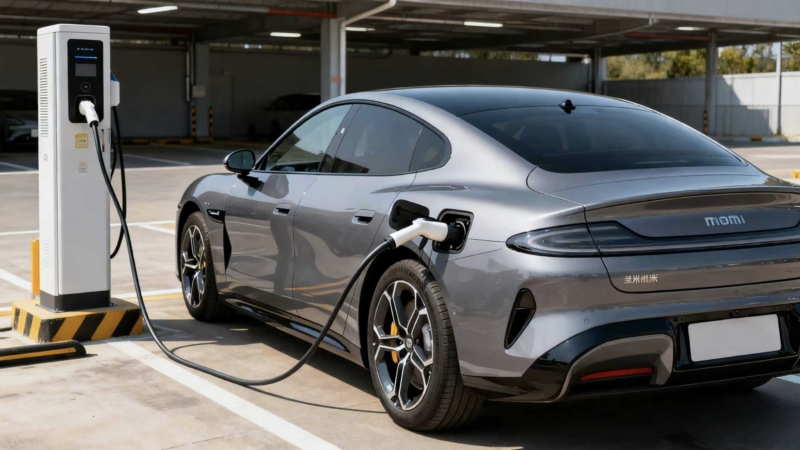
A recent study by Germany’s ADAC confirms that electric vehicles produce extremely low levels of electromagnetic radiation, comparable to or even lower than traditional internal combustion vehicles, as reported by IT-home. Measurements on 11 pure electric vehicles, several plug-in hybrids, and one gasoline car showed that radiation peaks occur mainly near the feet and are far below international safety thresholds. At the same time, the head and torso remain minimally exposed. AC and DC charging had little impact on overall radiation levels, with DC fast charging even producing lower readings than slower AC charging.
Chinese automakers have also demonstrated strong performance in this area. The China Automotive Technology & Research Centre (CATARC) New Energy Vehicle Testing Centre hosted the third annual New Energy Vehicle Electric Safety Conference in early November. Since the start of 2025, CATARC has conducted over 300 electric safety evaluation projects, aiming to control risks during the development stage and provide automakers with data-driven guidance for safer, higher-quality vehicles.
As of the conference, 14 Chinese models have passed the NESTA six-dimensional electric safety verification. NESTA, short for New Energy Safety Technical Assessment, is a comprehensive certification system that evaluates vehicles across six critical areas: charging safety, electromagnetic safety, functional safety, high-voltage safety, battery safety, and fire safety. The second batch of certified models includes Aito M7, Jetour Zongheng G700, Onvo L90, Li Auto i8, M-Hero M817, Fulwin A9L, and Xiaomi YU7. Earlier certifications include Galaxy E8, Exeed Exlantix ES, Exeed Exlantix ET, JAC Refine RF8, Jiyue 07, Aito M9, GAC Hypertec HT, Geely Galaxy Starship 7 EM-i, iCar V23, Aito M8, BYD Han L, Leapmotor B10, and Lynk & Co 900.
NESTA evaluations also identified top performers in each dimension for 2025: BYD Han L, Lynk & Co 900, and Hyundai Elexio in charging safety; Mercedes-Benz CLA, Li Auto i8, Zeekr 9X, and Geely Galaxy M9 in electromagnetic safety; Onvo L90, Xiaomi YU7, Galaxy Starship 7 EM-i, and Exeed Exlantix ET in functional safety; Leapmotor B10, Fulwin A9L, and Wuling Xingguang 730 in high-voltage safety; Jetour Zongheng G700, Aito M7, M-Hero 817, and Toyota bZ3X in battery safety; and Saic H5, Aito M8, Onvo L60, and iCar V23 in fire safety.
Real-world measurements confirm that Chinese EVs operate far below safety limits. Cabin electromagnetic radiation ranges from 0.8–1.0 μT in the front row and 0.3–0.5 μT in the rear row, which is only 1%–1.3% of China’s national standard limit of 100 μT. Peak readings appear mainly near electric drive units and wiring, particularly around the feet, while the head and torso remain largely unaffected. Charging, whether AC or DC, does not significantly change the readings, and DC fast charging can even produce lower radiation than slower AC charging. By comparison, standard household devices such as electric blankets emit 10–50 μT, far higher than the levels emitted by Chinese EVs.
These measurements indicate that Chinese electric vehicles emit electromagnetic radiation well below national and international limits. NESTA verification assesses each model across six dimensions: charging safety, electromagnetic safety, functional safety, high-voltage safety, battery safety, and fire safety.

Follow us for ev updates