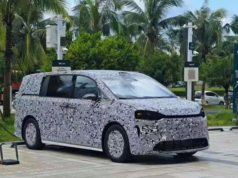
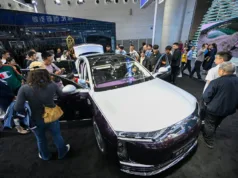
In 2020, China exported roughly one million cars, primarily to developing countries. By 2025, exports are projected to reach eight million, cementing China’s position as the world’s leading automobile manufacturer and exporter.
In the United Kingdom alone, Chinese automakers already hold 13% of the market and anticipate reaching 30% by 2026. Notably, while China dominates the electric vehicle sector, 70% of its exports are still traditional gasoline-powered cars—underscoring its twin dominance in both cost efficiency and market breadth.
This success has come at a steep price for international automakers operating in China. Their market share has collapsed from 64% in 2020 to 31% in 2025, according to industry expert and former GM executive Michael Dunne. German firms have been hit particularly hard, though American companies are also losing ground. China moved faster to adopt EVs, while U.S. firms lagged behind. The result: Chinese manufacturers are now poised not only to dominate their domestic market, but also to penetrate global markets with high-volume, low-cost vehicles. For the U.S., this leaves dominance only at home. (I serve on the board of a non-profit, EVs for All America, to help promote the EV industry at home.)
The implications extend beyond economics. China’s auto ascendancy will give it greater geopolitical leverage, strengthening its reach and influence worldwide. Yet this story is not entirely positive for China either. Two systemic challenges loom:
• A race to the bottom. Chinese automakers are competing aggressively by selling vehicles at a loss, echoing earlier patterns in solar panels and steel. While this benefits consumers, it saddles manufacturers with debt and undermines long-term profitability. China currently boasts around 100 car brands, but only a handful are profitable. This mercantilist strategy prioritizes global market share over sustainability. At some point, the industry risks a different sort of car crash.
• Trade wars. China’s approach risks inflaming tensions with the U.S., Europe, Japan, and South Korea—none of whom will simply cede their markets. Rather than pursuing collaborative growth, Chinese firms are locked into a confrontational strategy that raises the likelihood of political backlash and retaliatory trade measures.
Policy Options for the U.S.
What can be done? Government leaders in the U.S. and allied markets may consider several approaches:
1. Retreat. Both GM and Ford have announced a retrenchment in their EV programs, taking billions in write-offs and Ford is halting production of the F-150 Lightning EV pickup. While trimming activity may offer short-term relief, retreat cannot be a winning long-term strategy.
2. Protectionism. Import barriers, as demonstrated under President Donald Trump, can shield U.S. firms temporarily. Yet protectionism risks producing second-rate products and leaving them uncompetitive abroad—a strategy of retreat by another name.
3. Subsidies. Federal support for EVs, from consumer purchase incentives to charging infrastructure, can bolster domestic industry. When subsidies were withdrawn in September, U.S. EV sales dropped sharply, underscoring their importance.
4. Defense procurement. As with the early days of civil aviation, defense contracts could stimulate innovation and reduce costs. Vehicle batteries, in particular, have strategic implications for national security.
5. Transatlantic cooperation. A U.S.-EU free trade agreement in autos—especially EVs—would provide scale advantages and strengthen Western competitiveness.
6. Joint manufacturing. U.S. firms could outsource labor-intensive components, such as chassis production, to China while focusing domestically on software and advanced systems. This hybrid approach could preserve competitiveness and jobs.
Conclusion
No matter which strategies are pursued, the next decade will bring sustained downward pressure on U.S. automakers. Market share and profitability will decline, while Chinese firms consolidate global dominance. The challenge is not merely economic but geopolitical, demanding a coordinated response that balances competitiveness, innovation, and international cooperation.