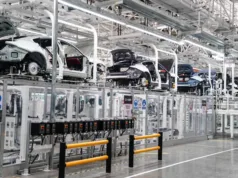
China has completed the formulation and revision of 294 national standards across 13 key sectors, with electric-vehicle power-battery safety requirements formally upgraded to mandatory status for the first time, according to information released by the State Administration for Market Regulation on December 26 and reported by CCTV. The standards were issued under an action plan jointly released by seven government departments and have now been approved, published, and set to take effect.
The completed standards form part of the Action Plan to Promote Equipment Renewal and Consumer Goods Trade-In Through Standards, which aims to guide industrial upgrading and consumption renewal through regulatory standardization. According to official information, the newly released standards focus on three areas: upgrading energy efficiency and emissions standards, strengthening product quality and safety requirements, and expanding standards for recycling and circular utilization.
In the area of energy efficiency and emissions, authorities oversaw the formulation and revision of national standards for key industries, including coal-fired power generation, steel, and building materials. A total of 113 national standards were approved and released, including updated mandatory energy consumption limits intended to support the phase-out of outdated production capacity. These standards also tighten efficiency requirements for commonly used industrial equipment, including boilers, electric motors, and transformers.
A separate group of 115 national standards targets sectors closely aligned with everyday consumer demand, including automobiles, home appliances, home furnishings, and emerging consumer products. Within this category, electric vehicle power battery safety standards were revised to require that batteries not catch fire or explode, marking the first time such criteria have been explicitly defined as mandatory technical requirements at the national level.
Liu Hongsheng, director of the Standards Technology Department at the State Administration for Market Regulation, said that the electric vehicle power battery safety standards represent a breakthrough in safety regulation. He stated that the mandate will require automakers to optimize battery structures and thermal management systems to improve the overall safety of new energy vehicles.
According to a recent summary from GDESTL, the revised national standard GB 38031-2025 is scheduled to take effect on July 1, 2026. The summary states that new type approvals will be subject to the updated requirements from that date. In contrast, vehicles that have already received approval under previous standards are expected to follow differentiated transition arrangements, commonly extending to July 1, 2027.
In addition to safety and efficiency standards, authorities approved and published 66 national standards on resource recycling and circular utilization. These standards cover key stages of the recycling, dismantling, and regeneration of used products, including home appliances, furniture, electronic devices, photovoltaic equipment, wind power equipment, and power batteries.

Follow us for ev updates