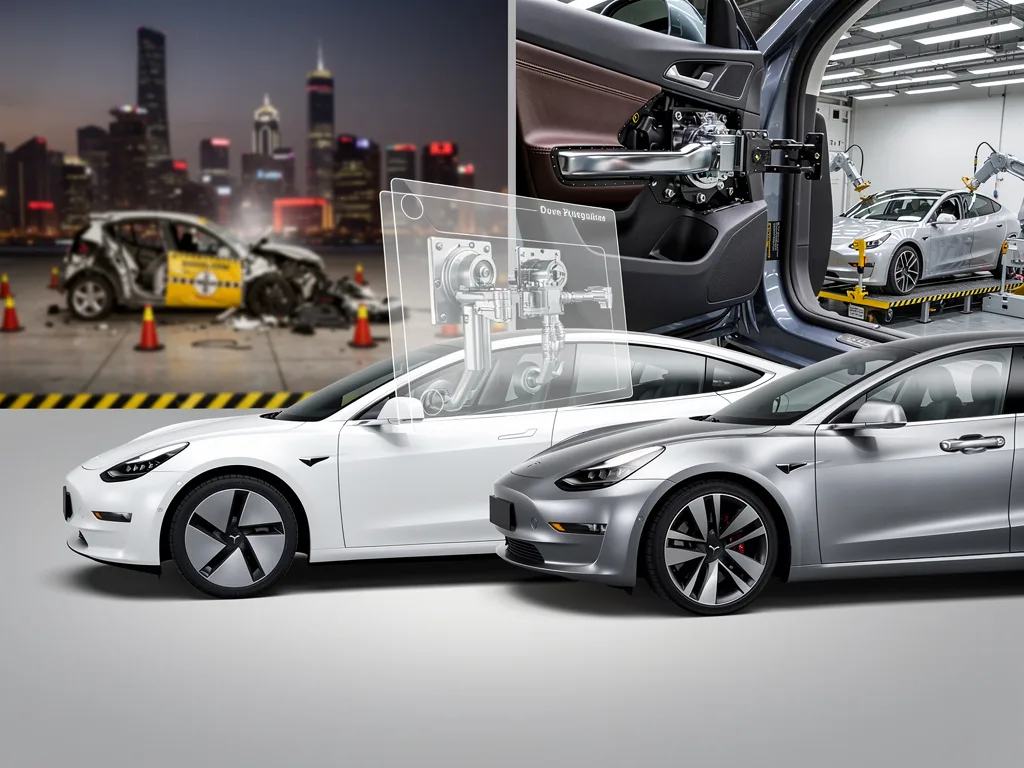
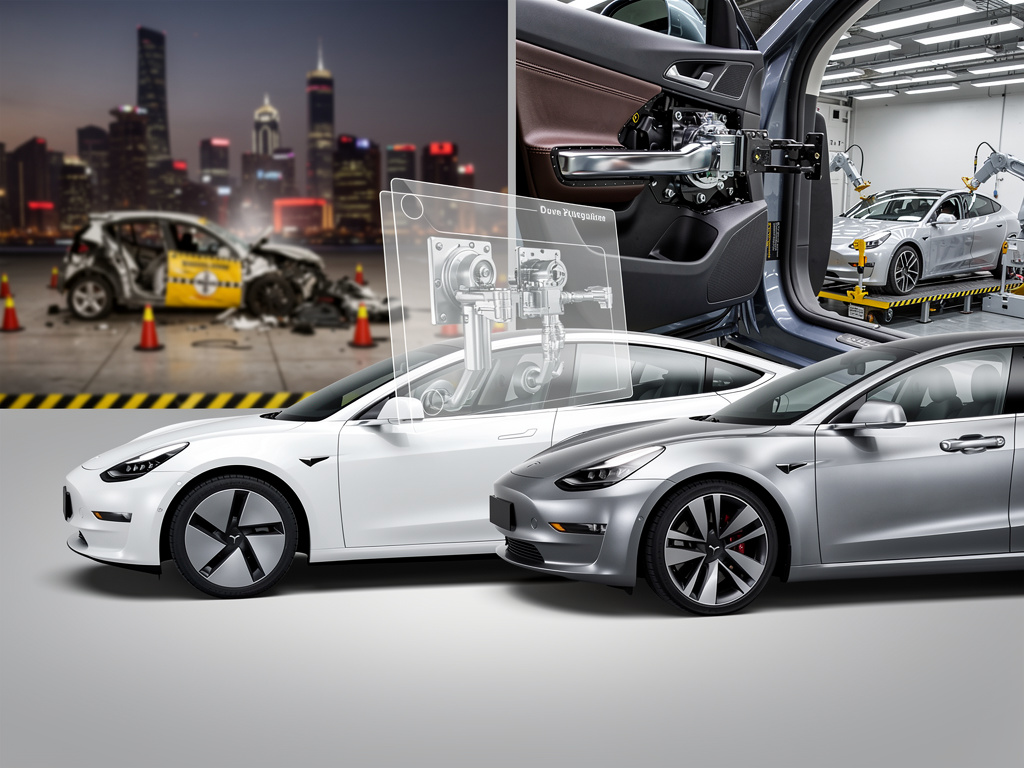
In a move that could ripple through the global automotive industry, China has announced a ban on fully retractable door handles, the sleek, flush designs popularized by Tesla Inc. that vanish into the vehicle’s body for aerodynamic efficiency. Effective from January 1, 2027, new vehicles sold in the world’s largest car market must incorporate mechanical door releases operable without electricity, according to recent regulatory updates. This decision stems from mounting safety concerns, particularly instances where electronic handles failed during crashes, trapping occupants or hindering rescuers.
The ban targets a feature that has become synonymous with modern electric vehicles (EVs), emphasizing style and performance over traditional mechanics. Automakers like Tesla, which have championed these hidden handles to reduce drag and enhance range, now face the prospect of redesigning core elements of their vehicles for the Chinese market. Industry analysts estimate that compliance could add significant costs and engineering challenges, potentially altering production timelines and market strategies.
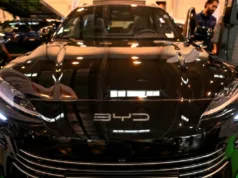
Beyond Tesla, the regulation affects a swath of manufacturers, including domestic giants like BYD Co. and Nio Inc., as well as international players such as Volkswagen AG and BMW AG, all of whom have adopted similar designs in their EV lineups. The shift underscores China’s growing influence in setting automotive standards, especially as it dominates EV sales and production.
Evolution of Door Handle Innovation
Retractable door handles first gained prominence with Tesla’s Model S in 2012, where they automatically extended when approached with a key fob and retracted when the car was in motion. This design not only contributed to a futuristic aesthetic but also improved aerodynamics, reportedly reducing drag coefficients and boosting battery efficiency. Over the years, the feature spread to other models like the Model 3, Model Y, and Cybertruck, becoming a hallmark of Tesla’s branding.
However, the allure of these handles has been tempered by practical issues. Users have reported malfunctions in cold weather, where ice buildup prevents extension, or software glitches that leave doors inaccessible. In emergency situations, the reliance on electronic systems has proven problematic, as power failures can render handles inoperable, complicating escape or rescue efforts.
Regulatory scrutiny intensified following several high-profile accidents in China. For instance, a fatal crash involving a Nio ES8 in 2021 highlighted how electronic doors failed to open after the battery was damaged, trapping the driver inside a burning vehicle. Such incidents prompted investigations by China’s Ministry of Industry and Information Technology, leading to the draft standards released earlier this year.
Safety Incidents Driving Regulatory Change
Details from the regulatory draft, as reported in sources like Sixth Tone, mandate that every vehicle door must include a manual override mechanism that functions independently of the electrical system. This includes requirements for doors to be openable from both inside and outside without power, addressing concerns raised by firefighters and emergency responders who have struggled with flush handles during extractions.
One poignant case involved a Tesla Model Y in a collision where first responders had to break windows to access occupants because the handles didn’t deploy. Similar stories have emerged globally, but China’s proactive stance reflects its aggressive push toward safer mobility amid rapid EV adoption. The country, which accounted for over 60% of global EV sales in 2024, has seen a surge in road accidents involving new energy vehicles, amplifying the need for robust safety protocols.
Industry insiders note that the ban isn’t just about handles but signals a broader emphasis on fail-safe designs in an era of increasing vehicle electrification. “These regulations are a wake-up call for automakers to prioritize human-centric engineering over gimmicks,” said an analyst from a Shanghai-based consulting firm, speaking on condition of anonymity.
Impact on Tesla and Global Manufacturers
For Tesla, the ban poses a direct challenge to its design philosophy, which often favors minimalism and integration. The company, which derives about a quarter of its revenue from China, may need to introduce market-specific variants with protruding mechanical handles, potentially disrupting its streamlined production model. Elon Musk, Tesla’s CEO, has yet to comment publicly on the issue, but posts on X (formerly Twitter) from users and industry watchers suggest a mix of frustration and resignation among Tesla enthusiasts.
Other EV makers are scrambling to adapt. BYD, China’s top EV producer, has already begun incorporating hybrid handle systems in some models to preempt the ban. International firms like Ford Motor Co. and General Motors Co., which sell EVs in China through joint ventures, face similar hurdles, with potential redesign costs running into millions per model line.
The financial implications extend beyond redesigns. Supply chains for components like actuators and sensors could see shifts, benefiting manufacturers of traditional handles while pressuring those specialized in electronic systems. Analysts from firms like BloombergNEF project that compliance could increase vehicle costs by 1-2%, a margin that might be passed on to consumers or absorbed to maintain competitiveness.
Broader Global Repercussions
The Chinese ban has sparked interest from regulators elsewhere. In the U.S., the National Highway Traffic Safety Administration (NHTSA) is investigating Tesla’s door handles following complaints and recalls, including a 2023 recall of over 120,000 vehicles due to doors unlocking during crashes, as noted in posts on X and covered by outlets like Mashable. European authorities, such as the Dutch Vehicle Authority (RDW), have emphasized door operability as a “key priority,” echoing similar safety concerns.
This regulatory wave could standardize mechanical backups worldwide, influencing how automakers approach innovation. In India and Southeast Asia, where EV markets are burgeoning, similar rules might follow, given China’s role as a trendsetter in automotive policy.
Moreover, the ban highlights tensions between design elegance and practical safety. Aerodynamic benefits of flush handles are undeniable—studies show they can improve range by up to 5%—but at what cost? Engineers are now exploring compromises, such as semi-retractable handles that pop out mechanically in emergencies.
Industry Sentiment and Expert Perspectives
Sentiment on platforms like X reveals a divided community. Some users praise China’s decision as a necessary step toward safer vehicles, with posts citing real-world frustrations like frozen handles in winter. Others decry it as overregulation stifling innovation, arguing that software updates could address issues without mandating physical changes.
Experts from publications such as Autoblog point out that redesigning door mechanisms isn’t trivial. It involves recalibrating aerodynamics, weight distribution, and even crash test ratings, which could delay model launches by months. “Tesla’s flush handles are iconic, but safety trumps style,” noted a contributor in a recent Road & Track article, underscoring the engineering complexities.
Automotive designers are already brainstorming alternatives. Concepts include haptic feedback systems or augmented reality cues for door access, but these must still comply with manual override mandates. In China, prototypes from startups are testing handles that deploy via springs or levers, blending old-school reliability with modern aesthetics.
Future Directions in Automotive Safety
Looking ahead, this regulation could accelerate the adoption of advanced materials and smart systems that enhance safety without sacrificing design. For instance, integrating biometric sensors that automatically unlock doors in crashes, or using redundant power sources for handles.
The ban also raises questions about harmonizing global standards. With China leading, organizations like the United Nations Economic Commission for Europe might push for unified rules, preventing a patchwork of regulations that complicate international trade.
For consumers, the change promises greater peace of mind, especially in high-speed EV travel. As one X post from an EV owner put it, “I’d trade a bit of drag for knowing I can get out in an emergency.” This sentiment captures the evolving priorities in an industry where technology must serve safety first.
Economic and Competitive Shifts
Economically, the ban could bolster China’s domestic suppliers of mechanical components, strengthening its position in the global supply chain. Foreign automakers might increase local partnerships to navigate compliance, further entrenching China’s dominance.
Competitively, brands that adapt swiftly could gain an edge. Tesla, known for agility, might innovate around the rules, perhaps by developing modular handles that vary by market. Rivals like Rivian Automotive Inc. and Lucid Group Inc., which also use flush designs, will watch closely.
Ultimately, this development reflects a maturation of the EV sector, where initial excitement over novel features gives way to rigorous safety vetting. As regulations evolve, the industry must balance innovation with responsibility, ensuring that progress doesn’t come at the expense of lives.
Reflections on Design Philosophy
In retrospect, the rise and potential fall of fully retractable handles illustrate the perils of prioritizing form over function. Tesla’s influence has been profound, pushing boundaries in vehicle design, but China’s intervention serves as a corrective force.
Industry veterans recall how traditional handles, though prosaic, have saved countless lives by their simplicity. The shift back to mechanics isn’t a regression but a hybrid evolution, merging reliability with modernity.
As the 2027 deadline approaches, automakers are in a race to comply, innovate, and communicate changes to consumers. This episode may well redefine what constitutes cutting-edge design in the automotive world, emphasizing that true advancement safeguards its users above all.