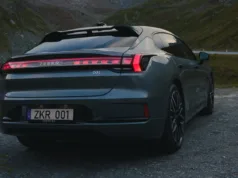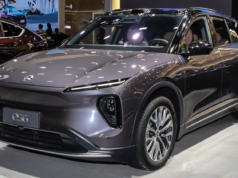

Canada’s Industry Minister, Mélanie Joly, discussed the initiative in an interview with Bloomberg News. She explained that Canadian automotive parts manufacturers such as Magna, Linamar, and Martinrea are already active in China and could contribute to a joint-venture assembly plant in Canada.
“We believe that these great Canadian champions can partner with Chinese EV companies to make a Canadian-Chinese car to export it around the world,” Joly told Bloomberg. There are “active conversations” on how domestic companies could complement new Chinese investments in Canada’s automotive sector.
This marks a significant step in Canada’s strategic pivot in automotive policy. For decades, the Canadian auto industry has been viewed as an extension of US manufacturers. GM and Ford operate plants in Canada to produce vehicles for North America, and suppliers are also active in the country. In some cases, components cross the US-Canadian border multiple times, from Tier 3 suppliers to the final vehicle plant. However, with the policies of former US President Trump, the Canadian government in Ottawa aims to reduce its dependence across many sectors.
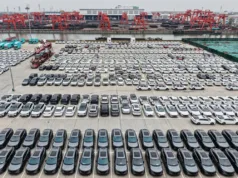
While Canada was among the countries accusing China of unfair subsidies for its automakers and imposed tariffs on imports of Chinese electric vehicles, as early as mid-January, Canadian Prime Minister Mark Carney announced an agreement with Chinese President Xi Jinping. Under the deal, tens of thousands of Chinese electric vehicles would be allowed into Canada at a significantly reduced tariff rate (6.1 per cent instead of 100 per cent), in exchange for lower tariffs on other goods. Officially, this applies to an initial 49,000 Chinese electric vehicles.
Canada had also raised security concerns about Chinese vehicles, particularly regarding the ability of modern cars to capture their surroundings using cameras and sensors—especially near critical infrastructure. Joly aims to address these concerns by involving domestic companies. The Bloomberg report mentions QNX, a software company based in Ottawa. “We can find a way to have software in the car that will address the security concerns,” Joly said. “I’ve already raised the fact with many Chinese companies that QNX is a state-of-the-art company that we could scale even more around the world.”
However, Canada cannot yet fully distance itself from American automakers. Last week, Joly and Carney unveiled a new automotive strategy. Canada will maintain its retaliatory tariffs on US-made vehicles but plans to introduce a system of import credits. The more vehicles a company produces in Canada, the lower the tariffs it will pay on imported US vehicles. Additionally, Carney is scrapping the electric vehicle sales quotas introduced by his predecessor and instead implementing stricter emissions standards for manufacturers and purchase incentives for consumers.