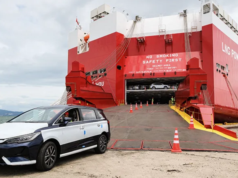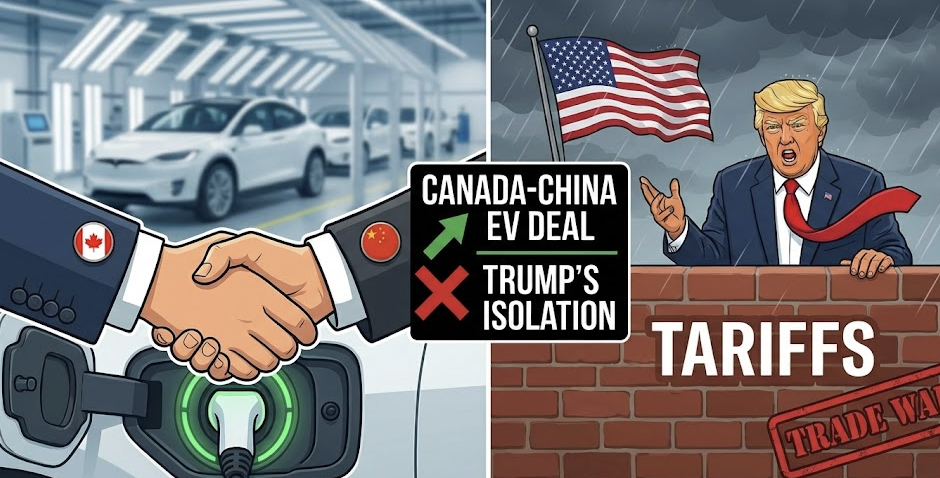
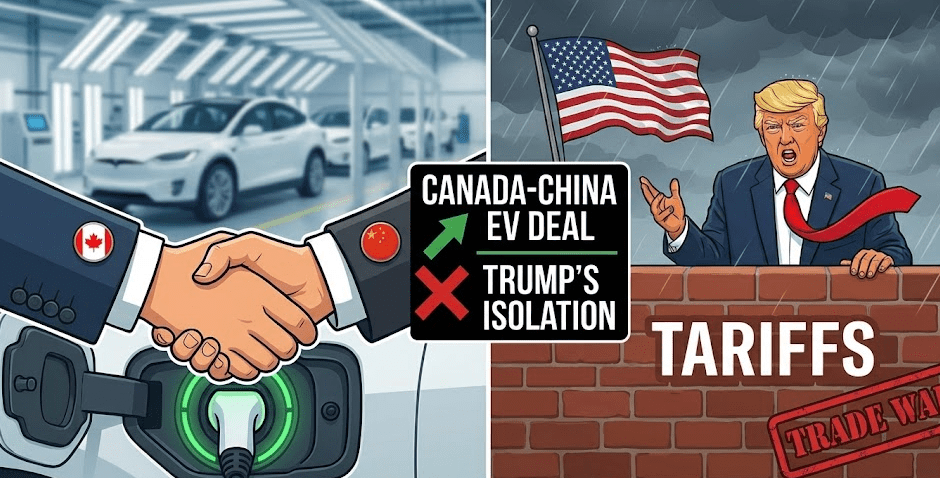
As a potential reversal of a significant policy implemented just over a year ago, the Canadian government is reportedly in advanced talks with China to remove or significantly reduce the 100% tariffs on Chinese electric vehicles.
The reversal comes as Prime Minister Mark Carney looks to stabilize trade relations with Beijing while navigating an increasingly hostile trade war initiated by the Trump administration against… well, everyone.
According to a new report from the Toronto Star, the Carney government is actively negotiating a resolution to the trade dispute that began when Canada lock-stepped with the US to impose massive tariffs on Chinese EVs.
At the time, Canada’s move was seen as a way to protect its integrated auto industry with the US. But the geopolitical landscape has shifted violently in the last few months.
Since taking office, President Trump has used emergency powers to slap 25% tariffs on Canadian goods, breaking the USMCA free trade agreement. In response, Canada announced its own 25% retaliatory tariffs on US-made EVs.
With the US market becoming a protectionist walled garden and Trump hostile to Canadian trade, the economic logic for Canada to keep blocking Chinese investment is evaporating.
China, for its part, retaliated against Canada’s initial EV tariffs by targeting Canadian canola and pork, hitting Western Canadian farmers hard. As we previously reported, this created a massive internal political rift in Canada. While Ontario Premier Doug Ford is begging Carney to keep the EV tariffs to protect legacy auto manufacturing, prairie premiers are demanding a deal to save their farmers.
It looks like the farmers, and potentially Canadian EV buyers, might win this one.
The new Canadian media report states that negotiators from Canada and China are getting close to a deal that would involve reducing or eliminating tariffs on Chinese EVs in exchange for China removing restrictions on Canadian canola and seafood.
The news of the progress in the negotiations, which have been ongoing for a few months, comes as Marc Carney, Canada’s prime minister, is right now heading to Beijing for an official trip.
Rumors are that a deal might be announced during the trip in the next few days.
Following Europe’s Lead
Canada isn’t the only one waking up to the reality that a full-blown trade war with China might not be the best strategy for electrification.
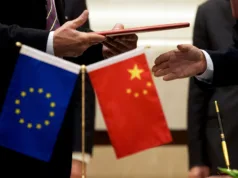
We reported just yesterday that the EU and China are close to a deal to replace their own tariffs with a “minimum price undertaking.”
Instead of a blanket tax that hurts consumers, Chinese automakers would agree to a price floor for their vehicles sold in Europe. This prevents “dumping” while still allowing competitive, affordable EVs to enter the market. It seems Canada is looking at a similar framework.
If a deal is reached, it could open the floodgates for automakers like BYD to finally enter the Canadian market with affordable models like the Seagull or the Dolphin, which are desperately needed to accelerate EV adoption in the country.
Electrek’s Take
This is what happens when you try to bully your allies.
The Trump administration’s strategy of waging a trade war against the entire world simultaneously is having the predictable effect of pushing everyone else closer together. Canada and Europe are realizing that if the US wants to isolate itself and protect legacy combustion engine profits, they don’t have to go down with the ship.
For Canadian consumers, this could be huge news.
We have said it time and time again: protectionist tariffs are a disaster for EV adoption. They artificially inflate prices, protect legacy automakers who dragged their feet on electrification for decades, and slow down the transition to sustainable transport.
Chinese EVs are the most competitive right now. If you are not competing with them, you won’t be competitive on the global stage.
If Canada drops these tariffs, it will be a major win for the climate and for consumers who are tired of waiting for affordable electric options.
It is ironic that Trump, who has been openly hostile to EVs, might accidentally be the catalyst for flooding Canada with cheap, high-quality Chinese electric cars by forcing Ottawa to pivot away from the US.