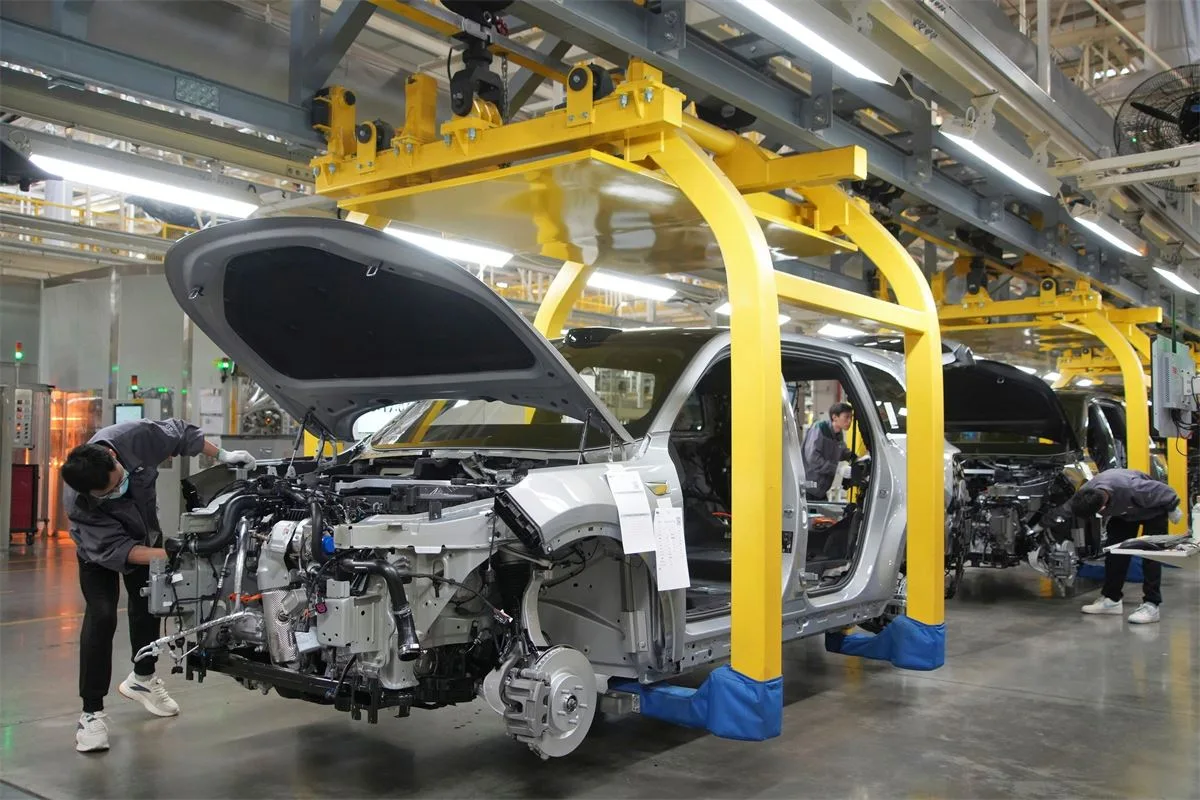
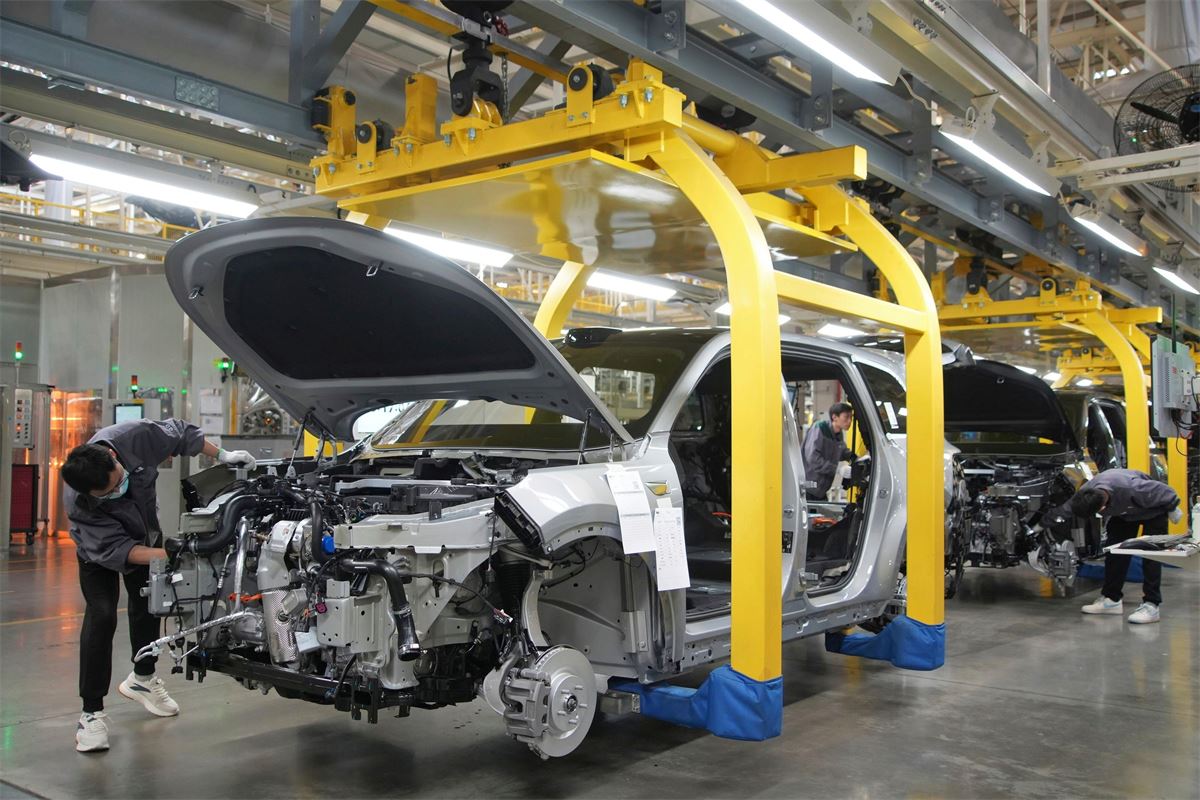
In 2020, while working on a white paper on electric vehicles, Peter Chase came across two brief news reports. One warned that traditional carmakers were in trouble because their emissions were too high to meet regulatory standards; the other noted that European manufacturers were producing electric vehicles in China.
“I thought, well, the obvious answer is that European car companies start exporting their EVs from China to Europe, which is exactly what happened,” recalled Chase, a visiting senior fellow at the German Marshall Fund and a former US diplomat.
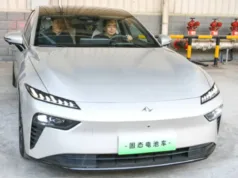
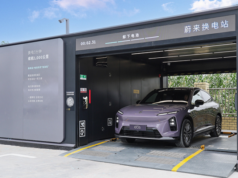
It did not take long before Chinese car companies started to emulate their European peers. By 2022, China, which until 2020 was a net importer of cars, surpassed Germany to become the world’s second-largest car exporter. The following year, it surpassed Japan to become the biggest auto exporter on the planet.
Key to that success lies in a stunning price differential: while Europe-made EVs average prices above €50,000, Chinese electric cars sell for around €32,000.
By last December, one in 10 cars sold in Europe could be traced back to a Chinese automaker, according to researcher Dataforce. And BYD, the country’s EV giant, has turned into something of a household name among European car buyers.
This new reality is at odds with the long-held view in Europe that China might take over simpler industries, but that the automotive sector — which accounts for roughly 7% of the bloc’s gross domestic product and over 6% of total employment in the EU — was far too complex to meet the same fate.
“There was an incredible arrogance in the European and, in particular, the German automobile industry,” Christian Dustmann, a professor of economics at University College London told The Parliament. “The [European] car industry was completely underestimating it.”
That naivete has faded among EU car executives, who are now vocal about the mounting pressures — including new barriers to the U.S. market driven by President Donald Trump’s sweeping tariffs and compressed margins amid rising competition at home and abroad.
If the EU doesn’t take action, Europe could lose up to 350,000 jobs, according to a Sept. 2025 study by Roland Berger commissioned by the European Association of Automotive Suppliers.
Made in Europe?
To turn the tables and help EU companies better withstand competition from their Chinese rivals, Brussels is now weighing how to introduce a “Made in Europe” provision without upending global supply chains.
The idea is that the EU would more closely police public procurement bids to prevent public money from going to foreign rivals. The policy, due to be unveiled by the European Commission in a proposed Industry Accelerator Act, would introduce targets for EU-made components in strategic technologies, including cars.
“The Chinese have ‘Made in China,’ the Americans have ‘Buy American,’ and most other economic powers have similar schemes that give preference to their own strategic assets. So why not us?” Stéphane Séjourné, the EU’s commissioner for industry, wrote in an op-ed at the start of February.
While Séjourné’s opinion piece was endorsed by over 1,000 European companies and industry associations, it lacked the backing of many major automotive firms, including France’s Renault and the Italian-French group Stellantis.
Several lobby groups contacted by The Parliament declined to share their views on the Commission’s strategy, citing a lack of clarity over how the final criteria would impact value chains that have been built out for decades.
And even industrial players who have not ruled out a “Made in Europe” ethos appear cautious. “This approach … should be applied on a case-by-case basis, taking into account value-chain specificities and the functioning of global markets, in order to avoid competitive distortions,” Italian industry lobby Confindustria said in a statement to The Parliament.
But according to Benjamin Krieger, CLEPA’s secretary general, calling for 75% of EU components to be sourced in Europe would not have an impact on prices. “We don’t want to reshore anything. We want to safeguard what we see now,” he said.
Certain analysts also see a protectionist push as inevitable. Matthias Schmidt, an independent car analyst at Schmidt Automotive Research, insisted that, given the current circumstances, curbing reliance on other global markets would be the surest bet for Europe.
“In the unstable geopolitical world we live in, the safest strategy for manufacturers is to invest in Europe for Europe, invest in China for China, and invest in the U.S. for the U.S,” said Schmidt, referencing Trump’s aggressive trade policies.
Disentangling EU–China supply chains
It’s not the first time that the Commission has tried to turn the screws on Beijing. In 2024, the EU imposed tariffs on Chinese electric vehicles following a year-long probe that found Beijing guilty of illicit dumping practices. But if carmakers had been hoping for some relief, that did not materialize.
Schmidt said that the levies were “working” but have fallen short of preventing the Chinese from gaining market share on the continent. Rather than stopping them altogether, the tariffs are “slowing their progression,” he said.
The reality, however, is that abandoning Chinese supply chains is easier said than done, given European companies have been outsourcing overseas to cut costs for decades.
One part of the problem is that many well-known brands sold in Europe are in fact owned by Chinese automakers, with Volvo — once a Swedish carmaker before it was bought by China’s Geely in 2010 — often cited as a flagship case.
Moreover, most major European carmakers, including Germany’s Volkswagen, BMW and Mercedes Benz, all operate Chinese joint ventures that leave them particularly exposed to any EU trade policies targeting Beijing.
Then there is the issue of Chinese investment in Europe. A recent analysis by Bruegel, an economic think tank, showed that China poured roughly €5 billion into the continent’s EV sector in 2024, an increase of more than 50% on 2022 levels.
“Chinese manufacturers are now here to stay,” said Schmidt. He added that was “fair game,” as long as Chinese carmakers operated on equal terms to their European counterparts.
An electric electric future
For Dustmann, the economist, the current crisis reflects Europe’s hesitation to more forcefully invest in EVs. Bowing to pressure from conventional automakers, the EU last December dropped a 2035 ban on combustion engine cars that had been meant to bolster the continent’s EV market.
That was a move that many observers viewed as an unexpected gift to China’s booming industry. Auto executives, meanwhile, have called the move a necessity to buy time, given more limited demand for electric cars.
At the same time, «China has gone up the learning scale at an unbelievable speed,” Dustmann said, as Chinese firms have harnessed fresh engineering talent in conjunction with AI.
To catch up, Brussels now wants to force Chinese companies to impart their intellectual property whenever they invest across the bloc — a condition European firms themselves faced when they began investing in China, but one that the Chinese government appears reluctant to accept.
As such, the future of the European automotive industry might now hinge on whether the EU can convince China to share its secrets.
Sign up to The Parliament’s weekly newsletter
Every Friday our editorial team goes behind the headlines to offer insight and analysis on the key stories driving the EU agenda. Subscribe for free here.