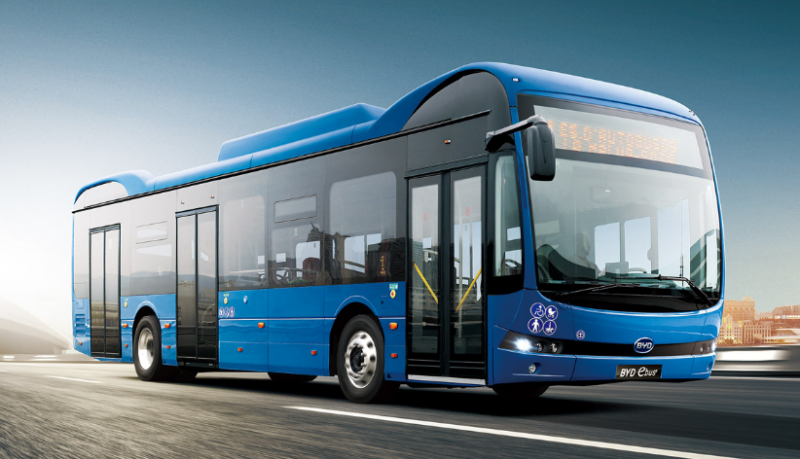
BYD continues to deploy electric buses with Blade batteries integrated into the chassis. The architecture, introduced in 2025 with e‑Bus Platform 3.0, is used in multiple international operations in 2026.
In Budapest, Hungary, BYD-assembled electric buses using the structural battery‑chassis design entered service in early 2026. The first units of an 82-bus order are operating on city routes.
In 2025, BYD completed more than 5,000 electric bus deliveries in Europe, including models with Blade battery integration. The company also established parts and service centres in Australia to support operations.
In Singapore, the Land Transport Authority (LTA) awarded six contracts in December 2025 for 660 new electric buses. BYD was selected to supply 210 buses, including 160 single-deck and 50 double-deck vehicles, scheduled for deployment from the end of 2026.
Electric bus electrification is expanding beyond urban transit. In China, urban networks are nearly fully electrified, while long-distance coaches and intercity fleets remain partially electrified. Electric platforms, such as BYD’s structural battery buses, offer greater efficiency and design consistency compared with converted combustion-engine designs.
The evolution from CTM (battery retrofit) to CTP (cell-to-pack) to CTC (cell-to-chassis) reflects a shift toward native electric-vehicle architectures, as reported by Sina. CTM retrofits placed conventional battery packs into combustion chassis. CTP designs removed intermediate modules, increasing usable battery space by 15–20% and reducing components. CTC designs integrate the battery into the chassis structure.
CTC integration affects multiple aspects of bus performance. BYD’s C11 coach achieves about 7 cubic meters of luggage volume. Unified floor-battery construction reduces the number of parts by approximately 370. The platform’s 1,000-volt electrical architecture lowers energy consumption by up to 18% and increases cold-weather range by 50–80 kilometers per day.
Maintenance of integrated battery systems can be more complex than conventional designs. Modular service solutions and replaceable zones are being explored to address repair requirements.
Future developments include integration with skateboard chassis concepts, solid-state battery technology, and advanced battery management systems for monitoring and predictive maintenance.
The deployment of BYD buses in global markets shows continued use of structural battery-chassis integration in 2026.

Follow us for ev updates