


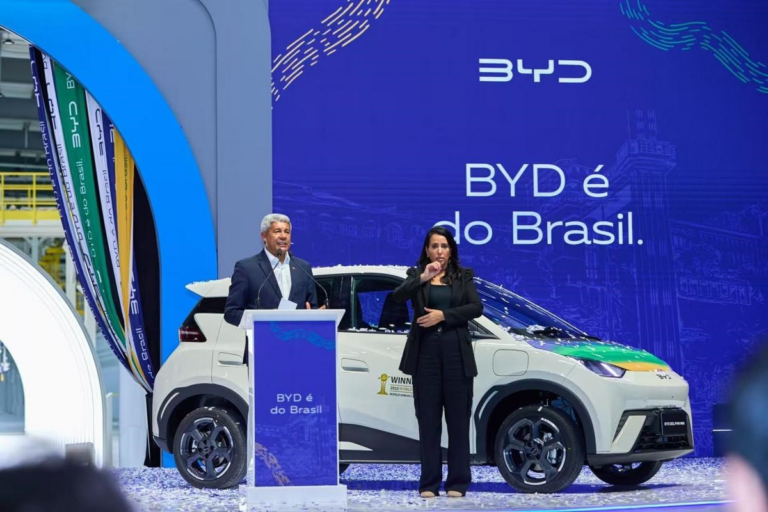

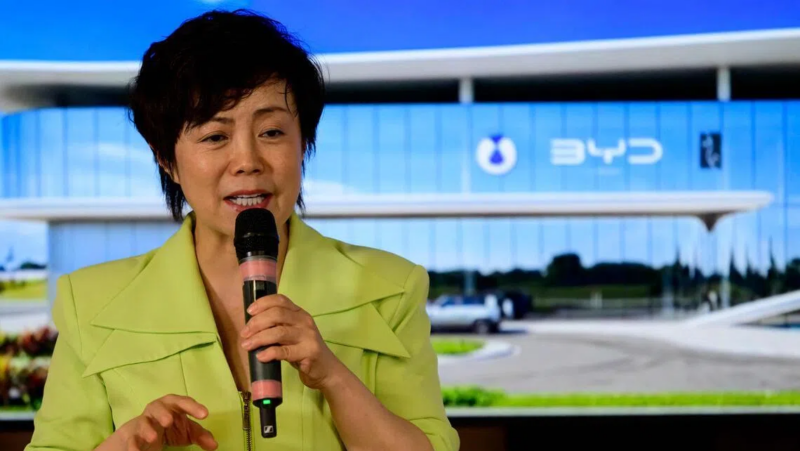
BYD is making strides in Latin America, with Executive Vice President Stella Li announcing that the company’s Brazilian plant has secured export orders totalling 100,000 vehicles from Argentina and Mexico. BYD’s Brazil plant officially commenced production on July 1, 2025.
According to a Reuters report quoted by Chinese media Zaobao, Li revealed this development during an event in Rio de Janeiro on Friday, March 13. She specified that the orders are evenly split, with 50,000 vehicles designated for Argentina and another 50,000 for Mexico.
The Camaçari plant in Brazil’s northeastern Bahia state currently has an annual production capacity of 150,000 vehicles, with plans to increase this to 600,000 vehicles in phases. The facility will manufacture both plug-in hybrid and fully electric vehicles, including the Dolphin Mini, BYD King, and Song Pro.
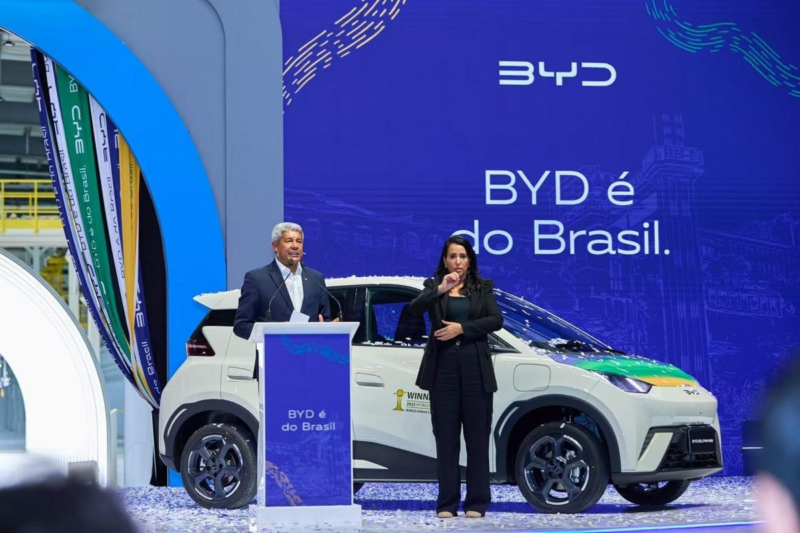
Data from Brazil’s National Association of Automotive Dealers shows that BYD sold approximately 113,000 vehicles in Brazil last year, making it the company’s largest market outside China. In 2024, 76,713 vehicles from BYD were registered in Brazil, an increase of 327.68% from 17,937 vehicles in 2023.
During Friday’s event, Li also announced plans to invest 300 million Brazilian reais (53 million USD) to build a research centre in Rio de Janeiro. Construction is scheduled to begin this year, with completion expected by 2028. The facility will include capabilities for testing vehicle speed, power, endurance, and performance. It will also generate tropical climate data to help BYD develop new products and adapt technologies specifically for local markets.
Last November, BYD announced that its Brazil plant produced the 10,000th vehicle.
Editor’s comment
Due to intense competition in the Chinese market, BYD is experiencing significant pressure domestically. In January this year, its sales plummeted by 30% year-on-year to 210,051 units. Notably, exports accounted for 100,428 units, representing nearly half of its total sales. Attributable to the Chinese New Year holiday period, February’s sales were naturally lower than January’s, yet exports remained robust, exceeding 100,000 units.
To revitalise domestic sales, BYD has implemented several strategies. These include launching Linghui, a dedicated brand for ride-hailing services, aimed at minimising any potential negative impact on BYD’s core brand. Additionally, the company introduced Blade Battery 2.0 this month.
Data from the first two months of this year clearly indicate the growing importance of exports for BYD. Indeed, during this two-month period, BYD’s export volume actually exceeded its domestic sales. Should this trend persist throughout the year, BYD’s overseas sales could potentially surpass its domestic sales in China for the entire year.


Follow us for ev updates