BYD’s ambitions are no longer limited to its home market in China. The company is openly positioning itself as a future leader of the global automotive industry, and Europe is seen as one of the most important regions in that strategy. According to BYD Vice President Stella Li, success in Europe would signal that the company can compete anywhere in the world.
“We want to be at the top of the automotive industry,” Li said, making it clear that BYD sees the European market as a critical test not only of sales volume but also of brand credibility and technological reputation.
From Domestic Giant to Global EV Leader

Photo Courtesy: Byd.
BYD reached a major milestone in 2025 by becoming the world’s highest-volume seller of electric vehicles, surpassing Tesla in total deliveries. The company also climbed to seventh place among global automotive groups, moving ahead of long-established names such as Ford. As an individual automotive brand, BYD now ranks among the world’s largest players, reflecting how quickly the company has expanded beyond China.
Advertisement
Advertisement
While that growth has been driven partly by aggressive model launches in its domestic market, BYD’s approach in Europe looks different. Instead of flooding the market with a large number of vehicles, the company wants to strengthen its image as a high-tech, innovative manufacturer.
Li emphasized that Europe represents a qualitative opportunity rather than a purely quantitative one. In other words, brand perception and long-term positioning matter as much as raw sales numbers.
A Technology Company First, Automaker Second
BYD frequently describes itself as a technology company as much as a car manufacturer. The company produces components used in roughly one-third of the world’s smartphones and supplies batteries to multiple global automotive brands. Its research and development footprint is equally massive, with more than 100,000 engineers working across different divisions.
According to company figures, BYD files around 45 new patent applications every day, a statistic meant to underscore how heavily it invests in innovation and in-house technology development.
Advertisement
Advertisement
This approach mirrors the strategy that helped Tesla reshape public perception of electric cars. BYD appears eager to build a similar identity, positioning itself as a technology-driven brand rather than simply another high-volume automaker.
Charging Infrastructure and Future Battery Technology

Photo Courtesy: BYD.
Infrastructure remains another key part of BYD’s expansion plans. The company intends to install around 6,000 ultra-fast chargers worldwide, including locations across Europe. Expanding charging access is seen as essential for increasing consumer confidence and accelerating electric vehicle adoption.
Looking further ahead, solid-state batteries are viewed as the next major breakthrough. These batteries promise higher energy density and potentially improved safety, although large-scale production remains challenging due to cost and manufacturing complexity. BYD believes early applications could appear later this decade, while mass adoption will likely take longer.
Prepared for Multiple Powertrain Paths
Unlike some manufacturers that focus exclusively on fully electric vehicles, BYD argues that flexibility is crucial. The company continues to invest heavily in plug-in hybrid technology, highlighting models capable of traveling more than 620 miles on a combined range while maintaining strong efficiency.
Advertisement
Advertisement
At the same time, BYD’s fully electric lineup continues to expand, giving the brand options depending on regional regulations and market demand. This multi-powertrain strategy allows the company to adapt quickly if European policy introduces new categories for smaller, affordable vehicles.
European Manufacturing Plans Take Shape

Photo Courtesy: BYD.
To strengthen its European presence, BYD is building a factory in Hungary that will enable local production and help avoid import tariffs. Alongside Hungary, Turkey has also been identified as a key manufacturing location, while Spain is reportedly being considered for a third production site.
Local manufacturing is expected to improve logistics, reduce costs, and build trust among European consumers who often prefer vehicles produced closer to home.
Premium and Luxury Expansion
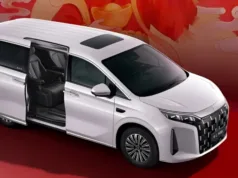
BYD’s strategy goes beyond mainstream electric cars. The company plans to introduce its premium brand Denza to Europe starting in 2026, followed by the luxury-focused Yangwang brand in the second half of 2027. These additions show that BYD is targeting multiple segments, from affordable city cars to high-end performance and luxury vehicles.
A Global Strategy Without the United States, for Now

Photo Courtesy: Autorepublika.
Advertisement
Advertisement
Interestingly, BYD currently has no plans to enter the United States market. Instead, the company is focusing on regions where expansion opportunities are clearer, including Central and South America. A factory has already opened in Brazil, supporting rapid growth throughout the region.
For now, Europe remains the key battlefield where BYD hopes to prove it can evolve from a fast-growing Chinese brand into a true global automotive powerhouse. If Stella Li’s vision becomes reality, the company could reshape how the industry defines competition in the electric era.
This article originally appeared on Autorepublika.com and has been republished with permission by Guessing Headlights. AI-assisted translation was used, followed by human editing and review.
Read More