Support CleanTechnica’s work through a Substack subscription or on Stripe.
While much of the news this week has been discouraging, recent reports about BYD’s over-the-air (OTA) updates have provided something positive to think about. In particular, the OTA updates have focused on BYD’s DM-i 5.0 (5th generation PHEV platform), which started rolling out across models in China last year. Consumers in China are getting more battery-only range and better fuel economy once the battery is depleted than when they bought their vehicles. While some news has been worse than expected, it is good to see something ending up better than expected. That is not only better for consumers, but also better for the CO2 emissions and the environment.

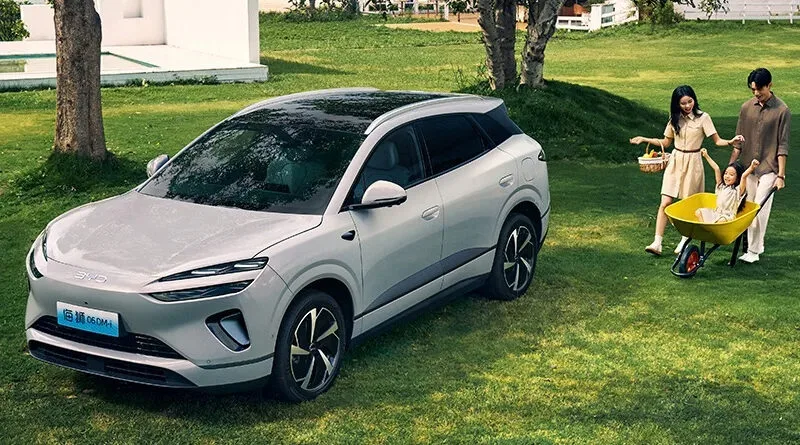
BYD Sealion 06 Gains up to 35 km of Battery Range
Recent OTA updates to the BYD Sealion 06 DM-i have led to a significant increase in battery-only range. Looking at the spec sheets, the base model goes from 121 km to 132 km of battery-only range. Meanwhile, for the Navigator Pro and Plus models, range goes from 170 km to 190 km in standard mode, with a new “Long Range Mode” increasing battery-only range to 205 km. It’s a 20% improvement in battery range over what buyers paid for when they originally bought their vehicles. It also means that the engine is less likely to come on to extend the range.
Of note, the Sealion 06 is a new vehicle as of last summer and is replacing the Song Plus in China. The previous Song Plus is currently also being sold in other markets as the Seal U and Sealion 6, using the previous generation DM-i 4.0 powertrain. However, the battery range OTA updates are being rolled out to other DM-i 5.0 vehicles in China. We will have to wait to see how significant a range improvement the updates will make to the other DM-i 5.0 models.
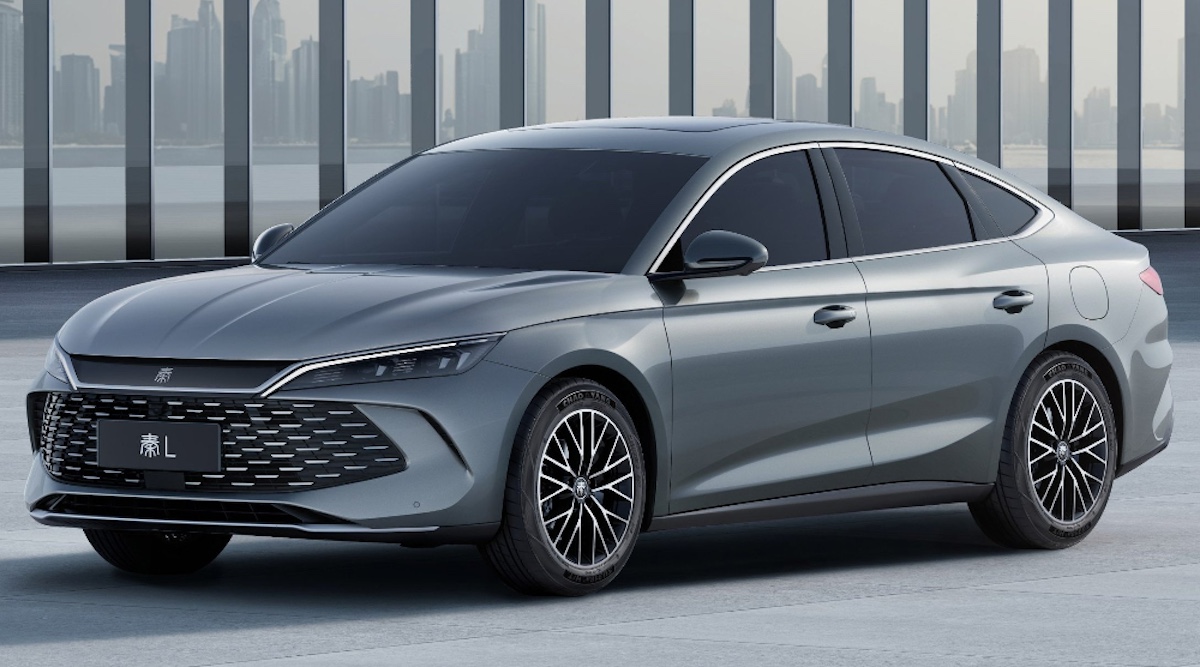
Real-World Efficiency for Qin L
But what happens when the battery runs out? As reported in Fast Technology, Chinese blogger “@向北不断电” has compiled real-world data of 100 Qin L drivers to see what impact recent OTA updates have made. When BYD launched the smaller battery version of the Qin L with an NEDC rating when the battery is depleted of 2.9 l/100km (81 mpg), using the gasoline engine as the power source, it gained attention for its efficiency. This year, BYD announced an OTA update that it claimed would improve the efficiency to 2.6 l/100km (90 mpg). The 80 km version of the Qin L has been discontinued for 2026, while the 120 km version has seen its battery-only range grow to 128 km. That larger battery vehicle is now officially rated 2.79 l/100km (84 mpg), up from 3.08 l/100km before the OTA.
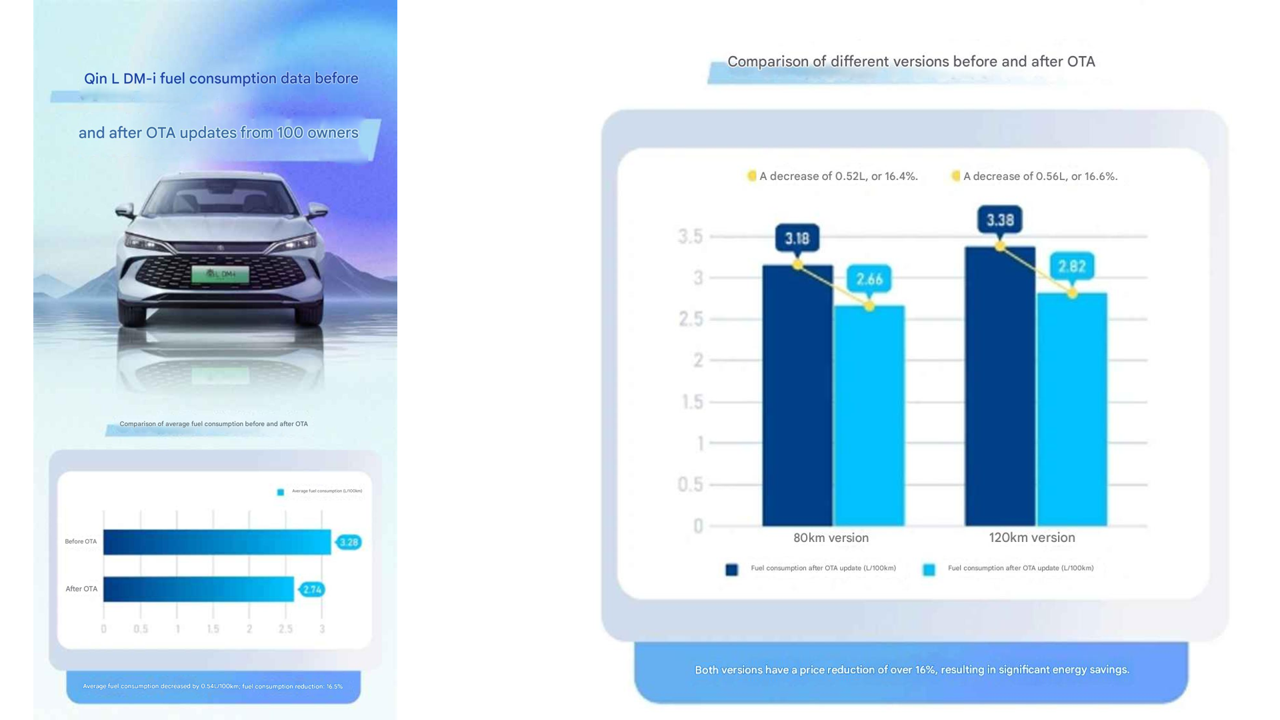
With the larger vehicle seeing a real-world average of 2.82 l/km, the difference between the rating and the real-world result shrank almost as much as the claimed efficiency has improved. The difference for real-world fuel economy is now essentially a rounding error versus the notoriously optimistic NEDC rating. In both cases, people are now getting better fuel economy in the real world than what was advertised for the cars when they launched.
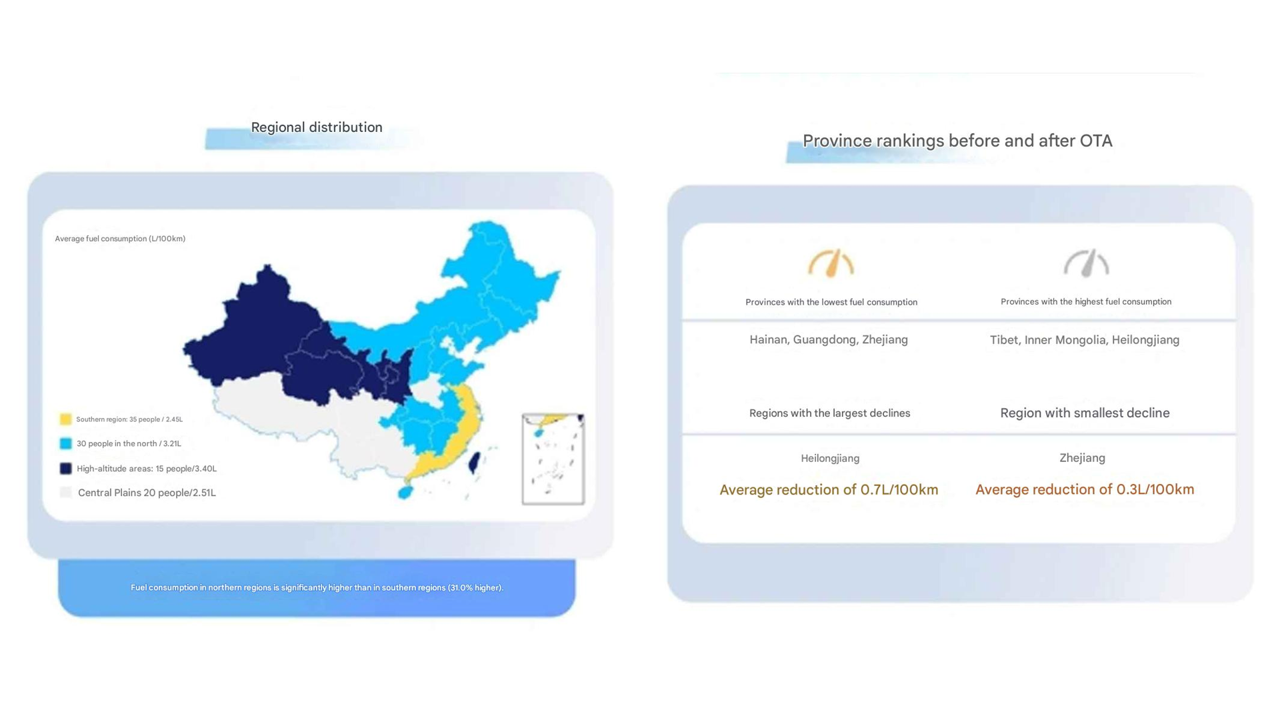
It gets more interesting as you dig into the data. Those in densely populated southern China are now beating the NEDC rating. Meanwhile, colder, higher altitude and more sparsely populated regions saw higher fuel consumption and a smaller overall reduction from the OTA update.
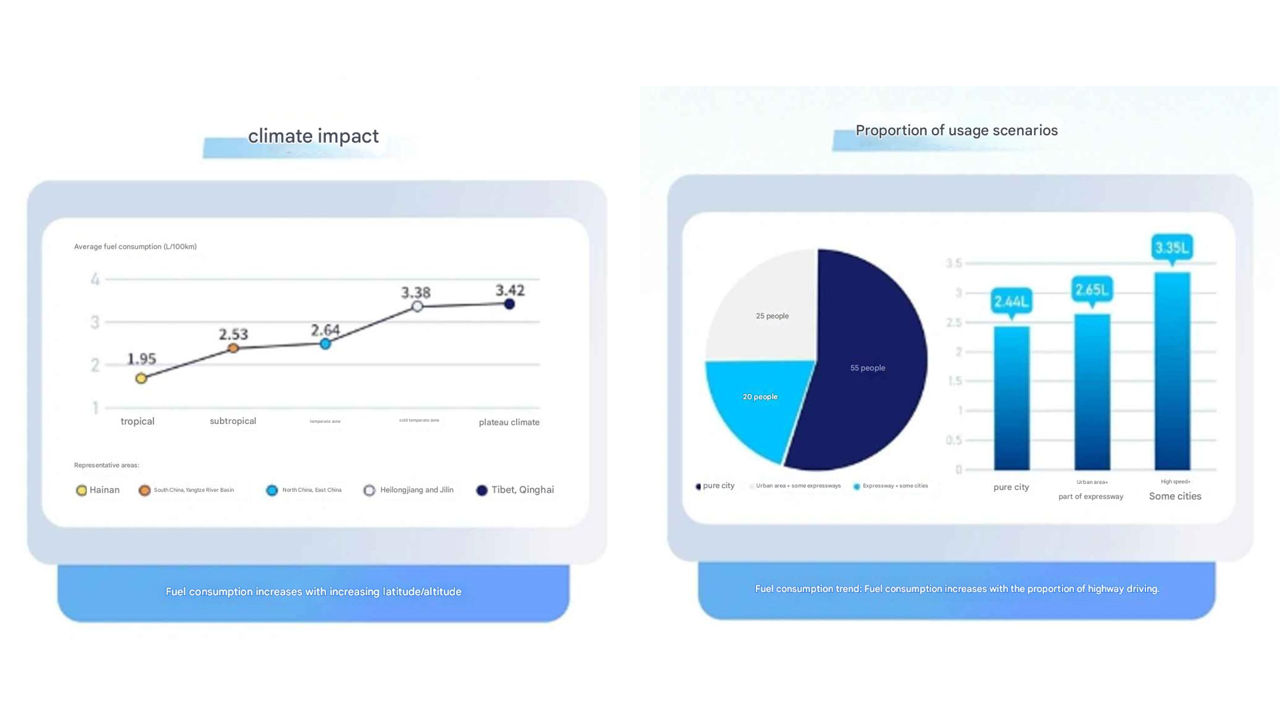
Digging in deeper, tropical Hainan saw real-world efficiency up to 1.95 l/100km (121 mpg) and city driving saw efficiency of 2.44 l/100 km (96 mpg).

Hopefully the Start of a Positive Trend
BYD was able to generate these optimizations using data from vehicles on the road that was then processed using AI to optimize operational performance. BYD was not hyping the AI aspect, but it is good to hear something positive for the environment coming from AI. Speculation has been that much of the improvements have come from better thermal management. Looking at the data, you can imagine further optimizations to adapt to outdoor temperature and altitude. BYD has indicated that this will not be the last optimization OTA update. And similar updates are expected for its BEV models.
Optimizing performance to real-world data is encouraging. The auto industry has a long history of optimizing to the test cycle with real-world performance lagging. “Dieselgate” is perhaps the most egregious example, but there have been multiple lawsuits over the years. In this case, real-world performance improved more than the test cycle. That wasn’t just to drive sales, as the cars were already sold. They were also not doing it to meet regulatory compliance or to get emissions credits that do not apply here. And they are not charging for the update. Customers are getting real-world performance that is better than what they paid for.
The speed of progress is also encouraging. Performance is improving faster than model names, and many marketing materials are being updated. New hardware is likely to improve performance further. And the data that feeds the OTA updates can also be used to design better hardware.
The downside, of course, is that we cannot buy these vehicles in the US. In many export markets, availability will also be limited. The threat of protectionism will lead to localization. If there are technology sharing requirements, that will tend to lead to local production with previous-generation technology. However, BYD’s previous-generation PHEV system is already more advanced than competitors in the export markets where it is available. DM-i 5.0 may not be available across their overseas lineup for a while, by which point China is likely to be on to the next generation. And some countries may try to prevent the data collection that feeds the models that optimize performance to real-world users.
However, the technology is improving. People are getting more than they pay for. Real-world results are living up to and sometimes even exceeding marketing claims. Competitors will inevitably up their game in response. Hopefully, that will lead to better EVs, more satisfied customers, and faster adoption of plug-in vehicles.
Sign up for CleanTechnica’s Weekly Substack for Zach and Scott’s in-depth analyses and high level summaries, sign up for our daily newsletter, and follow us on Google News!
Have a tip for CleanTechnica? Want to advertise? Want to suggest a guest for our CleanTech Talk podcast? Contact us here.
Sign up for our daily newsletter for 15 new cleantech stories a day. Or sign up for our weekly one on top stories of the week if daily is too frequent.
CleanTechnica uses affiliate links. See our policy here.
CleanTechnica’s Comment Policy