


The BYD Seal 06 series has received significant updates across its EV, DM‑i hybrid, and GT hatchback models, according to the China Automotive Energy Consumption Label database. The lineup now includes two EV range variants with extended driving distances, updated DM‑i hybrids with improved efficiency, and refreshed GT performance models.
The long-range Seal 06 EV 630 km variant will feature a 240 kW peak-power motor and achieve 11.4 kWh/100 km energy consumption. The mid-range Seal 06 EV 530 km variant uses a 120 kW motor and reports a 10.7 kWh/100 km consumption rate. Both EV variants benefit from improved battery and motor efficiency compared with earlier Seal 06 EV models. These changes are enabled by next-generation blade battery technology, high-efficiency motors, and integrated smart electric control systems.
Battery, weight, and energy density
The Seal 06 EV 630 km will carry a 64.315 kWh battery weighing 444.1 kg, with a curb weight of 1,795 kg. The Seal 06 EV will have a 530 km range and a 52.868 kWh battery weighing 383.6 kg, with a curb weight of 1,670 kg. The traction battery energy density is 144 Wh/kg, with estimated cell-level energy density exceeding 200 Wh/kg, consistent with advanced blade battery cells.
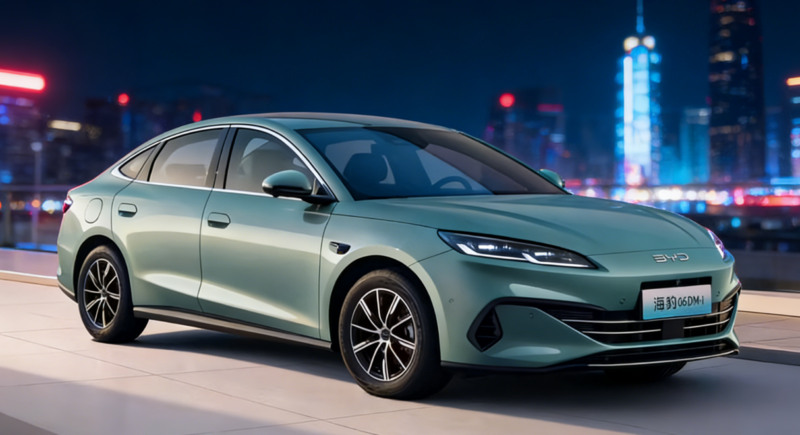
The Seal 06 DM‑i hybrid variants will both use 175 kW motors. One variant offers a 150 km pure-electric range with 15.2 kWh/100 km consumption, while the other delivers 155 km with 14.7 kWh/100 km consumption. These values represent incremental gains compared with earlier DM‑i Seal 06 hybrid models.
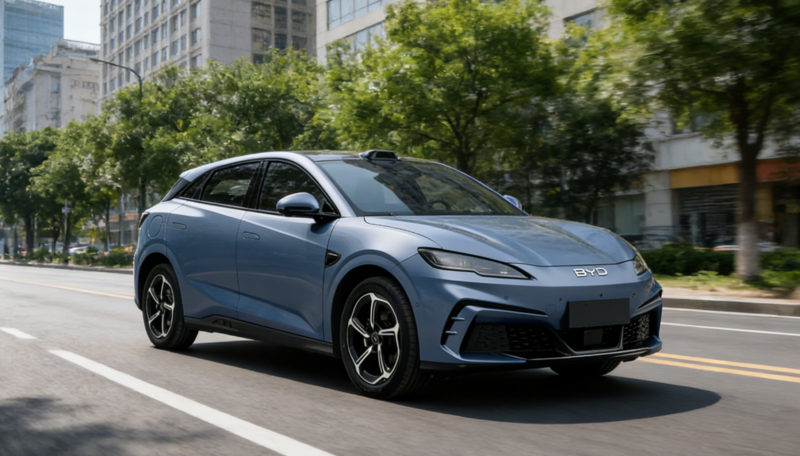
The Seal 06 GT hatchback models will also be updated. The long-range GT EV features a 200 kW motor and a 57.545 kWh battery with 12.3 kWh/100 km consumption. The performance GT EV variant uses a 240 kW motor, a 69.07 kWh battery, and 12.5 kWh/100 km consumption, with a CLTC range of 620 km.
Comparison table: updated Seal 06 series vs previous models
| Model | Variant | Motor Peak Power | Battery Capacity (kWh) | Curb Weight (kg) | Electric Range (CLTC) | Energy Consumption (kWh/100 km) | Notes / Compared to Previous Model |
|---|---|---|---|---|---|---|---|
| Seal 06 EV | Higher trim | 240 kW | 64.315 | 1,795 | 630 km | 11.4 | Range increased by ~50 km vs previous 580 km EV; motor power +60 kW; energy consumption reduced from ~12 kWh/100 km |
| Seal 06 EV | Lower trim | 120 kW | 52.868 | 1,670 | 530 km | 10.7 | Range increased by ~30 km vs previous 500 km EV; motor unchanged; energy consumption reduced from ~11 kWh/100 km |
| Seal 06 DM‑i | Lower trim | 175 kW | – | 1,670 | 150 km | 15.2 | EV range increased from 145 km; energy consumption improved from 15.5 kWh/100 km |
| Seal 06 DM‑i | Higher trim | 175 kW | – | 1,680 | 155 km | 14.7 | EV range increased from 150 km; energy consumption improved from 15 kWh/100 km |
| Seal 06 GT | Lower trim | 200 kW | 57.545 | 1,750 | 520 km | 12.3 | Range increased from ~580 km; motor power +40 kW; energy consumption slightly lower than the previous 12.6 kWh/100 km |
| Seal 06 GT | Higher trim | 240 kW | 69.07 | 1,880 | 620 km | 12.5 | Range increased from ~580 km, motor power +40 kW; energy consumption slightly lower than the previous 12.6 kWh/100 km |
Efficiency
The Seal 06 series updates show that BYD has boosted range and motor output while reducing or maintaining energy consumption. The high energy density of the updated blade battery packs, together with high-efficiency motors and integrated smart electric controls, underpin these gains.
Pricing outlook
BYD has not announced official pricing for the new Seal 06 EV, GT, or DM‑i variants. However, based on recent pricing for similar BYD EV and hybrid models, including the Qin L, Qin Plus, and Song Pro, any range increases may come with minimal or no price premium to sustain market competitiveness. Analysts anticipate that BYD may pursue a “more range without higher price” approach, keeping incremental pricing within a modest range relative to earlier versions.


Follow us for ev updates