Support CleanTechnica’s work through a Substack subscription or on Stripe.
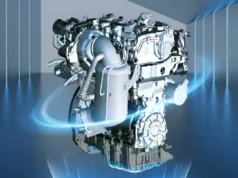
Recent regulatory filings with China’s Ministry of Industry and Information Technology reveal that BYD will use its new TZ200XYAT 240 kW (322 hp) motor in a wide range of mainstream vehicles. While we do not have too many details yet, this motor is being used for RWD 800V architecture vehicles, signifying an architecture upgrade for some models and a shift in primary drive axle for others. As the vehicles are also losing weight while adding power, some on Chinese social media predict that this motor will be a scaled down version of the surprisingly compact, high-speed motor in the Han L. If that is the case, performance will depend largely on gearing and tuning.

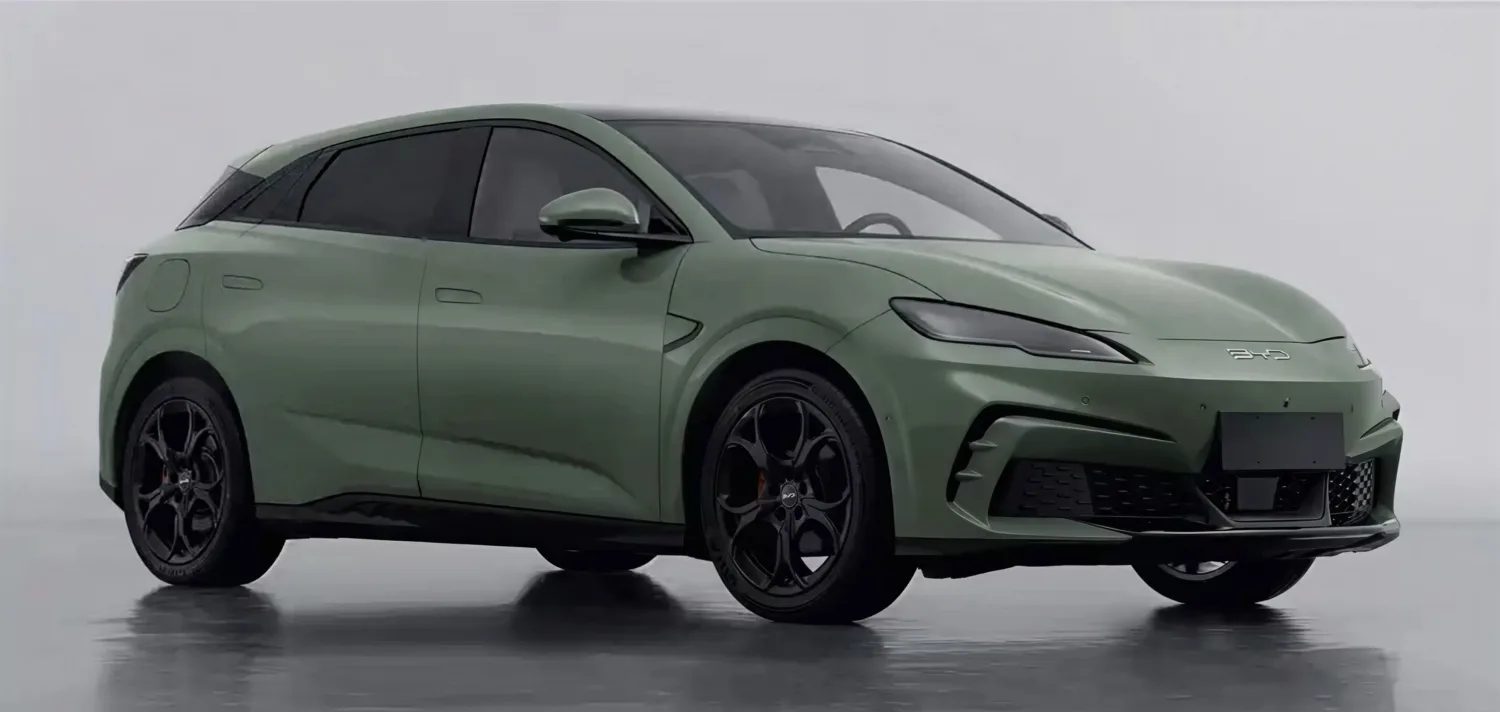
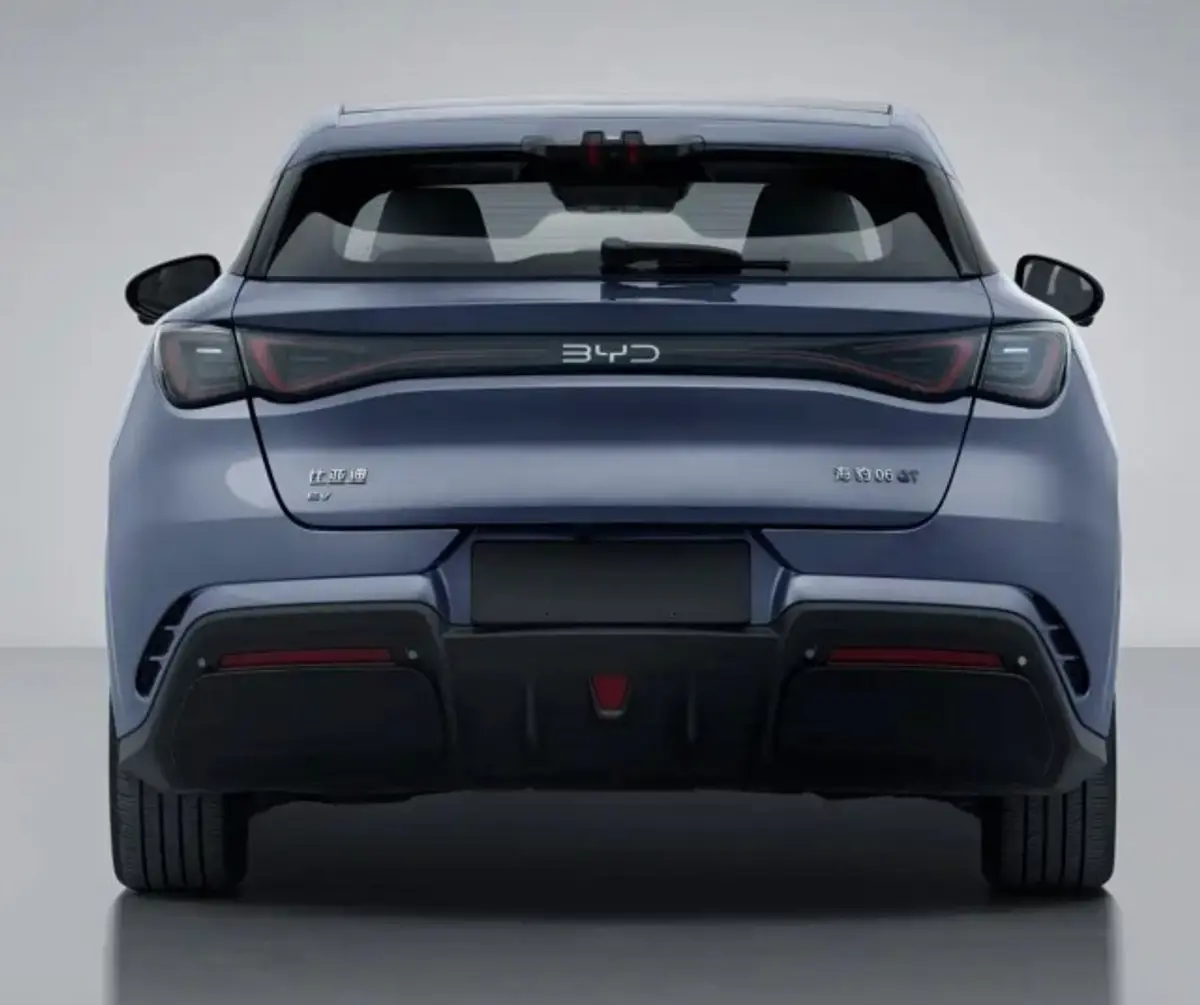
In the Seal 06 GT hatchback, the motor upgrade to 240 kW in the top RWD model (up from 165 kW) is accompanied by a 200 kW motor in the base version (up from 160 kW). Visually and dimensionally, not much has changed, which is good for comparison, as the change is significant on the scales. The current 165 kW RWD model comes in at 1940 kg, while the new 240 kW model drops to 1750 kg, according to the regulatory filing. For those not using the metric system, that’s a 419 lb weight loss.

New to BYD’s lineup is the Qin Max EV, which appears closely related to the Qin L EV on the same 2820 mm wheelbase. However, it grows in length from 4720 mm to 4866 mm, an increase of almost 6 inches, noticeable in the rear of the car. While BYD made no such announcement, this would also be a perfect time to offer a sedan profile hatch, like the hot-selling XPENG Mona. The move up to 240 kW in the top model is a significant improvement over the previous Qin L 160 kW motor on a 400V platform. Meanwhile, the entry level model saw a smaller gain, from 100 kW to 120 kW. Despite the increased size and power, weight is down slightly. Meanwhile, the Qin Max’s sister sedan, the Seal 06 Max EV, increases to 4870 mm long, making it longer than the current 4800 mm long Seal 07 (the Seal sedan in other markets), but slightly more powerful than the current 230 kW RWD version and significantly lighter (1795 kg vs. 2080 kg).
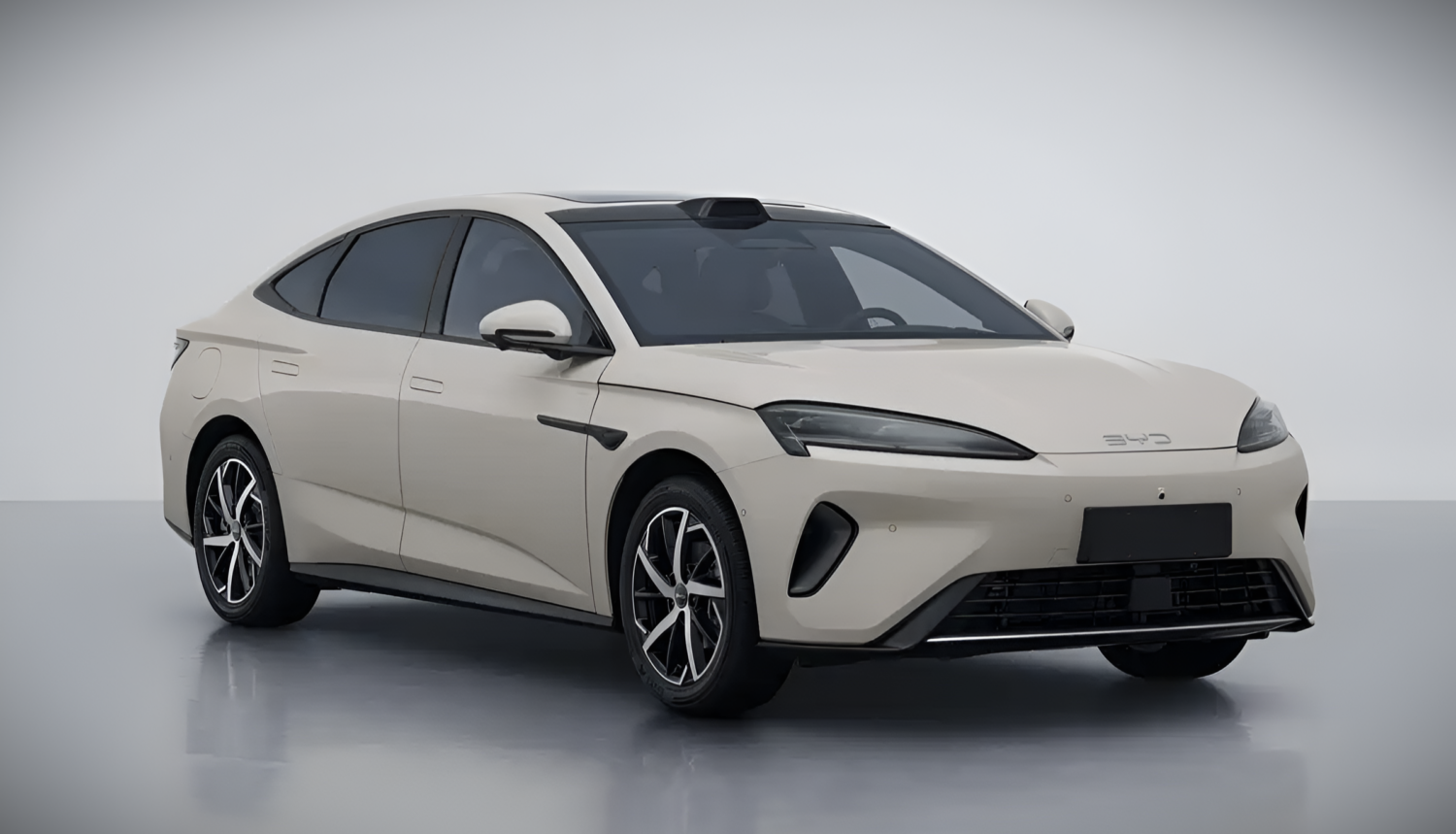
Speaking of the Seal 07, the new Seal 07 EV has shifted to the same body as its DM-I sibling. This vehicle, 4995 mm long, is more closely related to the Han than it is to the current Seal 07 EV. The new Seal 07 EV and new Han EV both feature the same 240 kW motor. At 1940 kg, the new Han EV and Seal 07 EV are not light cars. However, this weight is significantly less than the current Han EV or Seal 07 in comparable spec. Due to the change in motor, it is also widely expected that the new EV versions will move to be RWD, as is also expected for the Yuan Plus. This raises the question: what will happen with the existing Seal 07 EV? Will it become an export market only vehicle like the Song Plus/Seal U?

Beyond the BYD brand, this motor is also being used in the Fang Cheng Bao Ti3 compact SUV/crossover. In addition to the new 240 kW RWD version, an AWD version of that vehicle adds a 135 kW front motor (up from 110 kW) for 375 kW total (503 hp). If stands to reason that if higher performance versions of other models are desired, a similar AWD system could be added. As the Seal 06 GT shared the AWD motor layout with the previous Ti3, I anticipate the new AWD system will appear in future announcements.
The Charging Importance of 240 kW
While people may be looking at 240 kW (322 hp) and think it is a bit excessive for these vehicles; the number has greater significance. Many other automakers electrically split their nominal 800V pack into two nominal 400V packs to charge on 400V chargers. This is a somewhat simple solution, but it runs into limitations at chargers. The rated power of a charging pile is based on its amperage and voltage limit. As the actual voltage of an 800V nominal pack is often significantly less than the 800V nominal rating, the charger output hits its amperage limit and is typically charging at less than maximum output.
BYD’s latest BEVs use the power electronics that drive the motor as an onboard charger and the motor windings as a filter inductor. This takes the maximum output of the DC charging pile and uses it to charge the battery at the correct voltage, regulated onboard the vehicle. Due to a claimed 99.86% rated efficiency of their SiC electronics, it also tends to be more efficient. And, since it utilizes electronics already used to drive the vehicle, it eliminates the complexity of a separate onboard charger.
In China, 240 kW is a typical power rating for older, prevalent 400V chargers. As such, new BYD vehicles with 240 kW motors could theoretically use the maximum output from a single charge gun of the lower voltage chargers. Some of BYD’s more premium vehicles can use two charge guns simultaneously, but 240 kW is likely sufficient for mainstream cars (and less likely to create conflicts with other people looking to charge). For power ratings above 240 kW, chargers tend to be 800 V or higher in China, in which case the offboard charger would be used.
At those higher-voltage chargers, the current speculation is that these vehicles could charge at ~6 C. This would be good for an ~8 minute 20–80% recharge, which would work for most people, if not up to the 10 C Megawatt level of cars like the Han L. But we should hear more soon.
Of course, that charging speed will depend on the battery. BYD has indicated that more advanced batteries are coming for 2026, but we do not have details yet. The combination of increased power and significantly reduced weight clearly goes beyond a more advanced motor, with a new battery being the most likely contributor to the weight loss. In the recent shareholder meeting, Wang Chaunfu said that “groundbreaking technology” was coming in 2026, but that they would start holding off on announcing technology in advanced, in order to not give their competitors a heads up of what is on the way. There is a lot of speculation on what might be coming, but we will have to wait to see.
Setting the New Standard, for Now
Overall, the 240 kW motor is replacing a wide range of motor sizes in mainstream, mid-priced BYD models. I expect differentiation in how the software is tuned for different applications, but the standardization of the motor likely saves costs versus producing multiple different motors. This would provide greater performance for the money. However, the proliferation of the same motor across multiple models will mean high performance variants will have to offer even more. 240 kW just became the expectation from which to differentiate. Even the Sealion 06 midsized SUV that was released months ago went from a 180 kW to 270 kW (362 hp) motor in filings, which creates some separation. This isn’t an overwhelming jump in power (like the 580 kW motor in the Han L), but it represents an improvement for the mainstream standard.
With BYD’s scale in mainstream offerings, the new motor will set the standard for the segment. If competitors try to differentiate on performance, especially with BYD’s model weight loss, it will need to offer significantly more power to stand out. Perhaps more importantly, the practical implications to charging could set the standard expectation for EVs in China.
Overall, the competition will not stay still in China. Recently, BYD also essentially doubled its PHEV battery range across its lineup, with competitors working on similar increases. A company that raises the bar can expect to have competitors reach the same level in 18 months, according to Wang Chaunfu. It could take longer for current innovations to reach less competitive markets, like the EU, than it does to move onto the next generation of technology within China. Of course, as the US seems intent on creating a closed-market technological dark age, China will be multiple generations farther ahead by the time we hopefully catch up to where they are now. As discouraging as that may be to clean technology fans living in America, it is encouraging to see that progress is still happening globally.
Sign up for CleanTechnica’s Weekly Substack for Zach and Scott’s in-depth analyses and high level summaries, sign up for our daily newsletter, and follow us on Google News!
Have a tip for CleanTechnica? Want to advertise? Want to suggest a guest for our CleanTech Talk podcast? Contact us here.
Sign up for our daily newsletter for 15 new cleantech stories a day. Or sign up for our weekly one on top stories of the week if daily is too frequent.
CleanTechnica uses affiliate links. See our policy here.
CleanTechnica’s Comment Policy