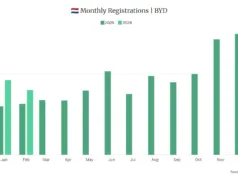
BYD’s sales are backsliding: the world’s biggest new energy vehicle (NEV) maker sold 190,190 units in February, marking a stark 41% decline year-on-year and the sixth consecutive month of falling sales. The figure comprises 187,782 passenger vehicles and 2,408 commercial vehicles; plug-in hybrids accounted for 108,243 units, and battery-electric models 79,539, of all passenger vehicle sales—both segments posting steep year-on-year falls of 44% and 36% respectively.
A sales dip in February is nothing new for Chinese automakers; in fact it depends entirely on when the second new moon after the winter solstice arrives. This year, the Chinese New Year holiday which ran from 15 to 23 February, bringing with it sharply compressed working days and a near-total stop to automotive production and retail.
In 2025, the same holiday fell primarily in January, making the year-on-year February comparison particularly punishing. Given this, it might be cleaner to lump January and February sales together: 400,241 units, down 36% on the equivalent period in 2025. Clearly, seasonal distortions only account for a small portion of the full picture.
China’s full purchase tax exemption on NEVs expired at the end of 2025, replaced in January 2026 by a 5% levy. The policy shift triggered a historic surge in demand during the final months of last year, with 1.38 million units being sold nationwide. Of this number, BYD’s accounted for 420,398, leaving a significant demand vacuum heading into the new year. Consumer confidence has also cooled—likely on a short-term basis—as buyers hold back pending new model launches and additional information on government trade-in initiatives.
This time, BYD hasn’t responded by opening a new front on the sticker price wars—indeed, it is no longer legally allowed to do so—but instead with aggressive financing. February saw the automaker roll out seven-year low-interest loan programmes, part of a wider move alongside Tesla (which offers a five-year zero interest plan) and Dongfeng-Nissan (eight years zero interest).
There is also a sense that, much like what happened this time last year, BYD is gearing up to level up its technology once again. In February 2025 it unveiled the God’s Eye autonomous driving system and bundled it in at no additional cost; this month it is expected to reveal the Blade Battery 2.0 and its second-generation fast charging infrastructure.
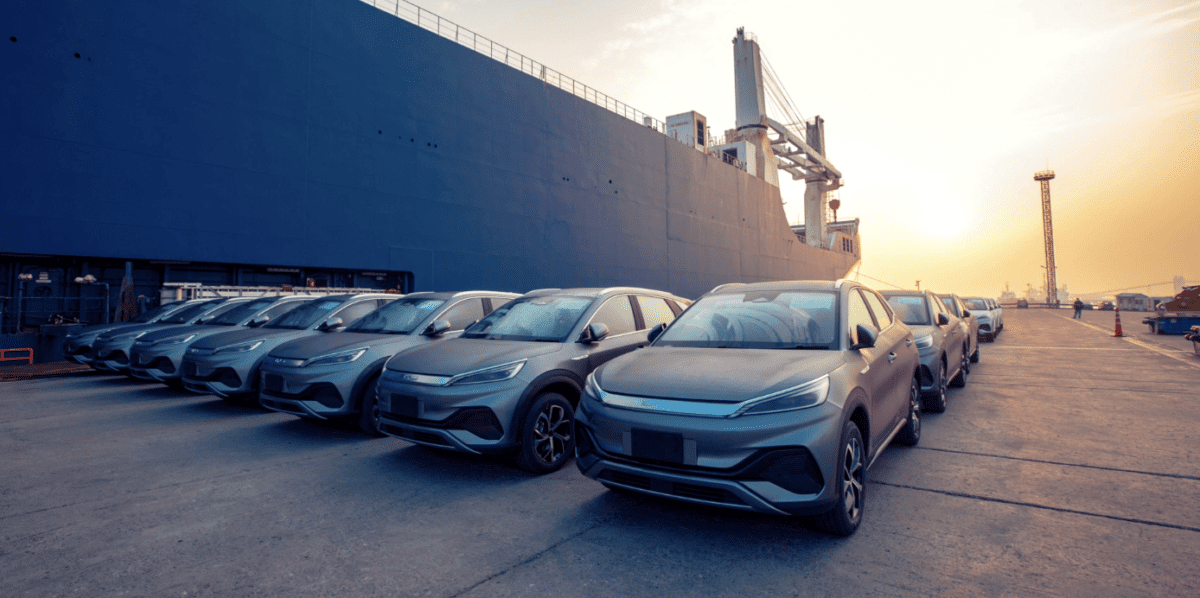
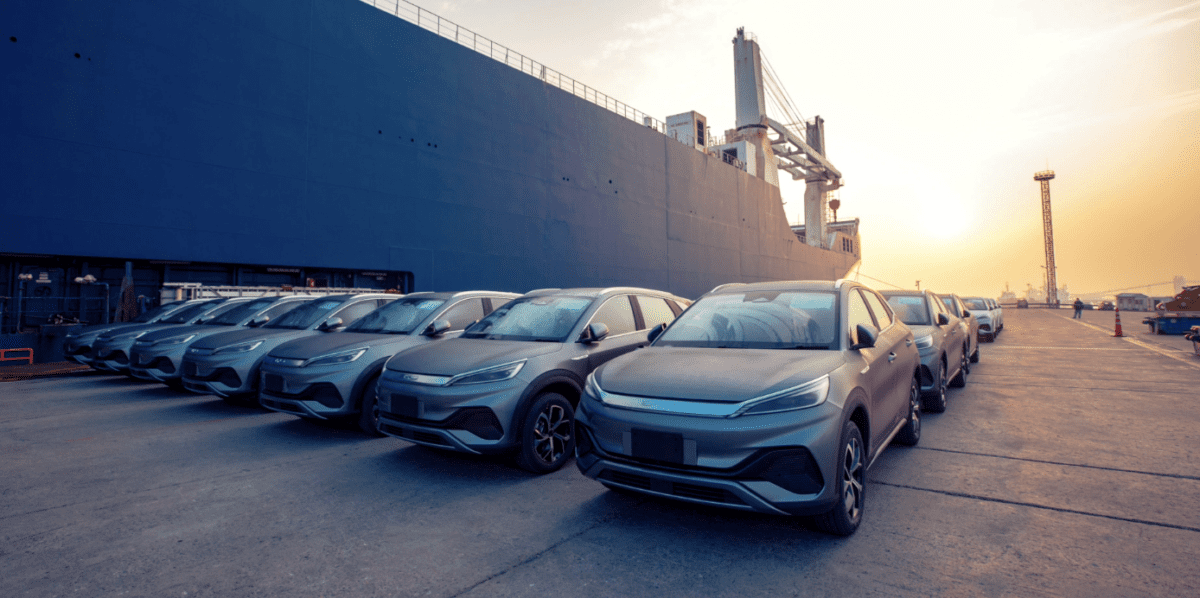
It should also be noted that all of BYD’s present woes are exclusive to China’s automotive market. Exports are booming: overseas shipments came in around 100,000 in February marking a 50% jump year-on-year and marking the fourth consecutive month of six-figure volumes. Full-year 2025 exports reached 1.1 million vehicles against an original forecast of around 800,000, and this year automaker is setting sights in the 1.3 million t0 1.6 million range.
With the US effectively locked out due to insurmountable 100% tariffs, Latin America and Europe are central to BYD’s growth story. In both regions, the launch of new local factories and vertical integration initiatives will be key to increasing sales and brand recognition while safeguarding against trade volatility. In Europe the introduction of individual negotiations for price minimums may also allow it to circumvent its current duty rate, which sits at 27%.